
Danish families challenge housing law in Supreme Court over alleged ethnic discrimination
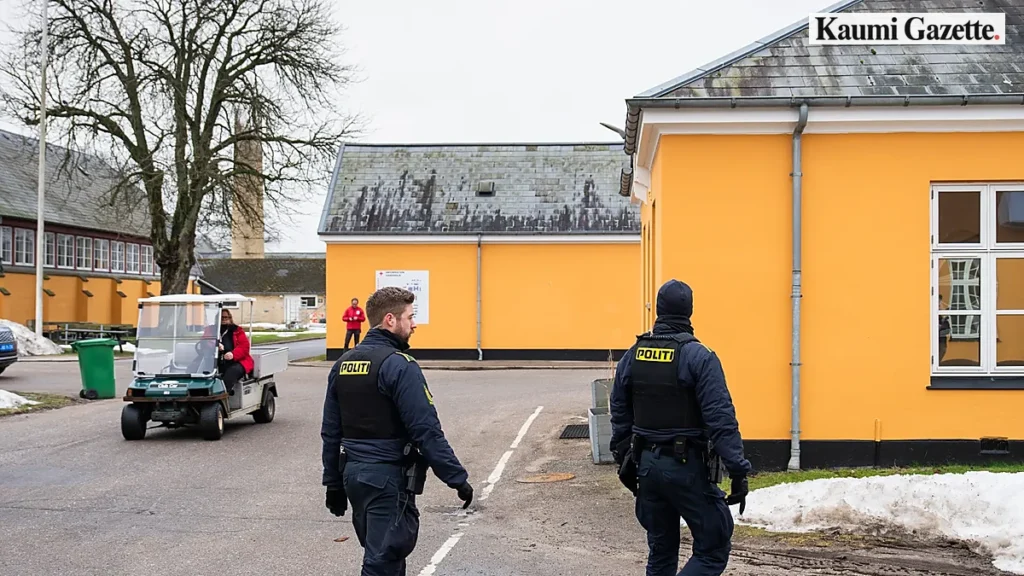
COPENHAGEN — Seven families from the coastal city of Helsingor are facing their former landlord in Denmark’s Supreme Court, arguing they were forced from their homes because of their ethnic origins under housing legislation previously known as the “ghetto law.”
The two-day Supreme Court hearing, which began on Friday, centers on lease terminations issued in 2022 under a controversial 2018 law targeting social housing estates where more than half of the residents are classed as “non-Western.” Lower Danish courts previously ruled that the “non-Western” label does not describe an ethnic group and therefore did not violate Denmark’s Equal Treatment Act.
The legal challenge carries significant implications for Denmark’s broader integration policies and housing regulations. Enacted under a national plan titled “One Denmark without Parallel Societies: No Ghettos in 2030,” the legislation requires housing areas with high populations of immigrants and descendants to cut public family housing to 40 percent by 2030 through sales, demolition, or conversion if they remain on government “parallel society” lists for five years. Tenants’ associations estimate that about 11,000 people across Denmark will have to leave their homes by 2030 as a result.
The court proceedings follow a December 2025 ruling by the Court of Justice of the European Union (CJEU). The EU court determined that while nationality or country of birth alone does not determine ethnic origin, an allegedly neutral criterion covering multiple origins could be linked to ethnicity.
During the hearings, lawyer Eddie Khawaja noted that the core question before the bench is “whether the criteria regarding the tenants’ origin is neutral or not.”
The families maintain they were evicted due to their ethnic background. Riad, one of the affected residents, stated that local management wanted to avoid having the estate labeled a “hard ghetto” and forcibly moved out residents when they advocated for alternative solutions.
The Danish government defends the legislation, maintaining that the law is aimed at integration. Kaare Dybvad Bek previously argued that unaddressed concentration increases the risk of the emergence of religious and cultural parallel societies.
Rights groups have campaigned against the measures for years, contending that the criteria are discriminatory. According to the UN Human Rights Office, Statistics Denmark defines “non-Western” as any country outside the EU, with specific exceptions for Andorra, Australia, Canada, Iceland, Liechtenstein, Monaco, New Zealand, Norway, San Marino, Switzerland, the United States, and the Vatican State. The definition also covers descendants born in Denmark if neither parent holds Danish citizenship born in the country. Critics point out that this designation disproportionately affects Denmark’s non-white and non-European ethnic populations.
A verdict from the Supreme Court could be handed down later this month. If the families prevail, they would likely be rehoused in properties comparable to those they were forced to leave. A separate legal challenge concerning the Mjolnerparken estate remains pending before the Eastern High Court.
Related stories



More from India
 NationalSupreme Court dismisses curative petition by former Short Service Commission Officers seeking pro-rata pension
 HeadlinesKarnataka Alleges Excess Ethanol in Petrol While Retailers Reject Claims
 HeadlinesCockroach Janata Party holds protest march in Kochi demanding electoral roll revision withdrawal
 NationalSupreme Court rules High Courts cannot dictate terms for future regular bail after denying anticipatory relief
 HeadlinesElection Commission directs fresh opportunity for omitted voters amid opposition criticism
 NationalSupreme Court clarifies OBC creamy layer ruling will not reopen completed appointments