
Recent police appeals at mosques reignite debate over minority political engagement in India
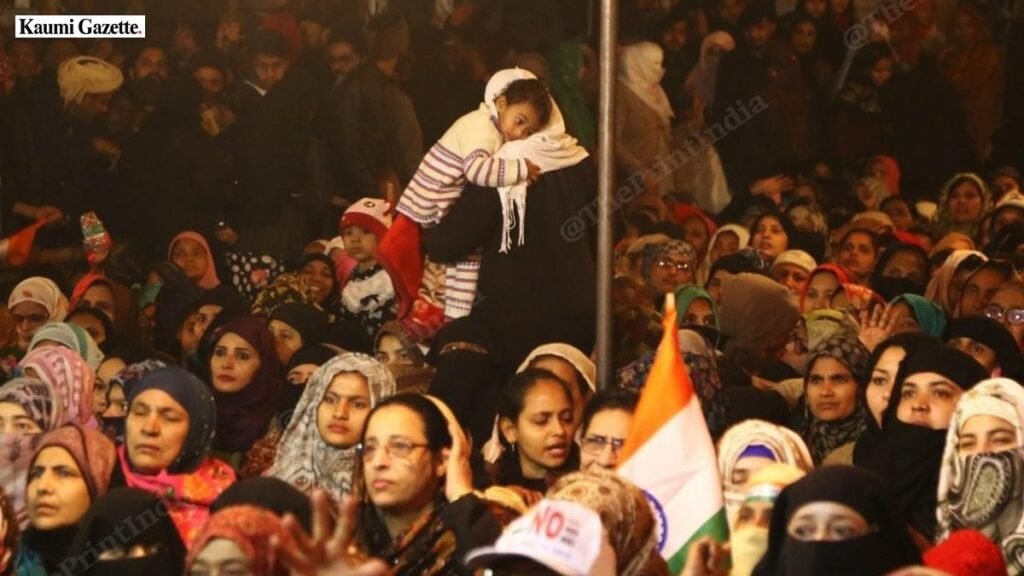
NEW DELHI — Six years after Muslim demonstrators occupied the streets of Shaheen Bagh to protest the Citizenship Amendment Act, recent policing methods and political appeals have reignited debate over how minority political participation is approached and perceived in India.
The discussion follows an incident in Old Delhi, where a Delhi Police officer used a microphone at the Shahi Masjid near the Chandni Chowk Town Hall to urge worshippers not to join a protest called by the Cockroach Janta Party. The mosque’s imam similarly advised worshippers against participating in the demonstration. The police department described the announcement as a preventive law-and-order measure, noting that comparable appeals were conveyed through residential associations and other community institutions.
This style of outreach highlights a persistent political and administrative practice of approaching mosques and religious leaders to influence a diverse community’s collective actions. Observers note that such approaches rely on the outdated assumption that opinions within a large population are uniformly shaped by religious authorities rather than individual exposure to schools, universities, social media, and broader political discourse.
The contrast between the Shaheen Bagh agitation and current protests also points to evolving calculations among ordinary citizens regarding the risks of public demonstrations. During Shaheen Bagh, Muslim families mobilized directly to question a law they viewed as a threat to their citizenship rights. In contrast, the CJP demonstrations center on allegations of electoral irregularities and accountability—issues that apply broadly to all Indian citizens.
Analysts and commentators argue that measuring political engagement solely by crowd sizes, slogans, or visible religious representation overlooks how individuals form political choices. While citizens retain the fundamental right to protest peacefully, exercising that freedom equally includes the autonomy to decide when, why, and for which causes to raise their voices, or to abstain entirely without being presumed politically indifferent.
True integration as equal citizens requires moving past the view that Muslims operate as a monolithic bloc. Individual students or citizens should be free to engage with democratic processes through secular organizations or as independent participants, rather than having their everyday political decisions analyzed perpetually through a communal lens.
Related stories


More from Analysis
 NationalIn bid to decentralise school governance, Centre mandates, empowers local committees
 ExplainerWhy industrial heat pumps are a ‘clean heat’ opportunity for IndiaOpinionPreserving inflation targeting framework’s core architecture is a policy choice of consequence: RBI Dy Guv Gupta
 OpinionWhy developers are warning against Paul Sztorc’s eCash fork