
Egyptian President Abdel Fattah el-Sisi Announces Departure at Conclusion of Term in 2030

CAIRO — Egyptian President Abdel Fattah el-Sisi has announced that he will leave office upon the conclusion of his third presidential term in April 2030, declaring that he will not seek a fourth term.
Speaking at a graduation ceremony at the Egyptian Military Academy, el-Sisi stated that his departure is a settled matter and maintained that no one would tamper with the constitution. The announcement has drawn widespread attention and prompted political analysis across the region regarding the future of military rule in Egypt, potential successors, and the underlying motivations driving the declaration.
The political landscape in Egypt remains closely tied to its military establishment, which retains broad constitutional influence. Article 200 of the Egyptian constitution designates the military as responsible for safeguarding the country’s democracy alongside the gains, rights, and freedoms of the public, following amendments introduced in 2019. Additionally, Article 234 mandates that any sitting president must secure approval from the Supreme Council of the Armed Forces before appointing a defence minister.
El-Sisi first assumed power after leading a 2013 military coup against Egypt’s first democratically elected president, Mohamed Morsi. That transition followed the 2011 uprising in which the military forced longtime leader Hosni Mubarak to step down amid mass popular protests. While el-Sisi previously stated in 2017 that he was committed to preserving the constitutional limit of two four-year terms, he later supported the 2019 constitutional amendments that extended presidential limits.
Reactions to the latest announcement remain divided among observers and political insiders. A judicial source told the outlet Mada Masr that the declaration leaves open the possibility of a future “popular call” urging the president to remain in office. Meanwhile, a member of parliament stated in private meetings that they heard el-Sisi indicate he would prefer to step down voluntarily rather than wait for the military to compel his departure.
The transition timeline unfolds against significant economic pressures in Egypt. The country’s national debt currently stands at 81 percent of its gross domestic product, with annual interest payments surpassing combined government spending on healthcare, education, employee wages, and subsidies. Furthermore, the Egyptian pound has depreciated by more than 80 percent against the US dollar since 2014, while cumulative inflation has exceeded 460 percent.
Alongside his departure announcement, el-Sisi has proposed a formal training program for future officials and leaders at the Egyptian Military Academy, overseen by a committee of experts.
Related stories



More from World
 WorldBritish Employers Question Proposed Cost Increases for Older Apprenticeship Training
 WorldLula wins Brazil presidential runoff as opponent contests result
 WorldDisplacement follows military sweep in Hebron after checkpoint attack
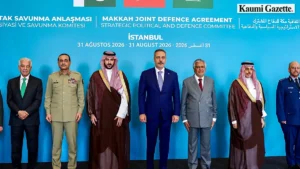 WorldMecca Defence Alliance delegations hold high-level security talks in Tehran amid regional tensions
 WorldSaudi-led coalition intercepts incoming missiles as cross-border attacks escalate
 WorldTrump Administration Removes Thirteen Percent of Americans From Federal Food Stamp Program