
India Faces Ethanol Blending Reductions as Drought Shifts Focus to Food Security
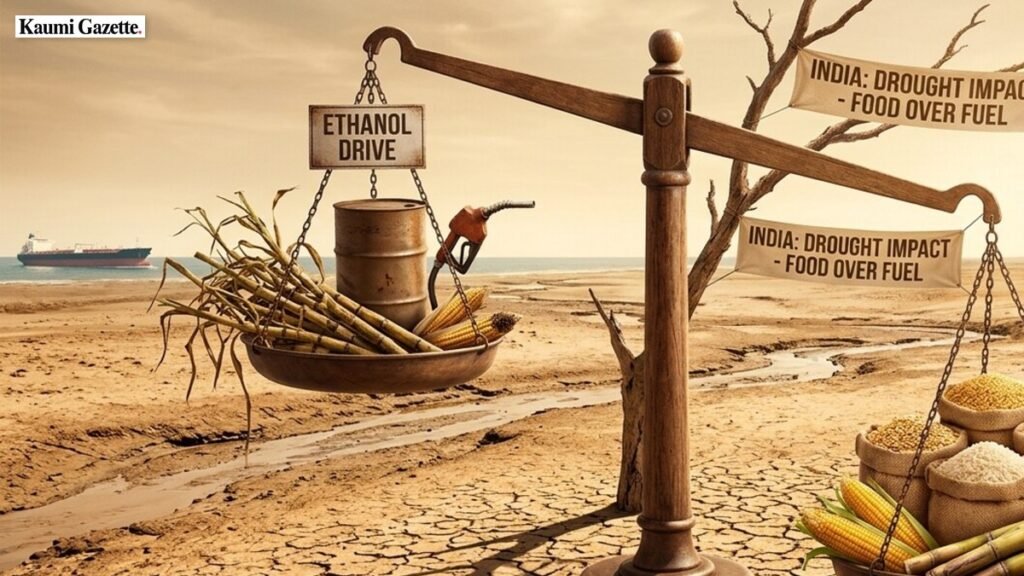
NEW DELHI — India’s flagship ethanol blending programme is facing severe setbacks and a potential reduction in output as the country grapples with its lowest monsoon rainfall in more than a decade, forcing authorities to prioritize food security over fuel production.
A severe El Niño weather pattern has caused monsoon rainfall to drop by nearly 13% from normal levels. According to Reuters, the proportion of ethanol being produced is expected to drop below the 20% mark, reversing gains made after achieving the milestone five years ahead of schedule. G.K. Sood, chairman of KN Agri Resources, stated that the scarcity of feedstocks could push India’s ethanol blending rate down to around 15% in the current supply year.
The E20 petrol initiative is a signature energy-security programme championed by Prime Minister Narendra Modi and Minister of Road Transport and Highways Nitin Gadkari. Since its introduction in 2014, the biofuel replacement strategy has saved around $21.1 billion in oil imports.
However, the current drought conditions have triggered widespread crop shortages, sending corn and sugar prices soaring by some 40% to record highs, while rice prices have climbed 20%. The resulting pinch pushed retail food inflation to 7.74% in September, up from 5.97% a month earlier.
“India is the world’s most populous country, requiring food to take priority over fuel, more so in a drought year,” Sood said.
The policy shift carries significant political and economic weight. Several states, including Uttar Pradesh, are due to hold assembly elections in early 2027, making food inflation a politically sensitive issue for the government.
Lower blending targets will also squeeze domestic producers who borrowed heavily to expand capacity to about 20 billion litres a year, resulting in considerable overcapacity across the sector. Additionally, ethanol producers have increasingly turned to damaged grains to make biofuel, raising worries about animal feed availability, according to C.K. Jain, president of the Grain Ethanol Manufacturers Association.
Related stories

More from India
 HeadlinesSupreme Court to Review Election Commission Directives on Delhi Electoral Roll Omissions
 NationalSupreme Court quashes former sarpanch disqualification, questions relevance of two-child norm
 NationalSupreme Court Directs Centre to Establish Monitoring Cell for Child Labour Law Compliance
 HeadlinesDelhi Police suspends Assistant Commissioner Manasvi Vashisth following headquarters protest
 HeadlinesCHANDIGARH: Decades-old inter-state river water disputes resurfaced in Punjab state politics as the Punjab Assembly passed five
 NationalSupreme Court Directs Strict Enforcement Action Against Illegal Firecracker Sales in National Capital Region