
Uttar Pradesh MLC election results reveal BJP political anxieties and upper-caste discontent
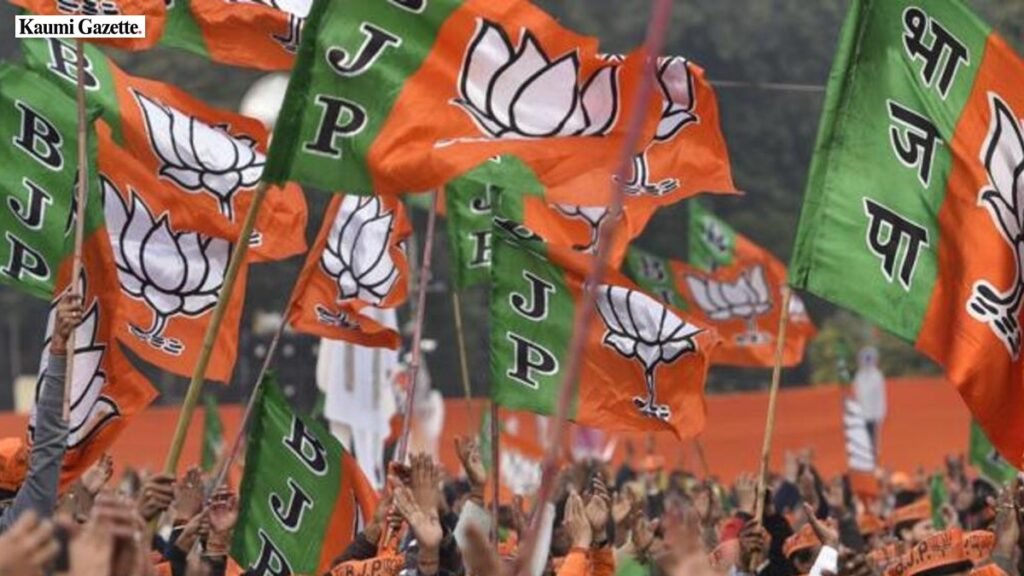
LUCKNOW — The recent Uttar Pradesh Legislative Council (MLC) election results have revealed mounting political anxieties within the ruling Bharatiya Janata Party (BJP), exposing deep-seated discontent among core upper-caste communities and educators over contentious central policies and local administrative burdens.
Although the BJP retained six of the 11 contested MLC seats across the state, its defeat in two seats in Varanasi and one in Lucknow highlights a brewing angst among upper-caste voters. The elections, spanning eastern, western, central and Bundelkhand regions and involving eight lakh voters across 11 seats—each covering eight to 10 districts—served as a crucial mini-survey ahead of the upcoming 2027 Uttar Pradesh assembly elections.
Political analysts and party insiders view the outcome as an indicator that local grievances and policy controversies could significantly impact the electoral landscape. While the BJP publicly downplays the friction, party strategy sessions acknowledge the palpable fear that alienating core demographics could alter the trajectory of the next assembly contest, which is shaping up as a direct two-way battle between the BJP and the Samajwadi Party (SP), with smaller allies playing restricted roles.
At the center of upper-caste unease is the University Grants Commission’s (Promotion of Equity in Higher Education Institutions) Regulations, 2026, notified by the central government in January 2026. Designed to prevent caste-based discrimination in higher education, the regulations mandate equity committees and monitoring teams comprising members from SC, ST and OBC communities.
The notification triggered sharp reactions from upper-caste groups, including several Brahmin organisations and the Kshatriya Karni Sena, who raised concerns over the potential misuse of the provisions through false complaints against general category individuals on campuses. Multiple petitions filed in the Supreme Court subsequently resulted in the regulations being put on hold, though street protests persisted.
In mid-September, Union ministers JP Nadda and Jitendra Singh met a high-profile delegation of general-category groups demanding a complete rollback of the amendment. While the government secured a three-week window to study the demands, the issue remains a source of alienation among the BJP’s traditional core base of Vaishya, Brahmin and Rajput voters.
The BJP faces a complex political dilemma, as any move to dilute or roll back the amendment risks alienating lower-caste communities, who remain sceptical of the party’s intentions amid rising public discourse surrounding quotas.
Beyond national policy friction, local governance issues heavily influenced voter sentiment. Educators across the state expressed frustration over unemployment concerns, the old pension scheme, and severe workloads stemming from round-the-year training programs and continuous deployment at government functions. These administrative strains contributed to swinging support away from the incumbent party.
Caste and communal considerations played a minimal role in most districts, excepting Meerut and Bareilly-Moradabad, which were secured by the BJP. Notably, the SP’s Muslim candidate Haji Danish Akhtar was defeated in Bareilly, an outcome requiring close evaluation by the opposition leadership.
Meanwhile, the results exposed structural weaknesses within the National Democratic Alliance’s (NDA) state partners, including Om Prakash Rajbhar’s Suheldev Bharatiya Samaj Party, Sanjay Nishad’s Nishad Party—both partners in the Yogi Adityanath cabinet—and Anupriya Patel’s Apna Dal (Sonelal), a constituent in the central government.
Internal BJP post-mortem assessments attribute the electoral setbacks to delayed ticket distribution, an indifferent party cadre, internal bickerings and overconfidence driven by perceptions of a sustained Prime Minister and Chief Minister wave. Conversely, the SP maintained high-intensity coordination, with its cadre sustaining a 58-hour vigil during vote counting in Varanasi and Gorakhpur.
Capitalising on upper-caste and non-Yadav backward discontent, the SP successfully broadened its social coalition by winning seats through candidates from communities traditionally aligned with the BJP. The SP’s five victors include one Kayastha, one Kurmi, one Agarwal and two Yadavs, reflecting an expanded outreach executed by party chief Akhilesh Yadav.
In Agra, Akash Agarwal—an independent winner in 2020 who sought a BJP ticket before switching to the SP—secured victory following an emotional campaign that prompted repolling in three booths and the suspension of six officials. The loss stung the BJP particularly given its heavy regional representation, counting Higher Education Minister Yogendra Upadhaya from Agra and Basic Education Minister Sandeep Singh from Aligarh among its senior leaders.
Similarly, in Lucknow, Kanti Singh captured a seat traditionally considered safe for the BJP’s Kurmi and Lodh support network, despite the state leadership and allied parties actively courting those communities. In Varanasi’s Cantt constituency, Ashok Sinha won a seat in a pocket containing a sizable Kayastha population long loyal to the BJP. In Gorakhpur, although SP candidate Sanjayan Tripathi lost his bid, the party successfully established a prominent Brahmin leader in a belt where the SP has also fielded Tej Narayan Pandey, known as Pawan Pandey, in Ayodhya.
While the BJP continues to navigate the competing demands of its diverse social coalition, the MLC results demonstrate that voter dissatisfaction on campuses and in classrooms has successfully transitioned from street protests into electoral outcomes.
Related stories

More from Analysis
 ExplainerHow black holes become cosmic monsters: Scientists uncover the violent merger chain behind giant space objects |
 ExplainerWhy the ‘Trump rally’ is hitting a wall of profit-takingExplainerWhy India’s defence sector boost drone output for next-gen combatExplainerHow decentralising therapy can help bridge India’s treatment gapExplainerUnderstanding inequality in India’s growth story
 NationalIn bid to decentralise school governance, Centre mandates, empowers local committees