
Supreme Court panel proposes three-year roadmap to phase out riverbed sand mining
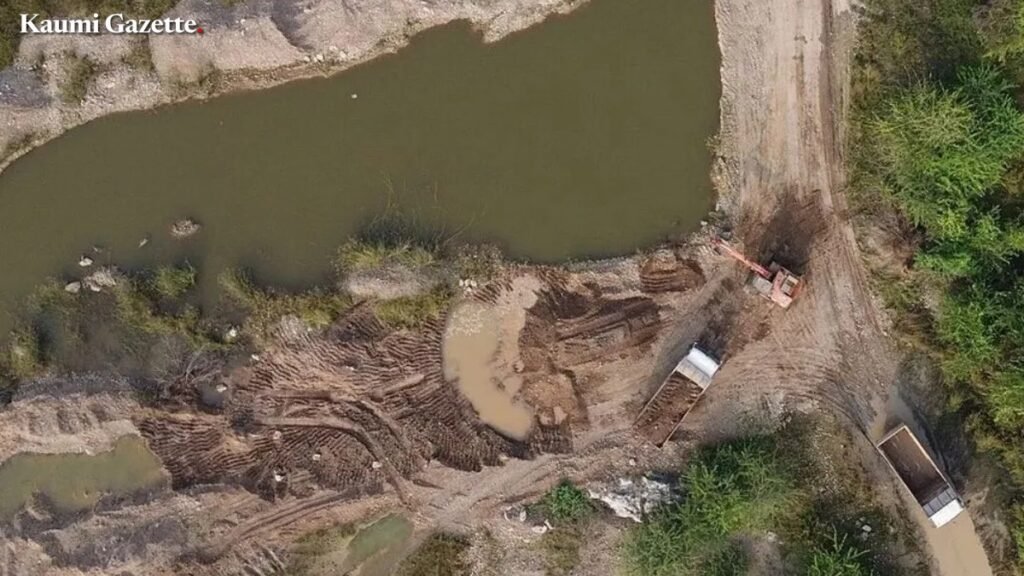
NEW DELHI: The Supreme Court’s Central Empowered Committee (CEC) has proposed a three-year roadmap to phase out unsustainable riverbed sand mining while introducing a plan to recover construction materials through the desilting and dredging of dam reservoirs.
The recommendations arose from a suo motu case concerning illegal sand mining in the National Chambal Sanctuary. In October, the Supreme Court expanded the scope of the proceedings and instructed the CEC to submit a comprehensive report on riverbed extraction. The court is yet to examine the proposals in detail.
The CEC noted that excessive extraction damages river ecosystems by disrupting the natural balance between water flows and sediment movement, which maintains channel stability and groundwater recharge. Historical infrastructure incidents illustrate these risks. In 2010, the Bombay High Court banned suction-pump sand mining on the Vaitarna River in Palghar district to protect a vital railway bridge. In 2024, excessive extraction damaged the Kalwa-Nangal bridge over the Swan River in Punjab, connecting Ropar to Garhshankar.
To offset the curbing of active riverbed mining, the CEC recommended recovering sand and gravel from sediment trapped behind major dams. Central Water Commission assessments show that 439 reservoirs have lost an average of 19.24% of their original gross storage capacity due to sedimentation, with an average annual capacity loss of approximately 0.74%. Of those assessed, 23 reservoirs have lost more than 50% of capacity, 23 have lost between 40% and 50%, and 49 have lost between 30% and 40%.
The Gobind Sagar reservoir behind the Bhakra Dam has seen its original capacity of 9,868 million cubic metres decline by 2,568 million cubic metres, or about 26%, to approximately 7,300 million cubic metres. Furthermore, an April 2026 expression of interest by the Bhakra Beas Management Board estimated annual sediment inflows of 35 to 40 million cubic metres into the Bhakra reservoir and 25 million cubic metres into the Pong reservoir.
The CEC cautioned that sediment recovered from dams must undergo grain-size, mineralogical and quality testing, noting that fine silt and clay may prove unsuitable for conventional construction. It also recommended that central authorities formulate a national reservoir sediment management policy featuring a ten-year desiltation cycle, reservoir-specific assessments, and safeguards for dam safety and downstream aquatic habitats. Storage dams older than 15 years that have not undergone systematic desiltation should be prioritized, the committee suggested.
Addressing enforcement challenges, the committee highlighted widespread regulatory failures, including outdated District Survey Reports, unverified replenishment studies, unauthorized night operations, and forged transit permits. The CEC cautioned that possessing a valid mining lease or environmental clearance does not guarantee that extraction remains within authorized boundaries and volume limits.
India lacks a consolidated national database for sand extraction, consumption, or illegal mining volumes. While Ministry of Mines data recorded 95,306 illegal mining cases involving major and minor minerals across reporting states in 2021-22, those figures are not specific to sand, and exact extraction quantities remain unknown. Under the Mines and Minerals (Development and Regulation) Act of 1957, sand is classified as a minor mineral, leaving regulation primarily to state governments, while a 2019 Lok Sabha reply confirmed that national sand-mining data is not maintained centrally.
Related stories
 NationalMeta reports sharp surge in content restrictions across India platforms following regulatory changes
 NationalBisleri asserts product safety and maintains it received no formal notice over regulatory action
 NationalUP, Uttarakhand Plan Joint Promotion of Neem Karoli Baba and Mahabharata Tourism Circuits
More from India
 HeadlinesIndia faces power shortage risks amid depleting coal stocks and thermal capacity constraints
 NationalSupreme Court suspends life sentence and grants bail to two convicts in Bilkis Bano case
 HeadlinesDelhi Police Questions Status of Reel Makers as Journalists in Supreme Court Affidavit
 HeadlinesOpposition Leaders Petition Supreme Court For Judicial Scrutiny Of Election Commission Voter Rolls Revision
 HeadlinesOpposition INDIA bloc leaders approach Supreme Court seeking factual clarity from Election Commission
 NationalCongress alleges economic mismanagement drives inflation and business closures