
Supreme Court Rules Female Relatives Cannot Be Ousted From Shared Household Solely Due to Husband Absence
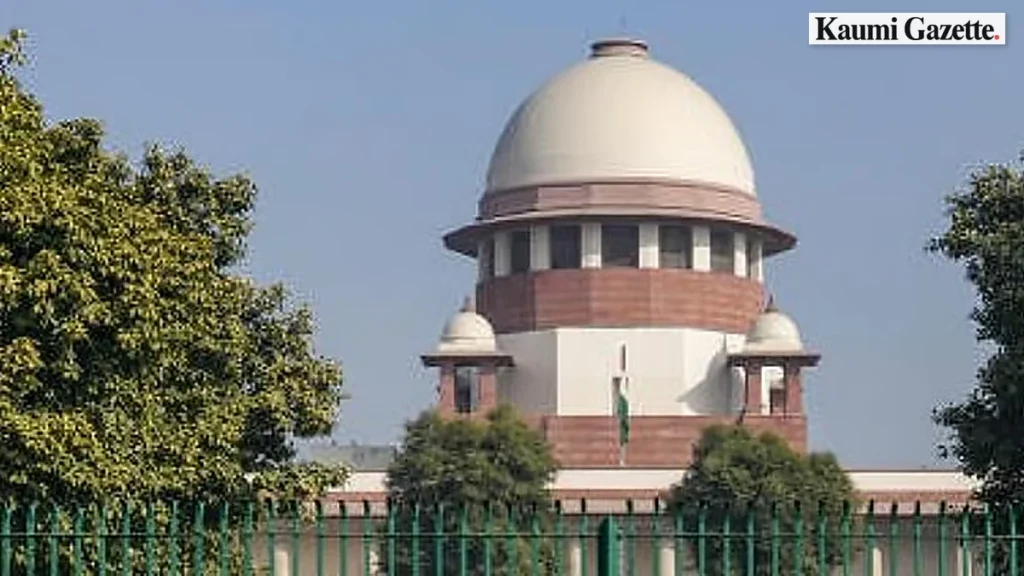
NEW DELHI — The Supreme Court has ruled that female relatives cannot be removed or ousted from a shared household under the Protection of Women from Domestic Violence Act, 2005, solely due to a husband’s non-appearance in legal proceedings.
A bench of Justices Aravind Kumar and Vipul M Pancholi observed that while Section 19(1)(b) of the Act empowers a Magistrate to pass protection orders directing removal from a shared household, the statutory proviso expressly bars any such order against a woman. The bench stated that “provided no order under clause (b) shall be passed against any person who is a woman.”
The ruling stems from a criminal appeal filed by Shahjahan and other female relatives, including the mother-in-law and sisters-in-law of the complainant, Yasmeen. The case originated when Yasmeen filed a petition under Section 12 of the 2005 Act before a jurisdictional Magistrate, seeking protection, a monthly maintenance of Rs 25,000 for herself and her minor daughter, a restraint against alienation of the shared household, and other reliefs.
During the earlier proceedings, the Uttarakhand High Court noted that the husband, Sonu, was residing in Saudi Arabia and avoiding proceedings, and subsequently directed counsel for the mother and sisters to obtain instructions on his appearance. Non-bailable warrants, proceedings under Section 82, and the attachment of the residential property followed, resulting in the premises being locked and the female appellants being displaced.
Setting aside the lower orders, the Supreme Court directed that the property attachment be raised forthwith. The apex court noted that locking the premises and removing women from occupation was erroneous and contrary to law.
The trial court has been directed to expedite the hearing and make all endeavours to secure the husband’s presence, utilising a look-out notice or other legal procedures if necessary.
Related stories
 NationalSouthern Allies Defend Election Commission Amid Opposition Backlash Over Electoral Roll Revision
 NationalElection Commission tells Supreme Court that electoral roll revision decisions were unanimous
 NationalElection authorities verify over 94 per cent of voter notices ahead of Delhi electoral roll publication
More from India
 NationalElection Commission defends revision orders in Supreme Court affidavit
 NationalDelhi traders urge Rahul Gandhi to reschedule November rally after Diwali
 NationalElection Commission defends electoral roll revision in Supreme Court, affirms unanimous decisions
 NationalElection Commission defends electoral roll revision before Supreme Court
 NationalBharatiya Janata Party prepares political march in Delhi amid rising tensions
 NationalCommunist Party of India stages protest in New Delhi demanding Chief Election Commissioner resignation