
Telangana decides to phase out standalone junior colleges to integrate senior secondary classes
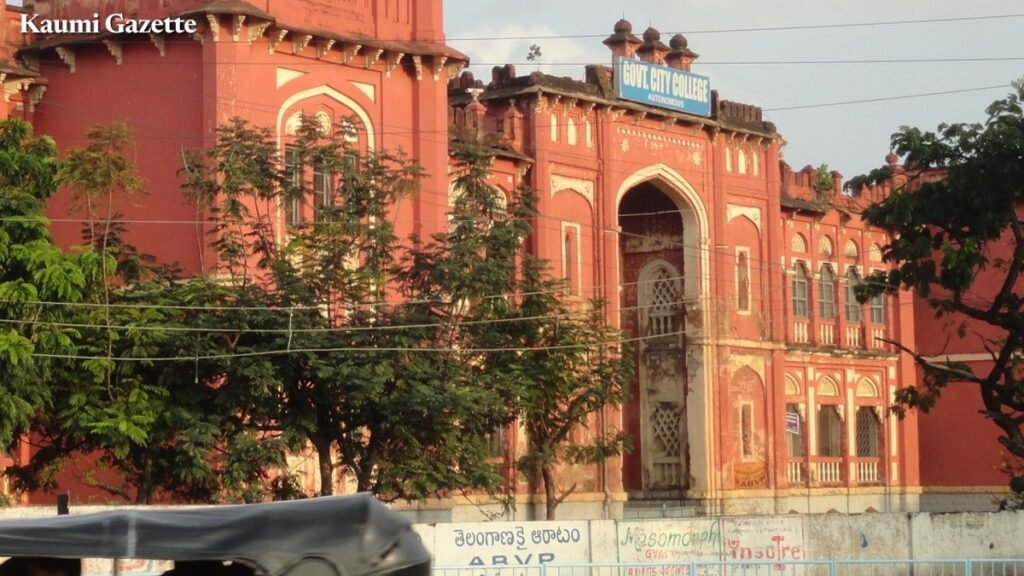
HYDERABAD: The Telangana government has decided to phase out standalone intermediate colleges, also known as junior colleges, and integrate Classes 11 and 12 directly into the school education system starting from the 2027-28 academic year. Under the new policy, existing schools offering education up to Class 10 will add two more grades, allowing students to continue their senior secondary education without changing institutions.
The sweeping reform aims to address high dropout rates among students after the completion of Class 10. According to state government figures, approximately 40 per cent of students leave the education system after the 10th grade, with the highest attrition rates observed among girls and students belonging to Dalit, tribal, and minority communities.
Chief Minister A Revanth Reddy, who also holds the portfolio for education, pointed out that the physical distance of junior colleges from residential areas acts as a major barrier for vulnerable students. Revanth Reddy said, noting that many students from socially and economically backward communities cannot afford the travel and incidental expenses required to attend junior colleges situated at a distance.
In contrast, the government noted that dropout rates remain significantly lower in institutions like Kendriya Vidyalayas, Navodaya Vidyalayas, and Kasturba Gandhi Balika Vidyalayas, which provide continuous schooling through to the 12th grade under one roof.
Under the current framework, students navigate two separate administrative bodies: the School Education Department, which manages education up to Class 10 and culminates in the Secondary School Certificate (SSC) public examination conducted by the Board of Secondary Education, and the Telangana Board of Intermediate Education, which governs junior colleges. Right to education and academic activists have long maintained that this institutional transition is cumbersome and disrupts academic continuity.
The restructuring will impact roughly 11 lakh students starting next year. For the 2025-26 batch, over 10 lakh students had enrolled across approximately 1,750 junior colleges across the state.
Under the implementation plan, the Telangana Board of Intermediate Education will be merged with the School Education Board. Classrooms in existing junior colleges will be converted to accommodate Classes 11 and 12.
For schools lacking the infrastructure to accommodate two additional grades on their own premises, classes for Classes 11 and 12 will be conducted under the school’s banner using nearby former junior college facilities. This arrangement is designed to allow students passing Class 10 to secure admission in the same institution rather than undertaking a separate admissions process.
Following the reorganisation, the state school education system will be structured into primary education spanning kindergarten to Class 4, secondary education covering Classes 5 through 8, and senior secondary education encompassing Classes 9 to 12.
Existing teachers and lecturers currently employed in junior colleges will transition to teaching Classes 11 and 12 when the new academic year begins. State Education Secretary Dr Yogita Rana confirmed that the curriculum will remain unchanged, preserving traditional academic streams such as BiPC (Biology, Physics, Chemistry), MPC (Maths, Physics, Chemistry), MEC (Maths, Economics, Commerce), and CEC (Civics, Economics, Commerce). This continuity allows current junior college faculty to step smoothly into senior secondary roles without requiring separate training or fresh recruitment drives.
Beyond curbing dropouts, the government expects the integrated system to reduce the administrative burden on families, enabling students to focus on preparation for national entrance examinations such as the National Eligibility cum Entrance Test (NEET) for medical courses and the Joint Entrance Examination (JEE) for engineering institutions.
The administration stated that the policy shift is intended to standardise educational quality from the nursery level through to the university stage, helping students transition smoothly into higher education and modern competitive environments.
Related stories
 ExplainerSEBI proposes scrapping additional disclosure requirements for foreign portfolio investors
 ExplainerBHOPAL: Researchers at the ICAR-National Institute of High Security Animal Diseases (NIHSAD) have formulated India’s inaugural domestic vaccine
 ExplainerEl Niño dryness drives India food inflation to twenty-three-month high
More from Explainers
 ExplainerDelhi Government Considers Cloud Seeding Trials to Combat Post-Diwali Air Pollution
 ExplainerData Analysis Shows Firecrackers Drove Majority of Delhi Pollution Following Diwali
 ExplainerPolitical Speculation Intensifies Over Potential Reunion Between Shiromani Akali Dal and Bharatiya Janata Party in Punjab
 ExplainerUttar Pradesh government increases Dearness Allowance by five percent for state employees
 ExplainerCentre explores legal safe harbour review for social media platforms amid accountability push
 ExplainerRahul Gandhi launches gig worker welfare scheme and data access initiative in Hyderabad