
Delhi Government Considers Cloud Seeding Trials to Combat Post-Diwali Air Pollution

NEW DELHI — Amid high levels of air pollution following Diwali, the Delhi government is considering fresh cloud seeding trials to induce artificial rain over the region, following two trial runs reportedly conducted near the airport.
The move revives a strategy previously tested by the administration. On October 28, 2025, the Delhi government conducted two consecutive cloud seeding trials using a small aircraft operated by a team from the Indian Institute of Technology (IIT) Kanpur, which released silver iodide and salt particles via flares.
The 2025 experiment yielded limited results. An evaluation of that year’s operation showed that air quality improvements began hours before the cloud seeding commenced, while pollution levels subsequently fluctuated and even rose. Furthermore, Delhi recorded no rainfall from the operation, whereas neighboring Noida and Greater Noida received only 0.3 mm of precipitation.
The consideration of artificial rain brings renewed scrutiny to the scientific mechanisms, environmental prerequisites, and limitations of cloud seeding as a tool for urban air quality management.
Cloud seeding involves introducing specific substances into targeted cloud formations to artificially trigger precipitation. The practice traces its origins to 1946, when American chemist Vincent Schaefer and his General Electric colleagues in New York successfully created a snowstorm inside a laboratory freezer.
Natural rain occurs when water vapour condenses around microscopic airborne particles to form cloud droplets. These droplets collide, grow in size, and eventually fall as precipitation when the cloud becomes saturated. Cloud seeding accelerates this process by introducing “cloud condensation nuclei” (CCN) or ice nuclei particles. CCNs have a high affinity for water vapour, facilitating the formation of cloud droplets or ice crystals, which grow faster than liquid drops and fall more readily.
To execute the process, salts such as silver iodide, potassium iodide, or sodium chloride are injected into clouds to serve as additional nuclei. These seeding materials can be dispersed via aircraft, ground-based generators, rockets, drones, or flares. In the Delhi trials, pyrotechnic flares containing burning agents compressed inside tubes were attached to aircraft wings. During the 2025 tests, eight flares weighing between 2 kg and 2.5 kg each were deployed, with each flare taking roughly two to two-and-a-half minutes to drop into clouds possessing 15% to 20% humidity.
While cloud seeding has primarily been tested in India to combat drought conditions with varying outcomes, proponents suggest artificial rain can help mitigate air pollution by washing away particulate matter such as PM2.5 and PM10. According to research from the Massachusetts Institute of Technology (MIT), falling raindrops attract tens to hundreds of tiny aerosol particles to their surfaces through a natural coagulation process, clearing air pollutants like soot, sulfates, and organic particles.
A 2024 document by the Pune-based Indian Institute of Tropical Meteorology (IITM) cited historical experiments conducted over 100 km inland from India’s west coast, which observed a 24% increase in rainfall under specific conditions.
Despite these mechanisms, experts emphasize that cloud seeding depends heavily on specific meteorological conditions that are frequently absent in Delhi during the winter months.
M Rajeevan, former secretary of the Ministry of Earth Sciences, previously noted that cloud seeding requires a sufficient volume and depth of clouds containing an adequate number of droplets. Clear skies preclude the operation entirely. In winter, Delhi’s clouds are primarily generated by western disturbances—storms originating in the Caspian or Mediterranean Seas that bring non-monsoonal rainfall to northwest India.
However, these winter formations may prove inadequate for artificial intervention. Sachchida Nand Tripathi, a professor at IIT Kanpur, previously stated that winter clouds rarely match the profiles required for effective seeding, requiring close monitoring of cloud height and liquid water content.
Consequently, experts caution that cloud seeding may be ineffective in Delhi during post-autumn months, as late-autumn cloud moisture content remains insufficient to wash away heavy particulate matter. Gufran Beig, founder project director of the government’s System of Air Quality and Weather Forecasting And Research (SAFAR), previously observed that even successful operations require significant rainfall volumes to clear pollutants, noting that any resulting relief would be temporary at best.
Beyond efficacy and duration, critics and researchers have questioned the strategic focus on treating pollution’s effects rather than its root causes. Delhi’s air quality is routinely worsened by vehicular traffic, industrial emissions, year-round dust, seasonal stubble burning, adverse weather conditions, and winter fireworks.
A study conducted at IIT Delhi concluded that cloud seeding cannot serve as a primary or reliable strategy for managing the capital’s winter air pollution due to Delhi’s climatological unsuitability. The research characterized cloud seeding as an expensive, emergency short-term measure contingent on stringent forecasting criteria, reaffirming that sustained emission reduction remains the essential long-term solution to the pollution crisis.
Related stories
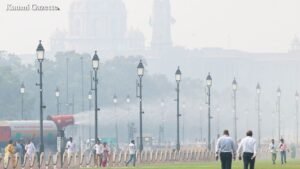 ExplainerData Analysis Shows Firecrackers Drove Majority of Delhi Pollution Following Diwali
 ExplainerPolitical Speculation Intensifies Over Potential Reunion Between Shiromani Akali Dal and Bharatiya Janata Party in Punjab
 ExplainerUttar Pradesh government increases Dearness Allowance by five percent for state employees
More from Explainers
 ExplainerCentre explores legal safe harbour review for social media platforms amid accountability push
 ExplainerDemocrats capture Congress as voter backlash over Iran conflict reshapes United States politics
 ExplainerKerala Agency Ordered to Probe Bribery Allegations Against Chief Election Commissioner
 ExplainerSupreme Court States Protest Sites Cannot Be Occupied Indefinitely
 ExplainerCyber Attacks Compromise Emergency Warning Systems in Ukraine and Russia
 ExplainerSupreme Court split verdict deepens legal challenges to election commissioner appointment law