
Data Analysis Shows Firecrackers Drove Majority of Delhi Pollution Following Diwali
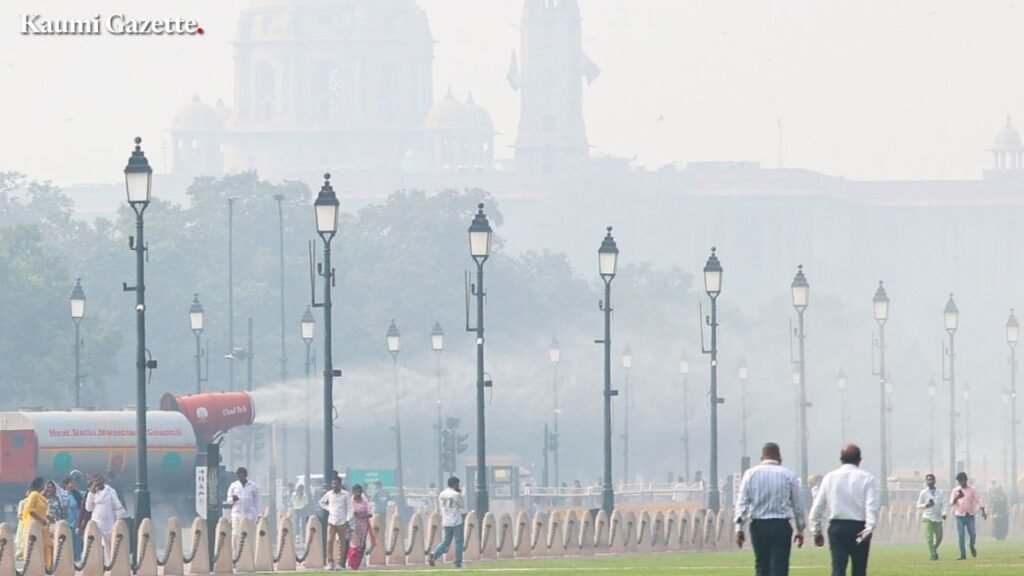
NEW DELHI — Days after Diwali celebrations, the Delhi-NCR region remains blanketed in a heavy layer of smog, with assessments showing that firecrackers drove over 71 per cent of the capital’s fine particulate pollution in the immediate post-festival hours.
The annual winter crisis is compounded by a combination of regional geography, falling temperatures, and trapped emissions. According to data analysed by the Indian Institute of Tropical Meteorology (IITM) in Pune, firecrackers accounted for 71.1 per cent of Delhi’s PM2.5 concentration between 1 am and 9 am on November 9, immediately following the festival. This followed contributions of 43.4 per cent during the same hours on November 8 and 5.6 per cent on November 7, highlighting how seasonal spikes overlay a persistent baseline of year-round pollution sources.
Smog is formed when particulate matter and gases from vehicles, industries, and other sources accumulate in the atmosphere, reducing visibility. While fog consists simply of suspended water droplets formed by cooling moist air, smog contains hazardous pollutants and can occur alongside fog. In Delhi, winter smog is characterised by the buildup of fine particulate matter under weather conditions that inhibit dispersion, occasionally combining with nitrogen oxides and volatile organic compounds in sunlight to form ground-level ozone.
The crisis is heavily influenced by meteorological and geographical factors unique to the Indo-Gangetic Plain. While warmer months feature rising air currents and stronger winds that disperse emissions, winter brings lower temperatures and sluggish winds. This stagnation is exacerbated by temperature inversions, where a layer of warm air settles above cooler surface air, acting as a lid that traps pollutants close to the ground for days.
Delhi’s baseline air pollution stems from vehicle exhaust, industrial emissions, construction activity, road dust, and biomass or waste burning. These year-round sources are seasonally amplified by agricultural residue burning in neighbouring states during the post-monsoon period. Before Diwali, these sources alongside secondary organic aerosols made up the bulk of fine particulate pollution before firecrackers temporarily became the dominant contributor.
Health experts warn that prolonged exposure to this particulate matter presents severe risks. PM2.5 particles, measuring 2.5 micrometres or less, can bypass the body’s natural filters to penetrate deep into human lungs and enter the bloodstream, impacting organs beyond the respiratory tract.
Short-term exposure frequently causes eye and throat irritation, coughing, breathing difficulties, and the aggravation of asthma. Over the long term, fine particulate pollution is linked to heightened risks of cardiovascular disease, stroke, lung cancer, and chronic respiratory illnesses. Children, older people, pregnant women, and individuals with pre-existing heart or lung conditions face the greatest vulnerability, though prolonged exposure can also harm healthy individuals.
Related stories
 ExplainerDelhi Government Considers Cloud Seeding Trials to Combat Post-Diwali Air Pollution
 ExplainerPolitical Speculation Intensifies Over Potential Reunion Between Shiromani Akali Dal and Bharatiya Janata Party in Punjab
 ExplainerUttar Pradesh government increases Dearness Allowance by five percent for state employees
More from Explainers
 ExplainerCentre explores legal safe harbour review for social media platforms amid accountability push
 ExplainerDemocrats capture Congress as voter backlash over Iran conflict reshapes United States politics
 ExplainerKerala Agency Ordered to Probe Bribery Allegations Against Chief Election Commissioner
 ExplainerSupreme Court States Protest Sites Cannot Be Occupied Indefinitely
 ExplainerCyber Attacks Compromise Emergency Warning Systems in Ukraine and Russia
 ExplainerSupreme Court split verdict deepens legal challenges to election commissioner appointment law