
Uttar Pradesh Government Plans Seventy Eight New Biogas Plants to Convert Stubble into Clean Energy

LUCKNOW — The Uttar Pradesh government is moving to establish 78 new biogas plants across the state to convert agricultural stubble into clean energy, supplementing an existing network of 40 operational facilities.
According to a spokesperson for the state government, the initiative is designed to curb stubble burning while simultaneously providing farmers with a secondary source of income through the supply of crop residue.
The expansion addresses longstanding environmental and agricultural challenges associated with crop residue disposal. Agricultural experts note that burning stubble intensifies air pollution, poses respiratory hazards, and degrades soil health by eliminating beneficial microorganisms necessary for natural fertility. In contrast, biological decomposition and commercial conversion into compressed biogas and organic manure help restore soil structure, improve moisture retention, and cycle essential nutrients back into the earth.
Under the administrative framework, a specialized stubble management model has been crafted by the Technical Support Unit of the Gates Foundation, operating under the oversight of the Department of Agriculture. Officials indicated that the operational footprint is already visible in districts like Barabanki, where Compressed Biogas plants are functional along Deva Road and in Haidergarh, with ongoing expansion into Harkh, Fatehpur, and Ramnagar blocks.
Local supply chains have integrated Farmer Producer Organisations to streamline the logistics of stubble collection and transportation from fields to processing units. Field operations directly support rural employment, with local administrators reporting that individual collection teams typically engage 10 to 12 workers in the fields, while individual plants sustain approximately 2,000 jobs.
The upcoming infrastructure rollout forms part of broader administrative efforts to align regional agricultural practices with compliance expectations outlined by judicial and environmental tribunals regarding air quality management.
Related stories
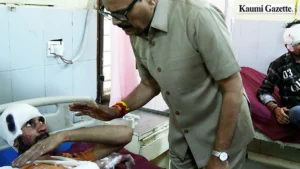 Uttar PradeshThree Dead and Dozens Injured After Bus Plunges Into Ditch on Lucknow-Agra Expressway
 HeadlinesChief Minister Yogi Adityanath alleges mass exclusion of Hindu voters in Uttar Pradesh electoral rolls
 HeadlinesAkhilesh Yadav promises free mustard oil distribution if Samajwadi Party wins Uttar Pradesh elections
More from UP Politics
 Uttar PradeshThirteen killed in three separate road accidents across Uttar Pradesh during Diwali festivities
 Uttar PradeshUttar Pradesh Government Announces Three Percent Hike in Dearness Allowance for State Employees
 Uttar PradeshLUCKNOW
 Uttar PradeshAllahabad High Court criticizes Uttar Pradesh Police over unlawful detention and missing CCTV evidence
 HeadlinesAyodhya illuminates banks with 36 lakh earthen lamps for tenth Deepotsav celebrations
 Uttar PradeshUttar Pradesh government raises dearness allowance for state employees