
Scientists warn 2026 on course to become warmest year on record as COP31 opens
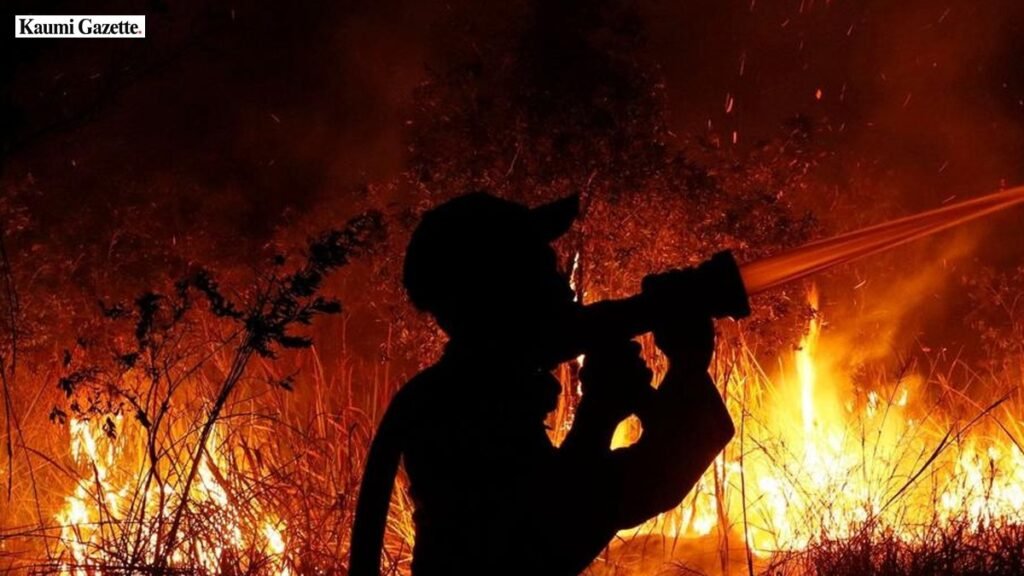
ANTALYA — Scientists have warned that the world is on course to record its hottest year in history, as cumulative greenhouse gas emissions and an active El Niño cycle push global temperatures to unprecedented levels.
The alarming scientific forecasts coincide with the opening of COP31, the United Nations climate summit, where world leaders, ministers and negotiators gathered in the Turkish seaside city of Antalya on Monday. Against a backdrop of severe international weather extremes, the two-week conference opens as governments face intensifying pressure to bridge the widening gap between climate science and policy implementation, while negotiating new global targets for emissions and energy transitions.
Berkeley Earth, an independent US research group, has stated that even with two months remaining in the year, it holds 95% confidence that 2026 will surpass the previous global temperature record set in 2024. Dr Robert Rohde of Berkeley Earth pointed to a compounding sequence of extreme weather events, stating that a run of record warm years is expected as global warming progresses, alongside glacier collapses, record-breaking heatwaves and droughts.
The findings follow confirmation from the European Union’s Copernicus climate service that October was the warmest on record globally. The UN’s World Meteorological Organization (WMO) published its own evaluation on Monday, projecting that 2026 will rank among the four warmest years in recorded history, with 2027 offering no relief as an unusually powerful El Niño persists. WMO Secretary-General Celeste Saulo described the trajectory as giving new meaning to the phrase off the charts.
The primary driver of rising global temperatures remains the increasing concentration of atmospheric carbon dioxide, generated largely by the burning of fossil fuels. Additional greenhouse gases have trapped substantial thermal energy, approximately 90% of which has been absorbed by the oceans. Dr Saulo explained that the El Niño phenomenon does not add new heat to the planet, but rather releases heat from oceans that are at their warmest measurements on record. This dynamic is steering the planet toward an estimated 2.8C of warming above pre-industrial levels by the end of the century, all but guaranteeing that the Paris Agreement goal of limiting warming to 1.5C will be breached.
Addressing delegates on the opening morning, UN climate chief Simon Stiell emphasized the immediate financial and human toll of environmental degradation. “No single COP is a silver bullet. No single conference can bridge the chasm between the science and reality,” Mr Stiell told governments, adding that the urgency of this moment must drive them forward because global heating is already costing the Earth.
The real-world impacts of these thermal shifts have already disrupted populations across participating nations in recent months. Europe has experienced extensive wildfires, while Nepal suffered a sudden glacier collapse that resulted in more than 1,000 fatalities. In the United Kingdom, recent extreme weather prompted domestic warnings last month when Defence Secretary Wes Streeting urged citizens and businesses to prepare for rising natural disasters, including stockpiling food. Mr Streeting cited summer wildfires and record heat—which the Met Office noted was made 130 times more likely by climate change—alongside elevated winter flood risks linked to El Niño. Stephen Belcher, chief scientist at the Met Office, told the media that society is built for a 20th-century climate that no longer exists, noting that ongoing shifts will alter all aspects of daily life.
Negotiators in Antalya face sharp divisions over policy mechanisms designed to curb emissions and manage the transition away from fossil fuels. While emissions continue to rise, countries have expanded renewable energy capacity significantly, with the International Energy Agency predicting that global renewable growth over the next six years will outpace the previous period by 57%. Mr Stiell highlighted the economic advantages of this transition, noting that global renewables saved approximately half a trillion dollars last year amid recent energy shocks.
The host Turkish government advocated for discussions focusing on a new global target for electrification—shifting energy systems away from fossil fuels toward electricity—alongside waste reduction. However, early drafts of EU positions indicate member states would only endorse an electrification goal if it excludes the use of gas as a compliance mechanism. Conversely, nations such as Saudi Arabia and Russia have previously promoted the interim use of gas as a cleaner fossil fuel alternative to coal.
Financial commitments to developing nations represent another critical point of contention. Wealthier nations previously agreed at prior COP summits to triple adaptation funding for developing countries to at least $85 billion annually by 2035. Current data from 2024 indicates that nations have achieved roughly one-third of that target, and the UN noted that ongoing climate damage is substantial, requiring significantly greater financial outlays. However, multiple governments have redirected aid budgets toward domestic defence spending and short-term household relief following oil and gas price spikes induced by the Iran-US war.
Domestically, participating delegations face scrutiny over their own policy trajectories. The UK government reportedly remains reluctant to establish new targets at COP31, arguing that priority should rest on fulfilling existing agreements. Concurrently, sustainability groups have warned that upcoming reductions in UK electric vehicle targets risk undermining national climate goals. British authorities also faced criticism in September from MPs on the International Development Committee over aid budget reductions that impair the UK’s capacity to meet historical climate funding commitments.
In addition to traditional energy and finance agendas, delegates are scheduled to address global artificial intelligence policy, focusing on the escalating water and energy demands of data centres supporting technological expansion. Prime Minister Andy Burnham is among the national leaders participating in discussions throughout the two-week conference.
Related stories
 HeadlinesNvidia Shares Fall After Chief Executive Jensen Huang Discloses Relationship
 WorldSyria confirms military adviser deployment to Saudi Arabia following high-level diplomatic talks
 WorldANTALYA: World leaders and delegates are gathering in Antalya, Turkiye, for the United Nations COP31 climate summit,
More from World
 HeadlinesOusted Prime Minister Sheikh Hasina requests passport to return and surrender before Bangladesh court
 WorldPolish Prosecutors Open Terrorism Investigation After Mass Shooting in Kraków
 WorldWorld leaders convene in Turkey for Cop31 climate summit amid record temperatures
 HeadlinesSaudi coalition intercepts missiles over Riyadh, damaging Aramco building
 HeadlinesIsraeli President Tasks Opposition Leader Gadi Eisenkot With Forming New Government
 WorldUnited States Offers Twenty Million Dollar Reward For Information On Iran Nuclear Programme