
Anand Teltumbde warns state weaponises legal frameworks against opposition to Chief Election Commissioner
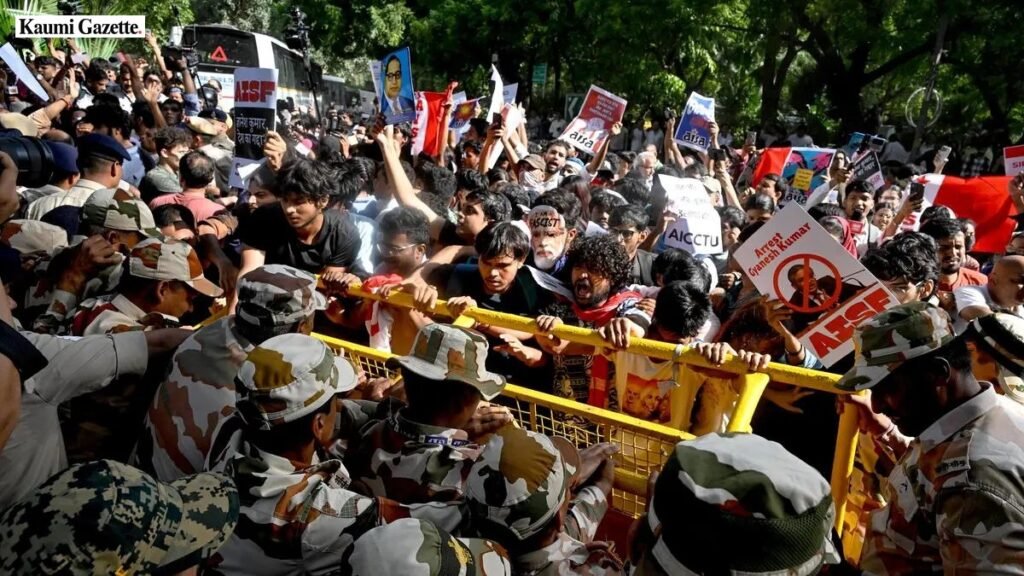
NEW DELHI — Civil rights activist Anand Teltumbde has warned that the state is increasingly weaponising the judicial system and preventive legal frameworks to suppress nationwide opposition against Chief Election Commissioner Gyanesh Kumar.
Writing in a recent commentary, Teltumbde asserted that the Modi administration is mirroring past repressive tactics—such as the 2018 Bhima Koregaon arrests of 16 rights activists and the 2020 crackdown on Citizenship Amendment Act protesters—by entangling critics in protracted legal battles and preventive detentions.
The administrative pushback intensified ahead of an October 10 mobilization called by the Cockroach Janta Party (CJP). Delhi authorities sealed parts of the capital, deploying tens of thousands of police and paramilitary personnel, suspending mobile internet within a four-kilometre radius, shutting metro stations, and integrating drones and facial-recognition technology after denying formal permission for a Jantar Mantar protest.
The strategy targeted organizers before they reached the site. On October 10, CJP leaders Abhijeet Dipke, Saurav Das, and Ashutosh Ranka were detained aboard an Air India flight after it landed at Indira Gandhi International Airport. They secured release only after providing Rs. 50,000 bonds with sureties and undertaking to keep the peace for a year. Security forces also cleared protesters near Jantar Mantar, transporting them to undisclosed locations before releasing them in distant parts of the city.
Authorities subsequently revoked Jantar Mantar’s official designation as a protest venue. On October 13, Delhi Police arrested Das and Ranka for alleged trespassing and slogan-raising at the former protest site, leading a magistrate to remand them to five days of judicial custody.
A CJP call for a “Lehra Do Tiranga” march at Connaught Place on October 16 met with further preventive police action. Abhijeet Dipke and All India Students’ Association president Neha Bora were detained before reaching the area, with Bora picked up at Mandi House and served with a Special Executive Magistrate’s notice demanding a Rs. 10,000 bond and surety under Section 135 of the BNSS. On October 23, the Delhi High Court declined to quash the notice, citing three General Diary entries, six FIRs against Bora, and video recordings. While the High Court directed that relied-upon material be provided to Bora and questioned whether Section 135 contemplates bonds at the threshold or during an inquiry, Bora declared she would not sign the bond.
Teltumbde argued that cumulative FIRs, preventive arrests, and peace bonds function as punishment without requiring the state to secure convictions, imposing severe costs in time, money, and liberty. He cautioned that courts risk validating this pattern by treating each remand, notice, and FIR as an isolated technical matter rather than examining the broader systemic strategy.
Historical parallels indicate that escalation can backfire, with Teltumbde pointing to the 1975–77 Emergency, Bhagat Singh’s trial, the farm law agitations, and recent upheavals in Sri Lanka, Bangladesh, and Nepal as examples where crackdowns galvanized broader political opposition.
Related stories
 Fact CheckFact Check: Viral Video Showing Donald Trump Vandalizing Office Is Artificially Generated
 HeadlinesOusted Prime Minister Sheikh Hasina requests passport to return and surrender before Bangladesh court
 HeadlinesElection Commission simplifies voter reinstatement procedure for specific jurisdictions following judicial scrutiny
More from Analysis
 HeadlinesYouth-led political movements reshape global landscape amid systemic grievances and state crackdowns
 ExplainerPolitical Speculation Intensifies Over Potential Reunion Between Shiromani Akali Dal and Bharatiya Janata Party in Punjab
 HeadlinesCongress launches nationwide campaign demanding removal of Chief Election Commissioner and electoral reforms
 HeadlinesKarnataka voter list shrinks by nearly eighteen percent following revision exercise by Election Commission
 HeadlinesSaudi coalition intercepts missiles over Riyadh, damaging Aramco building
 HeadlinesSonia Gandhi describes upcoming memoir as personal narrative rather than political book