
Supreme Court rules conviction cannot rely solely on unexamined handwriting expert opinion
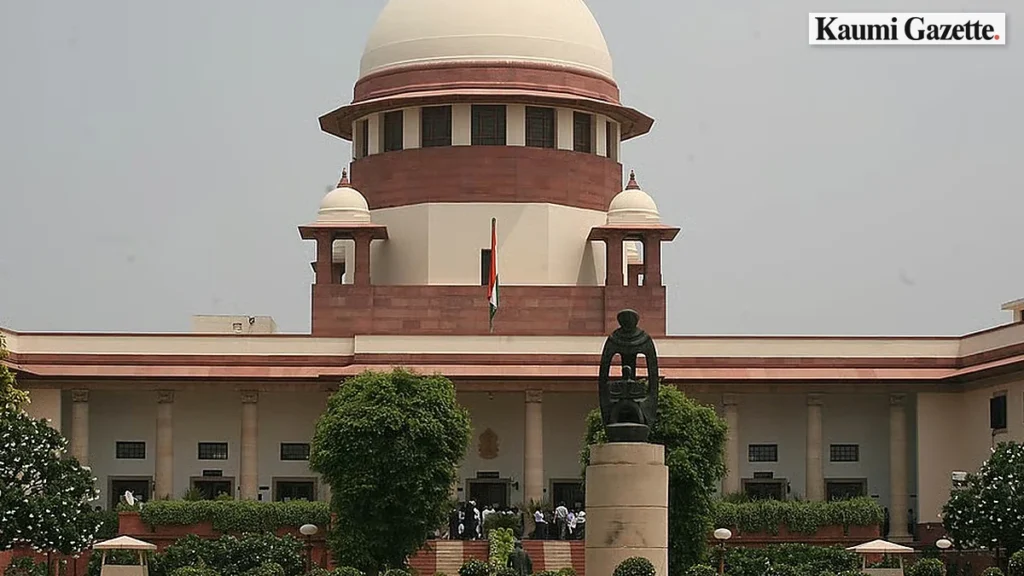
NEW DELHI — The Supreme Court has ruled that a criminal conviction cannot be founded solely on an unexamined handwriting expert’s opinion without substantial corroboration from other direct or circumstantial evidence.
A bench of Justices Sandeep Mehta and Devendra Kumar Upadhyaya delivered the ruling while acquitting a man, Govardhan, who had been previously convicted by lower courts of abetting his wife’s suicide. The apex court emphasized that handwriting comparison is not a perfect science and that expert views under Section 45 of the Evidence Act must be received with great caution.
The case stems from the death of Govardhan’s wife, Anju, who set herself on fire at her parental home on January 18, 2011, and succumbed to burn injuries the same day. An FIR for abetment of suicide was lodged 15 days after the incident by the victim’s mother.
According to background details in the case, Govardhan and Anju were married on November 22, 1996, and shared a son named Hemant. Anju had been living at her father’s house for more than two years prior to her death, after allegedly being turned out of her matrimonial home in February 2009 due to dowry harassment.
A trial court in Jaipur subsequently convicted Govardhan and sentenced him to 10 years in prison, a judgment that was later upheld by the Rajasthan High Court before reaching the Supreme Court.
In its legal observation on expert testimony, the Supreme Court stated that if the prosecution wishes to rely upon the report of a handwriting expert to prove and attribute handwriting on a particular document, it is essential to examine the expert in evidence. The bench noted that because handwriting comparison is not a foolproof science, it may be subject to different interpretations and requires independent corroborative support to sustain a conviction.
Related stories

More from India
 HeadlinesCongress launches nationwide campaign demanding removal of Chief Election Commissioner and electoral reforms
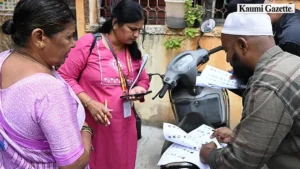 HeadlinesKarnataka voter list shrinks by nearly eighteen percent following revision exercise by Election Commission
 HeadlinesSonia Gandhi describes upcoming memoir as personal narrative rather than political book
 NationalMadhya Pradesh High Court Quashes FIR Against Journalist Uvesh Khan Over Violence Reporting
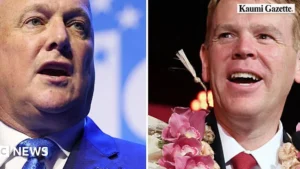 HeadlinesNew Zealand Election Ends in Tight Contest Pointing Toward Coalition Negotiations
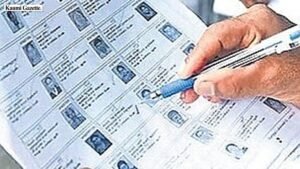 HeadlinesDiscrepancy emerges between electoral rolls in Rajasthan as millions of voters missing from national lists