
Madhya Pradesh High Court Quashes FIR Against Journalist Uvesh Khan Over Violence Reporting

NEW DELHI — The Madhya Pradesh High Court has quashed a first information report registered against independent journalist Uvesh Khan, ruling that reporting on an incident of violence does not, by itself, constitute a criminal offence.
In an order dated October 28, 2026, Justice Himanshu Joshi set aside the police case, observing that the continuation of criminal proceedings would amount to an abuse of the process of law. The high court emphasized that the constitutionally guaranteed right to freedom of speech and expression cannot be curtailed merely because a news report involves a sensitive public incident.
The case stems from video coverage published by Khan on his personal YouTube channel on September 6, 2025. The report detailed violence during a Ganesh immersion procession in Silwani within the Raisen district, where two separate physical altercations occurred resulting in severe injuries. Similar incidents were covered by other media outlets, including News18 Madhya Pradesh-Chhattisgarh.
Two days after the broadcast, on September 8, 2025, an FIR was lodged against Khan under Section 196(1) of the Bharatiya Nagarik Suraksha Sanhita (BNSS), corresponding to Section 153A of the erstwhile Indian Penal Code. The complaint, filed by 40-year-old Rajeev Soni, alleged that the reportage carried the title “Bloody clash during Ganesh Visarjan, violence at two locations, two people seriously injured” and aimed to provoke communal discord by creating fear and confusion within the Hindu community.
Records show that Khan had received multiple calls on September 7 demanding the removal of the video and complied out of concern, yet the legal complaint proceeded regardless. Sources familiar with the matter noted that Khan was singled out despite other outlets covering the same events, severely impacting his independent digital reach.
Representing his defense, Khan maintained that his report concerned factual altercations without promoting disharmony.
Accepting these arguments, Justice Joshi noted that the allegations failed to identify specific expressions or statements intended to promote enmity between communities. Citing legal precedents, including the Supreme Court rulings in Bilal Ahmed Kaloo v. State of Andhra Pradesh (1997) and Patricia Mukhim v. State of Meghalaya (2021), the court reiterated that mens rea—or criminal intent—alongside the active promotion of enmity between at least two distinct groups, remains an essential ingredient of the offence.
The bench observed that the mere incitement of feelings within a single community, without reference to another group, does not attract the provision. Furthermore, the court ruled that the abstract possibility of public outrage or tension does not justify criminal proceedings in the absence of statutory elements.
Related stories
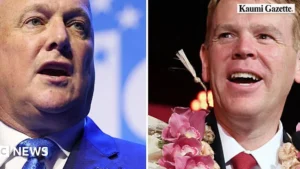 HeadlinesNew Zealand Election Ends in Tight Contest Pointing Toward Coalition Negotiations
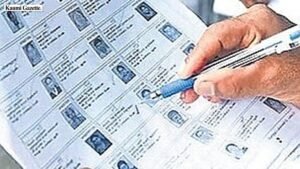 HeadlinesDiscrepancy emerges between electoral rolls in Rajasthan as millions of voters missing from national lists
 HeadlinesCockroach Janta Party Founder Calls for Democratic Removal of Government at Kochi Protest
More from India
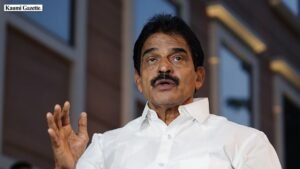 HeadlinesCongress vows indefinite nationwide agitation for removal of Chief Election Commissioner
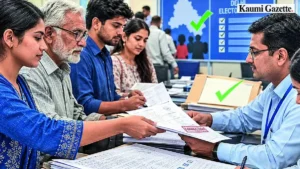 HeadlinesElection Commission orders verification of deleted voters in Andhra Pradesh electoral rolls
 HeadlinesCivil rights analysis reveals voter list discrepancy in Rajasthan local polls
 HeadlinesKarnataka Electoral Officer admits duplicate voter ID generation following roll revision
 HeadlinesRetired Judge Biswajit Basu resigns from West Bengal electoral roll appellate tribunal
 NationalDelhi Air Quality Plummets to Severe Levels as Authorities Enforce New Restrictions