
New Zealand Election Ends in Tight Contest Pointing Toward Coalition Negotiations
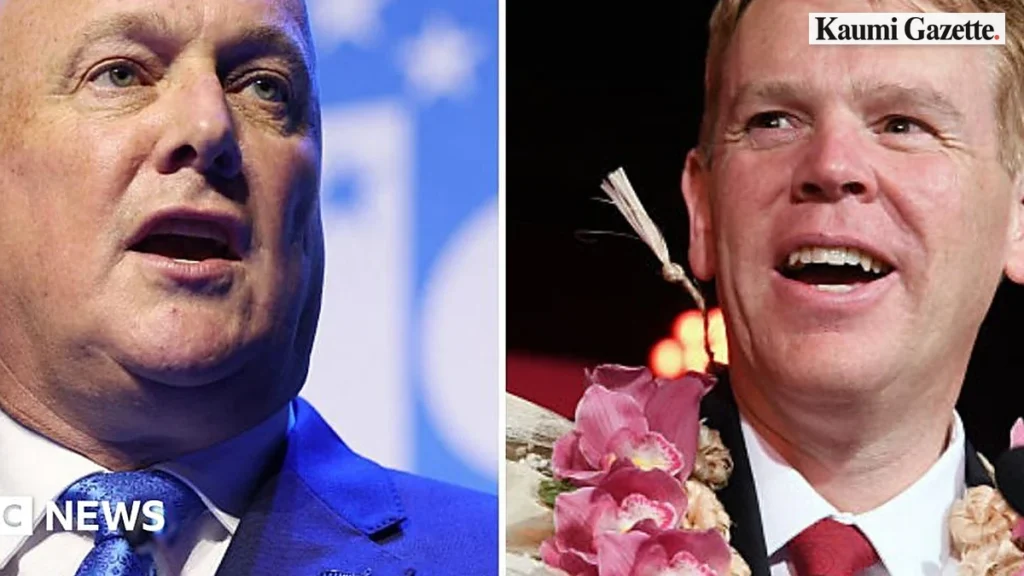
WELLINGTON — New Zealand’s general election ended in a tight contest on Saturday, with preliminary results failing to produce a clear winner and pointing toward coalition negotiations to form a new government.
Prime Minister Christopher Luxon’s centre-right National Party secured 42 seats, leaving it 19 short of the simple majority required to govern alone. Meanwhile, opposition leader Chris Hipkins and the Labour Party won 36 seats following a campaign heavily shaped by economic concerns, the cost of living, and unemployment.
Under New Zealand’s mixed-member proportional voting system, most governments are formed through coalitions, requiring parties to reach agreements across parliamentary lines. With more than 99% of votes counted, preliminary seat projections show the Greens holding 16 seats, ACT on 13, New Zealand First on 12, the Opportunity Party on 7, and Te Pāti Māori on 5. Combined support for the two major parties dropped to roughly 60%, reflecting historically low major-party backing.
The electoral commission stated that the official results will not be announced until November 27, leaving special votes to be processed and counted over the next three weeks.
Mr Luxon stated that he would run a caretaker government until the final results are confirmed later in the month.
Mr Hipkins stated that the next parliament will require all parties to compromise, work together, and find common ground.
The election outcome was further complicated by the Opportunity Party crossing the 5% threshold to enter parliament for the first time. Qiulae Wong stated that the Opportunity Party would negotiate first with the party that secures the most seats and believes they can change the way politics is done.
Andrew Geddis stated that the Opportunity Party could determine which bloc is able to govern, adding that results will depend on fine vote margins and special votes.
Voter sentiment ahead of the vote reflected broader economic strains. Julian McCrann stated that the cost of living was the main issue for many New Zealanders and that Mr Luxon had not really delivered on solving economic issues. Annual social cohesion surveys indicated that more than half of the country no longer views New Zealand as a land of opportunity, coinciding with record numbers of citizens leaving for Australia.
Meaningful negotiations for forming a coalition government will take place after the electoral commission confirms the final results on November 27.
Related stories
 NationalMadhya Pradesh High Court Quashes FIR Against Journalist Uvesh Khan Over Violence Reporting
 HeadlinesIsraeli President Tasks Opposition Leader Gadi Eisenkot With Forming New Government
 HeadlinesDiscrepancy emerges between electoral rolls in Rajasthan as millions of voters missing from national lists
More from India
 HeadlinesCockroach Janta Party Founder Calls for Democratic Removal of Government at Kochi Protest
 HeadlinesCongress vows indefinite nationwide agitation for removal of Chief Election Commissioner
 HeadlinesElection Commission orders verification of deleted voters in Andhra Pradesh electoral rolls
 HeadlinesCivil rights analysis reveals voter list discrepancy in Rajasthan local polls
 HeadlinesAyodhya illuminates banks with 36 lakh earthen lamps for tenth Deepotsav celebrations
 HeadlinesKarnataka Electoral Officer admits duplicate voter ID generation following roll revision