
Supreme Court signals preference for restricting Delhi traffic to BS-VI vehicles while ordering status quo
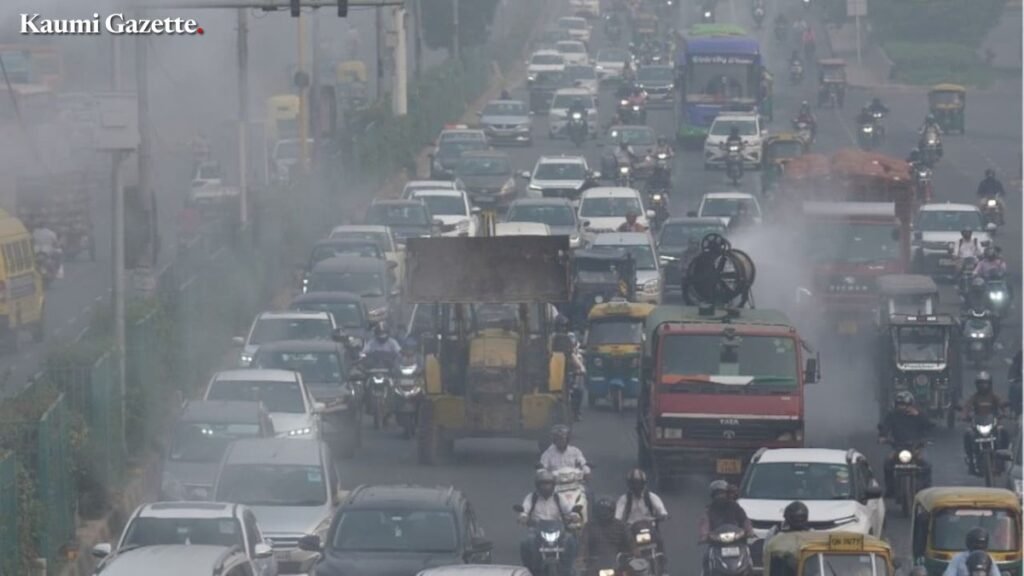
NEW DELHI: The Supreme Court on Monday indicated that it favours restricting vehicular traffic in Delhi exclusively to those complying with Bharat Stage VI (BS-VI) emission standards, though it ordered a one-month status quo on the matter.
Hearing a petition concerning the Delhi air pollution crisis, Justice Joymalya Bagchi stated that the court wanted only BS-VI compliant vehicles to operate in the national capital, and potentially across the wider National Capital Region (NCR). The observation followed submissions by a counsel alleging that authorities had halted Pollution Under Control (PUC) tests for BS-IV vehicles, creating difficulties for owners and leaving some unable to refuel.
While Justice Bagchi noted that restrictions were intended to limit operations to BS-VI vehicles, the Chief Justice of India (CJI) announced that the court would maintain the status quo for at least one month without immediate intervention. Delhi has already prohibited the entry of non-BS-VI petrol and diesel vehicles registered outside the national capital since November 1 under its Winter Action Plan.
During the proceedings, the Bench also examined long-term measures to curb vehicular emissions by phasing out heavy commercial vehicles over a five-year period. The CJI questioned why authorities could not implement gradual steps to prevent heavy commercial vehicles from entering Delhi over the next five years. The court suggested exploring battery-operated alternatives and border storage facilities to maintain the supply of essential goods without requiring heavy commercial vehicles to enter the city.
The CJI cautioned against a blanket ban, noting that Delhi residents rely on regular supplies of food, vegetables and other essential commodities, and that an immediate total ban could lead to drastic consequences.
The Supreme Court also questioned the role of neighbouring states in addressing regional air pollution, with the CJI remarking that neighbouring jurisdictions appeared to be participating passively. The Bench observed that Delhi had experienced favourable weather conditions this winter, stating that nature had helped keep pollution levels in check.
Counsel informed the court that the volume of heavy commercial vehicles entering Delhi had dropped by 30 per cent following permission to impose the Environment Compensation Charge (ECC). Separately, the CJI questioned the Municipal Corporation of Delhi (MCD) over what he termed a rosy picture presented to the bench, directing authorities to submit sworn affidavits detailing remedial actions.
The court directed the Advocates General of Punjab, Haryana, Uttar Pradesh, Rajasthan and Delhi to appear at the next hearing. The bench adjourned the proceedings while seeking detailed status reports from all concerned states regarding anti-pollution measures before considering further directions.
Related stories
 NationalMeta reports sharp surge in content restrictions across India platforms following regulatory changes
 NationalBisleri asserts product safety and maintains it received no formal notice over regulatory action
 NationalSupreme Court panel proposes three-year roadmap to phase out riverbed sand mining
More from India
 NationalUP, Uttarakhand Plan Joint Promotion of Neem Karoli Baba and Mahabharata Tourism Circuits
 HeadlinesIndia faces power shortage risks amid depleting coal stocks and thermal capacity constraints
 NationalSupreme Court suspends life sentence and grants bail to two convicts in Bilkis Bano case
 HeadlinesDelhi Police Questions Status of Reel Makers as Journalists in Supreme Court Affidavit
 HeadlinesOpposition Leaders Petition Supreme Court For Judicial Scrutiny Of Election Commission Voter Rolls Revision
 HeadlinesOpposition INDIA bloc leaders approach Supreme Court seeking factual clarity from Election Commission