
Uttar Pradesh establishes digital libraries in over 57,000 village panchayats
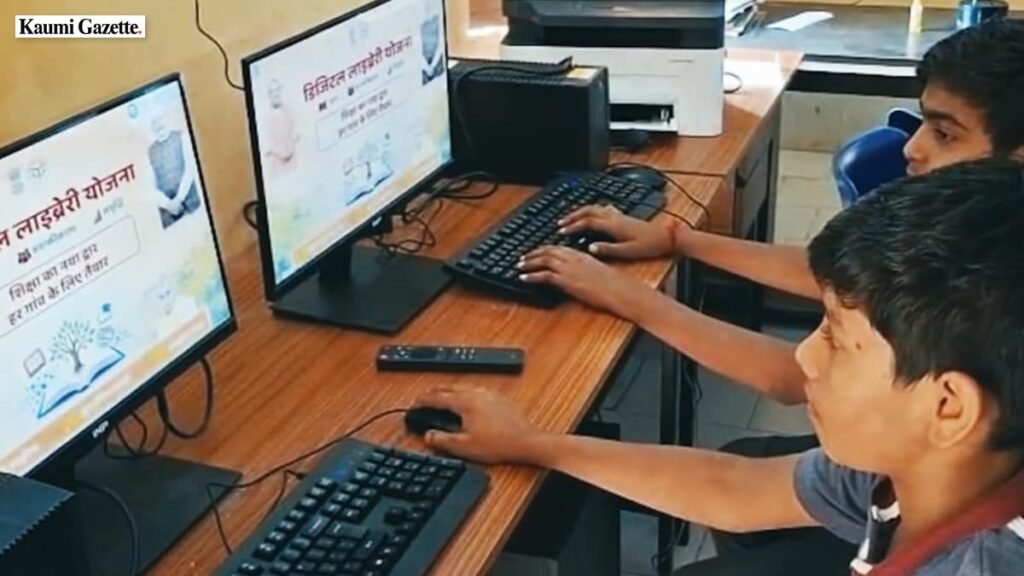
Educational access in rural Uttar Pradesh has expanded significantly with digital libraries now established in more than 57,000 village panchayats, ending the traditional dependence on cities for competitive exam preparation.
The state government’s gram panchayat digital library initiative has scaled up from just 76 state and district-level e-library locations prior to 2017 to reach 57,600 village panchayats. The initiative aims to save rural students time and money previously spent traveling to urban centers for coaching and reference books, allowing them to redirect those resources toward e-learning and local studies.
Beyond community libraries, the digital infrastructure expansion includes the distribution of nearly 6 million smartphones and tablets to youth across the state. Technical integration in basic education includes smart classrooms established in more than 32,000 government schools and ICT labs set up in over 15,000 schools.
Local administrative spaces have also been repurposed. Village panchayat secretariats now function as technology and information hubs rather than solely handling administrative paperwork, bolstering parental confidence in rural educational standards.
Bahraich district’s Khasaha Mohammadpur village in the Tejwapur block has emerged as a functional model for the rural library network. The local gram panchayat secretariat combines traditional reading materials with modern technology, featuring computers, printers, high-speed Wi-Fi, smart TVs, and CCTV surveillance. The facility houses standard reference texts alongside literature from the National Book Trust to support students preparing for competitive examinations.
Related stories


More from UP Politics
 Uttar PradeshVerdict Expected in 2018 Killing of Apple Executive Vivek Tiwari in Lucknow
 Uttar PradeshUPMSP Result 2026 (OUT) Live: Class 10th results declared at upresults.nic.in; website crashes, how to check scorecards
 Uttar PradeshUP Board 10th, 12th result date and time: UPMSP to release Class 10, 12 marksheet on 23 April — official notice here
 Uttar PradeshUP Board Class 10th, 12th result to be released tomorrow: Here’s what students need to know
 Uttar PradeshUP Board Result 2026: ‘Coming soon’- Can you check result on Digilocker? When to check scorecard on upmsp.edu.inUttar PradeshWaiting for another take-off: Dealing with U.P.’s stalled airports