
Bhadohi Woman Turns Family Financial Crisis into Leaf-Plate Business, Creates Four Jobs

BHADOHI: When her husband lost his employment during the COVID-19 pandemic, Babita Devi, a resident of Dighwat village in Uttar Pradesh’s Bhadohi district, faced the challenge of supporting her family through an uncertain financial period.
Instead of relying entirely on her husband’s income, she decided to establish a small manufacturing business producing disposable leaf plates, commonly known as pattal.
Today, the enterprise provides a source of income for her household and employment for four other people, according to a case study released by the Uttar Pradesh Rural Development Department.
From Financial Difficulties to Entrepreneurship
Babita Devi, who studied up to the Bachelor of Arts level, lives in Dighwat village in Aurai block.
Her husband previously worked as a migrant labourer in Kanpur. When he lost his job during the pandemic and returned home, the family faced additional financial pressure.
Babita decided to explore opportunities for self-employment.
She borrowed money from local lenders to purchase a plate-making machine from Varanasi.
However, obtaining the equipment was only the first step.
To understand the manufacturing process, she spent approximately six months working with the machine supplier, acquiring practical knowledge of production and operations.
Building a Business Beyond Manufacturing
Babita subsequently established her manufacturing unit with an investment of approximately ₹1.20 lakh.
The unit operates a double-die machine capable of producing around 1,000 plates per hour, according to the department.
The release states that raw materials costing approximately ₹35,000–₹38,000 can produce around 20,000 plates, although the figures do not establish the enterprise’s final production cost per plate.
Babita also recognised the importance of finding reliable buyers.
She began approaching local markets and developing relationships with retailers and wholesalers.
Her current customer network reportedly includes four regular retail buyers and three wholesale traders, along with customers purchasing plates for weddings, festivals and other social events.
Support from Women’s Self-Help Networks
During the development of her enterprise, Babita became associated with women’s self-help group networks and received support through training and market-linkage activities.
The department identified Development Alternatives and local community organisations among the groups involved in helping her strengthen business operations.
These networks reportedly helped her improve access to raw materials and customers.
Monthly Income Reaches ₹25,000
According to the government case study, Babita currently earns approximately ₹15,000–₹25,000 per month, depending on seasonal demand.
Her manufacturing operation also provides work for four other people.
The department has not supplied independently audited financial statements or a detailed breakdown of revenue, expenses and profits.
Babita now intends to expand production by purchasing another machine.
She is also considering solar power to reduce dependence on conventional electricity and a vehicle or e-rickshaw to improve deliveries.
A Lesson in Rural Entrepreneurship
Babita’s experience illustrates several challenges facing small rural businesses: access to initial capital, technical training, reliable suppliers and customers.
Her enterprise also demonstrates the importance of market access in determining whether a small manufacturing operation can sustain itself.
While government-backed networks can support entrepreneurs, the success of individual ventures also depends on demand, operating costs and the ability to maintain consistent sales.
For Babita, the immediate objective is to expand a business that began as a response to financial hardship into a more sustainable source of livelihood.
Bhadohi Woman Turns Family Financial Crisis into Leaf-Plate Business, Creates Four Jobs
BHADOHI: When her husband lost his employment during the COVID-19 pandemic, Babita Devi, a resident of Dighwat village in Uttar Pradesh’s Bhadohi district, faced the challenge of supporting her family through an uncertain financial period.
Instead of relying entirely on her husband’s income, she decided to establish a small manufacturing business producing disposable leaf plates, commonly known as pattal.
Today, the enterprise provides a source of income for her household and employment for four other people, according to a case study released by the Uttar Pradesh Rural Development Department.
From Financial Difficulties to Entrepreneurship
Babita Devi, who studied up to the Bachelor of Arts level, lives in Dighwat village in Aurai block.
Her husband previously worked as a migrant labourer in Kanpur. When he lost his job during the pandemic and returned home, the family faced additional financial pressure.
Babita decided to explore opportunities for self-employment.
She borrowed money from local lenders to purchase a plate-making machine from Varanasi.
However, obtaining the equipment was only the first step.
To understand the manufacturing process, she spent approximately six months working with the machine supplier, acquiring practical knowledge of production and operations.
Building a Business Beyond Manufacturing
Babita subsequently established her manufacturing unit with an investment of approximately ₹1.20 lakh.
The unit operates a double-die machine capable of producing around 1,000 plates per hour, according to the department.
The release states that raw materials costing approximately ₹35,000–₹38,000 can produce around 20,000 plates, although the figures do not establish the enterprise’s final production cost per plate.
Babita also recognised the importance of finding reliable buyers.
She began approaching local markets and developing relationships with retailers and wholesalers.
Her current customer network reportedly includes four regular retail buyers and three wholesale traders, along with customers purchasing plates for weddings, festivals and other social events.
Support from Women’s Self-Help Networks
During the development of her enterprise, Babita became associated with women’s self-help group networks and received support through training and market-linkage activities.
The department identified Development Alternatives and local community organisations among the groups involved in helping her strengthen business operations.
These networks reportedly helped her improve access to raw materials and customers.
Monthly Income Reaches ₹25,000
According to the government case study, Babita currently earns approximately ₹15,000–₹25,000 per month, depending on seasonal demand.
Her manufacturing operation also provides work for four other people.
The department has not supplied independently audited financial statements or a detailed breakdown of revenue, expenses and profits.
Babita now intends to expand production by purchasing another machine.
She is also considering solar power to reduce dependence on conventional electricity and a vehicle or e-rickshaw to improve deliveries.
A Lesson in Rural Entrepreneurship
Babita’s experience illustrates several challenges facing small rural businesses: access to initial capital, technical training, reliable suppliers and customers.
Her enterprise also demonstrates the importance of market access in determining whether a small manufacturing operation can sustain itself.
While government-backed networks can support entrepreneurs, the success of individual ventures also depends on demand, operating costs and the ability to maintain consistent sales.
For Babita, the immediate objective is to expand a business that began as a response to financial hardship into a more sustainable source of livelihood.
Related stories
 HeadlinesGrameen Bank branches face coordinated attacks amid political tensions in Bangladesh
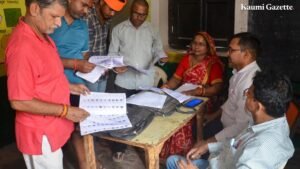 HeadlinesSupreme Court directs priority hearings for millions of appeals regarding deleted voter names in West Bengal
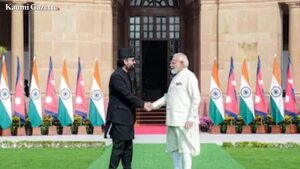 HeadlinesNepali Prime Minister Balen Shah Prioritizes India for First Foreign Visit Amid Economic and Diplomatic Realities
More from UP Politics
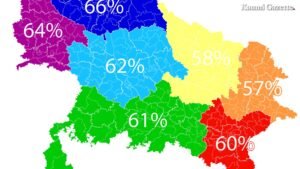 HeadlinesLUCKNOW: Uttar Pradesh is set for a major political show of strength on November 26, 2026, coinciding with
 HeadlinesUN Climate Summit in Antalya Concludes Without Consensus Due to Divisions Over Fossil Fuels and Finance
 HeadlinesSupreme Court directs Election Commission to prioritize voter list deletion appeals in West Bengal
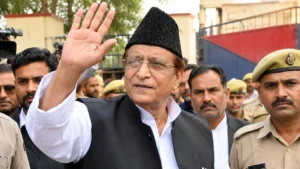 OpinionAzam Khan: Political Persecution to Revolution Chants
 Uttar PradeshState Museum in Lucknow Hosts Heritage Week Programmes for Students
 Uttar PradeshVindhyachal Shrines Record Surge in Pilgrim Visits Amid State Tourism Push