
Nepali Prime Minister Balen Shah Prioritizes India for First Foreign Visit Amid Economic and Diplomatic Realities
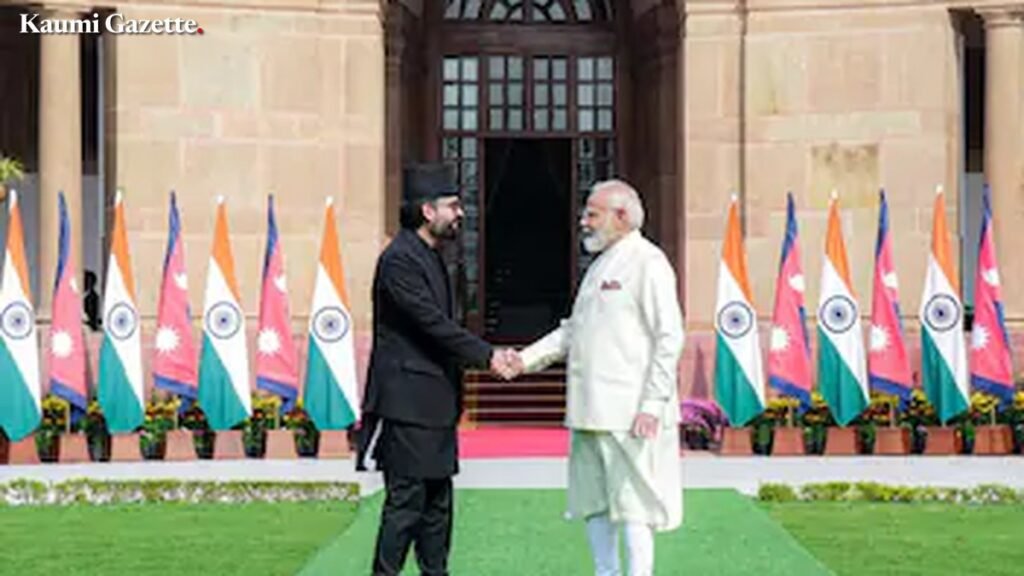
NEW DELHI: Nepal’s Prime Minister Balen Shah chose India for his first bilateral foreign visit, marking a significant diplomatic turn for the 36-year-old leader who had initially been perceived as close to Beijing.
A former rapper turned politician, Shah is Nepal’s youngest prime minister. His party, the Rastriya Swatantra Party (RSP), secured a major electoral victory in the March 2026 elections with strong backing from young voters. Analysts point to five primary factors driving his decision to prioritize New Delhi over China for his debut overseas trip.
Diplomatic relations required mending after Shah made a controversial statement in Parliament in May 2026 regarding border disputes, which had heightened bilateral tensions. The visit served to normalize ties, supported by a favorable atmosphere created when India dispatched immediate relief to Nepal during severe flooding in August 2026.
Economic dependence heavily influenced the decision. India remains Nepal’s largest trading partner, receiving approximately 82% of Nepal’s exports while supplying the majority of its petroleum and other essential goods.
Reconstruction needs also directed the government’s focus toward New Delhi. The August 2026 floods caused massive devastation in Nepal, resulting in over 1,450 deaths and creating an urgent demand for substantial financial assistance, making India the closest and largest potential benefactor.
In the energy sector, India holds a dominant position by purchasing roughly 1,200 megawatts of electricity from Nepal, generating significant revenue for Kathmandu. Because engaging Chinese contractors can invite regulatory hurdles from India, securing agreements directly with Delhi is considered essential for Nepal’s hydropower exports. Furthermore, trade costs have risen due to the continued closure of border points between Nepal and China, such as Tatopani and Rasuwagadhi, keeping the Indian trade route as the stronger and more viable alternative.
During the roughly 25-hour visit, several major agreements and announcements were finalized. India announced a financial assistance package of Rs 15,000 crore for Nepal, comprising a grant of Rs 3,500 crore and a line of credit amounting to Rs 11,500 crore.
The two sides signed eight agreements spanning space, security, health, education, and urban development. These include accords on satellite communication networking between the Indian Space Research Organisation (ISRO) and Nepal, cooperation in forensic science, police training, civil service capacity building, and the promotion of Ayurveda.
Six connectivity and energy projects were inaugurated during the visit, including the launch of the new “Saryu-Kamla Express” train connecting Ayodhya and Janakpur. Additionally, Nepal gained access to maritime trade through India’s Deendayal Port in Gujarat and Paradip Port in Odisha.
Despite choosing India for his first visit, analysts note that Shah has not cut ties with China. In September 2025, he proposed a “Himalayan Climate Resilience Mechanism” at the United Nations General Assembly that included both India and China, reflecting an ongoing effort to balance relations between the two regional powers. Prior to his trip to India, Shah sent a 20-member parliamentary delegation on an 11-day visit to China beginning November 15, while Beijing has also extended an invitation for him to visit Beijing and maintained active diplomatic contact.
Not all bilateral issues were resolved during the discussions. The long-standing border disputes concerning Kalapani, Lipulekh, and Limpiyadhura remain unresolved and were absent from the official agenda. Nepal’s long-standing requests for additional air-entry routes through Indian airspace, revisions to the trade treaty, and amendments to the 1950 treaty also remain unfulfilled.
The visit underscores that Nepal’s foreign policy under the new administration is driven by economic realities and national interests rather than sentiment alone, with trade, electricity exports, and reconstruction needs compelling the government to engage Delhi. However, underlying trust deficits persist, and the immediate challenge lies in ground-level implementation of the newly signed agreements.
Related stories
 NationalPalestinian Envoy Abdullah Abu Shawesh Meets Sri Sri Ravi Shankar at Art of Living Centre
 NationalNorthern Railway Organizes Capacity Building Programe for Traction Power Controllers (TPCs)
 HeadlinesCongress plans nationwide protests on Constitution Day over alleged electoral roll irregularities
More from India
 HeadlinesGrameen Bank branches face coordinated attacks amid political tensions in Bangladesh
 HeadlinesSupreme Court directs priority hearings for millions of appeals regarding deleted voter names in West Bengal
 HeadlinesLUCKNOW: Uttar Pradesh is set for a major political show of strength on November 26, 2026, coinciding with
 HeadlinesUN Climate Summit in Antalya Concludes Without Consensus Due to Divisions Over Fossil Fuels and Finance
 NationalCockroach Janata Party Leader Sourav Das Alleges Travel Restrictions at Delhi Airport
 HeadlinesSupreme Court directs Election Commission to prioritize voter list deletion appeals in West Bengal