
India and Bangladesh Meet in Dhaka as Ganga Water Sharing Treaty Nears Expiry
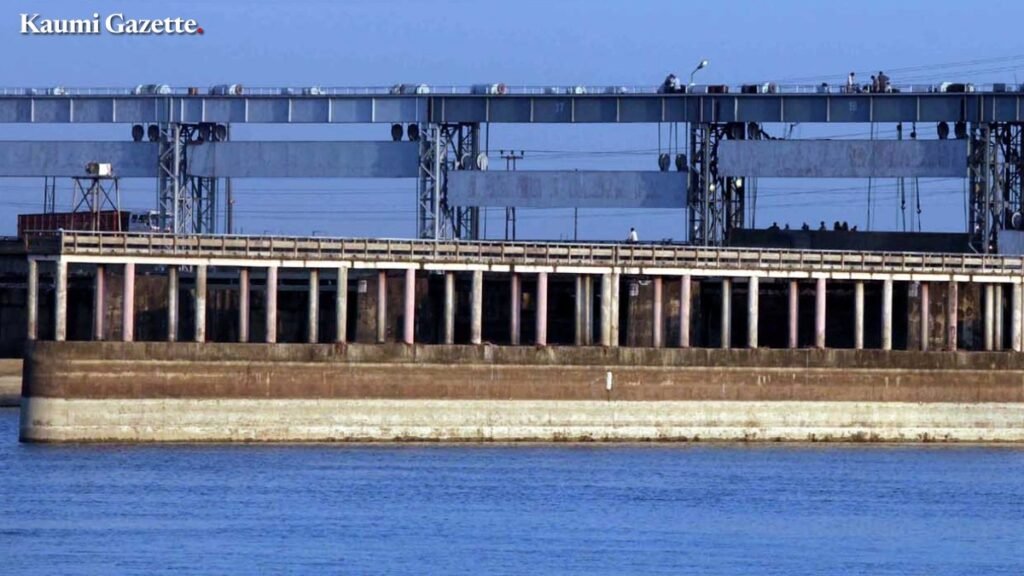
NEW DELHI: Representatives from India and Bangladesh met in Dhaka for the 91st routine meeting of the India-Bangladesh Joint Committee, just weeks before the Ganga Water Sharing Treaty officially lapses on December 12.
Although there was no official word on whether discussions for renewing the 1996 bilateral pact took place during the November 21–22 weekend meetings, reports indicate Bangladesh appears agreeable to renewing the existing agreement rather than seeking a completely fresh accord.
The 30-year treaty was signed in December 1996 by then-Prime Ministers H.D. Deve Gowda and Sheikh Hasina. It established a flow-sharing mechanism for the annual dry season from January to May, underpinned by a joint committee to monitor implementation. The pact instituted a three-tiered allocation system based on historical average flow data from 1949 to 1988, measured at Farakka.
Under the provisions, if the water flow falls to or below 70,000 cusecs (cubic feet per second), the two nations share the water equally. For flows between 70,000 and 75,000 cusecs, Bangladesh is entitled to 35,000 cusecs while India retains the remainder. If flows reach 75,000 cusecs or more, India receives 40,000 cusecs and Bangladesh receives the balance. An additional clause guarantees both countries 35,000 cusecs in alternate three 10-day periods between March 11 and May 10 each year.
The treaty also includes an emergency provision under Article II(iii). It mandates immediate bilateral consultations for equitable adjustments if flows at Farakka drop below 50,000 cusecs in any 10-day period. Disputes are referred to the Joint Committee, and subsequently to the Joint Rivers Commission (JRC), established in 1972 to manage 54 shared rivers.
Tensions over the Ganga waters date back to the 1950s when India proposed constructing the Farakka barrage in West Bengal, located about 18 km from the border with then-East Pakistan. Completed in 1975, the barrage diverted water to the Hooghly river to flush silt and keep the Kolkata port navigable. The diversion sparked significant friction, culminating in the 1976 “Farakka Long March” led by Maulana Bhashani, who argued the barrage caused desertification and drying of the Padma river in Bangladesh. Ad hoc agreements followed in 1977, 1982, and 1985, but failed to provide lasting solutions until the 1996 treaty.
Both nations have faced criticism domestically over the pact’s failure to account for rising populations and climate change. Prior reports suggested India sought 30,000 to 35,000 cusecs additionally during the March 11–May 10 lean period alongside a shorter renewal duration of 10 to 15 years. Meanwhile, Press Trust of India (PTI) reported that Bangladesh sought a guaranteed release of 40,000 cusecs between February and May, a longer renewal period, and enhanced flood data sharing.
A central sticking point is Bangladesh’s demand to reinstate a minimum guarantee similar to the 1977 ad hoc agreement, which ensured 80% of scheduled allocations during lean periods regardless of actual availability. Nilanjan Ghosh of the Observer Research Foundation (ORF) noted that a fixed volumetric guarantee independent of actual flows would impose an asymmetric hydrological risk on upstream India, making it an impracticable demand amid climate-induced shortages.
Political developments have added complexity. Following the Bangladesh Nationalist Party’s February 2026 election victory under Tarique Rahman, treaty renewal was expected to be a priority. However, diplomatic friction persists over former Prime Minister Sheikh Hasina’s exile in New Delhi since August 2024. Domestically, the Janata Dal (United), an ally of the BJP, opposed the renewal in Bihar last August, terming the pact detrimental to the state’s interests. India’s 2025 decision to put the 1960 Indus Waters Treaty with Pakistan in abeyance has also generated caution in Dhaka.
Srinivas Chokkakula, president and chief executive of the Centre for Policy Research, wrote in a July 2026 op-ed that the upcoming treaty renewal offers an opportunity to reimagine a regional strategic vision. He emphasized the need for robust transborder institutions to handle broader issues, including data collection, dispute resolution, and risk management.
Related stories
 ExplainerSEBI proposes scrapping additional disclosure requirements for foreign portfolio investors
 ExplainerBHOPAL: Researchers at the ICAR-National Institute of High Security Animal Diseases (NIHSAD) have formulated India’s inaugural domestic vaccine
 ExplainerTelangana decides to phase out standalone junior colleges to integrate senior secondary classes
More from Explainers
 ExplainerEl Niño dryness drives India food inflation to twenty-three-month high
 ExplainerDelhi Government Considers Cloud Seeding Trials to Combat Post-Diwali Air Pollution
 ExplainerData Analysis Shows Firecrackers Drove Majority of Delhi Pollution Following Diwali
 ExplainerPolitical Speculation Intensifies Over Potential Reunion Between Shiromani Akali Dal and Bharatiya Janata Party in Punjab
 ExplainerUttar Pradesh government increases Dearness Allowance by five percent for state employees
 ExplainerCentre explores legal safe harbour review for social media platforms amid accountability push