
Congress leader Jairam Ramesh accuses Centre of seeking to manipulate constituencies through delimitation
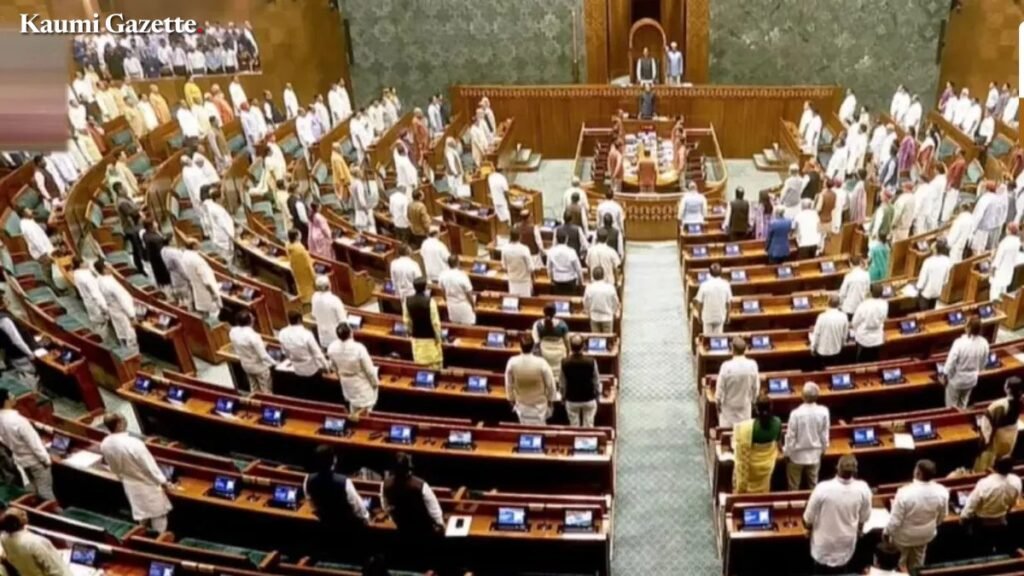
NEW DELHI: Congress general secretary Jairam Ramesh has accused the BJP-led Centre of seeking to manipulate the composition of electoral constituencies through a proposed delimitation exercise, raising fresh political concerns over the practice known as gerrymandering.
The criticism followed the Union Cabinet’s decision to clear a constitutional amendment Bill seeking to increase the number of Lok Sabha seats across states by 50% while facilitating the implementation of women’s reservation from the 2029 general election. The measure marks a fresh push for a delimitation process that the government unsuccessfully sought to initiate in April. Unlike the earlier legislative push, the current Bill explicitly provides for a uniform increase in seats across states.
While a uniform increase would broadly preserve the relative representation of states in Parliament, how electoral boundaries are redrawn within individual states has emerged as a contentious political debate.
Gerrymandering is defined as the deliberate practice of manipulating electoral boundaries to favour one political party or demographic group, or to dilute the influence of another. In countries such as India and the United States, where representatives are elected from individual constituencies, the geographical distribution of voters is frequently as decisive as their political preferences in determining electoral outcomes.
The term combines the surname of Elbridge Gerry, the fifth US Vice President and governor of Massachusetts, with the word salamander. In 1812, Gerry signed a bill to reshape state Senate districts to favour his party, resulting in oddly shaped legislative districts. A political cartoon from that year depicted one such district in Essex County as a mythical creature, dubbing it the Gerry-mander.
The practice typically involves packing and cracking techniques. Packing involves concentrating a political party’s supporters into a select few constituencies where candidates win by large margins, thereby limiting its overall influence elsewhere. Cracking involves splitting concentrations of a party’s supporters or specific demographic groups across several districts to leave them in a minority in each.
Two other methods target incumbent legislators directly. Hijacking redraws boundaries to force two sitting lawmakers to compete against each other in the same constituency, eliminating a rival. Kidnapping adjusts boundaries so that an incumbent legislator’s residence falls outside their existing constituency, separating them from their established voter base.
International examples highlight how redistricting disputes play out. Ahead of the November 3 US midterm elections, gerrymandering became a central issue as both Republican and Democratic state legislatures redrawn congressional districts. In August 2025, Texas adopted a new electoral map at the insistence of President Donald Trump to help Republicans secure five additional seats in the US House of Representatives. California responded by approving a measure in November 2025 temporarily replacing maps drawn by an independent commission with maps crafted by the state legislature.
Despite these efforts, Republican attempts to retain control of the House of Representatives through redistricting ultimately proved unsuccessful. In Texas, Republicans won only one of the five targeted Democratic-held seats while losing two of their own, while in California, Democrats captured all five targeted Republican-held seats. The results illustrated the limitations of gerrymandering, showing that electoral advantages gained through boundary manipulation can be eroded if voters shift their allegiances.
The practice has also faced judicial hurdles. In 2019, the US Supreme Court ruled in a 5-4 verdict on cases from North Carolina and Maryland that claims of partisan gerrymandering were beyond the remit of federal courts, though electoral maps remain challengeable on grounds of racial discrimination.
Safeguards against the practice include entrusting boundary delimitation to independent bodies. In Australia, independent committees redraw federal electoral boundaries based on legally prescribed criteria, including registered voter counts, common economic and social interests, geography, and transport links, while incorporating public submissions.
In India, successive nationwide delimitation exercises have historically been conducted by statutory commissions headed by judges. Under the Delimitation Act, 2002, a three-member commission comprises a serving or former Supreme Court judge appointed by the Centre, the Chief Election Commissioner or a nominated Election Commissioner, and the State Election Commissioner of the concerned state. The Act mandates criteria such as geographical compactness, existing administrative boundaries, and public convenience, alongside public hearings on draft proposals.
However, political questions have been raised regarding the framework and institutional oversight. During parliamentary debates in April, DMK MP Kanimozhi questioned why the proposed legislation did not require the Centre to consult the Chief Justice of India or state governments when appointing the Commission’s chairperson.
Ramesh has similarly questioned the role of Chief Election Commissioner Gyanesh Kumar in the proposed exercise. Those concerns follow an investigation published by The Indian Express on September 23, which revealed that Election Commissioners Sukhbir Singh Sandhu and Vivek Joshi had recorded objections on at least 14 occasions over a 10-month period to steps taken by the poll panel under Kumar, including decisions taken without their knowledge regarding procedures for adding and deleting voters during the Special Intensive Revision of electoral rolls.
While the Election Commission maintained that the disagreements were part of internal deliberations and that decisions concerning the revision had been unanimous, subsequent reports on November 4 showed the Commission reversed nearly all the disputed decisions.
Related stories
 HeadlinesIndian government summons parliament for special sitting amid opposition criticism
 HeadlinesAzam Khan criticizes Congress during Samajwadi Party manifesto launch for Uttar Pradesh elections
 HeadlinesCockroach Janata Party founder challenges Mumbai Police to arrest him following Look Out Circular
More from India
 HeadlinesUttar Pradesh Chief Electoral Officer Reports Millions Unenrolled in Voter Rolls
 HeadlinesPolice initiate document checks for voters seeking re-inclusion in West Bengal
 NationalSupreme Court Rules Sanctioning Authority Cannot Reverse Prosecution Refusal Without Fresh Material
 HeadlinesSamajwadi Party Releases 2027 Election Manifesto Highlighting Employment and Welfare Pledges
 HeadlinesSupreme Court questions status of self-proclaimed journalists during law enforcement operations
 HeadlinesParliament special sitting revives debate over women quota and delimitation