
GST Council deliberates on tax offence decriminalisation and compliance reforms
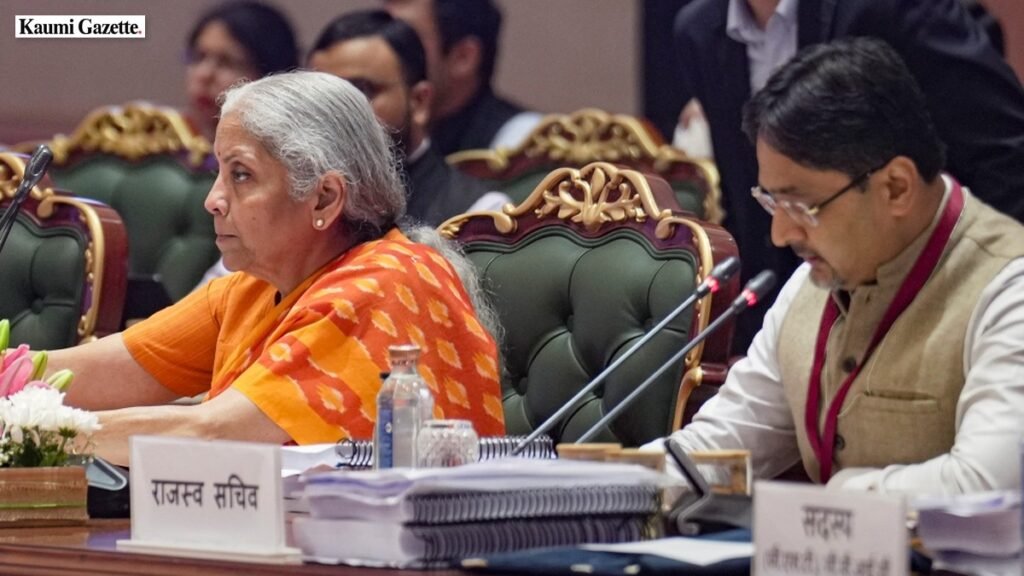
The GST Council is set to deliberate on major reforms focusing on the decriminalisation of tax offences, removal of pre-prosecution arrest powers, and streamlining compliance processes for businesses.
Under the proposed changes, officials stated that pre-prosecution arrest powers, which have created unnecessary leverage over businesses, would be removed in favour of civil consequences such as tax recovery, delayed interest, and penalties. While prosecution will remain an option with potential tweaks, the monetary threshold for prosecution is expected to be raised from Rs 1 crore to Rs 5 crore.
However, major states including Maharashtra, Gujarat, Uttar Pradesh, Karnataka, and Andhra Pradesh have raised concerns regarding any sweeping curtailment of tax authorities’ powers. These states have demanded that the indirect tax regime retain its enforcement capability, suggesting that pre-prosecution arrests be graded with an additional provision enabling civil arrest for serious violations.
The Council will also address process reforms leveraging technological systems developed over the nine years since the GST rollout. Officials noted that systems built on quality data should handle routine compliance, leaving discretionary judgements to officers.
Key proposals on the agenda include: Registrations and Returns: Streamlining registration processes to reduce unnecessary queries, alongside introducing an invoice matching system to automatically record changes in buyer ledgers and validate input tax credit at the recording stage. Refunds and Litigation: Proposing that refund claims be acknowledged within 10 days—or deemed acknowledged otherwise—with 90% released following a risk check. A common standard for notices, hearings, and orders is planned, alongside a proposal to drop notices entirely for amounts under Rs 10,000 in both new and pending cases. Input Tax Credit: Ensuring honest buyers who hold invoices, receive goods, and pay suppliers in full retain their tax credit regardless of whether upstream entities have deposited taxes. The refund ambit is also proposed to cover taxes paid on services, plant, and machinery. Exports and E-Commerce: Aligning laws for service exports—such as testing, certification, and research for foreign clients—so the place of supply follows the customer’s location even if goods remain in India. Additionally, e-commerce sellers would benefit from a one-time verification in their home state to enable nationwide sales without requiring local registration in every state.
The Council meeting will further discuss measures to simplify business exits, making the closure of an enterprise as straightforward as its establishment.
Related stories


More from Explainers
 ExplainerHow black holes become cosmic monsters: Scientists uncover the violent merger chain behind giant space objects |
 ExplainerWhy the ‘Trump rally’ is hitting a wall of profit-takingExplainerWhy India’s defence sector boost drone output for next-gen combat
 ExplainerHow David Attenborough’s lush imagery hid a history of colonial harm
 ExplainerWest Bengal (WBBSE) Madhyamik Result 2026 LIVE: Class 10 scorecard today at wbbsedata.com — How to check at 10:15 am
 ExplainerCBSE 12th Result 2026: How students can access scores via DigiLocker, UMANG and SMS