
Research shows rise in mental health struggles and psychiatric visits in Israel following October 7 attacks
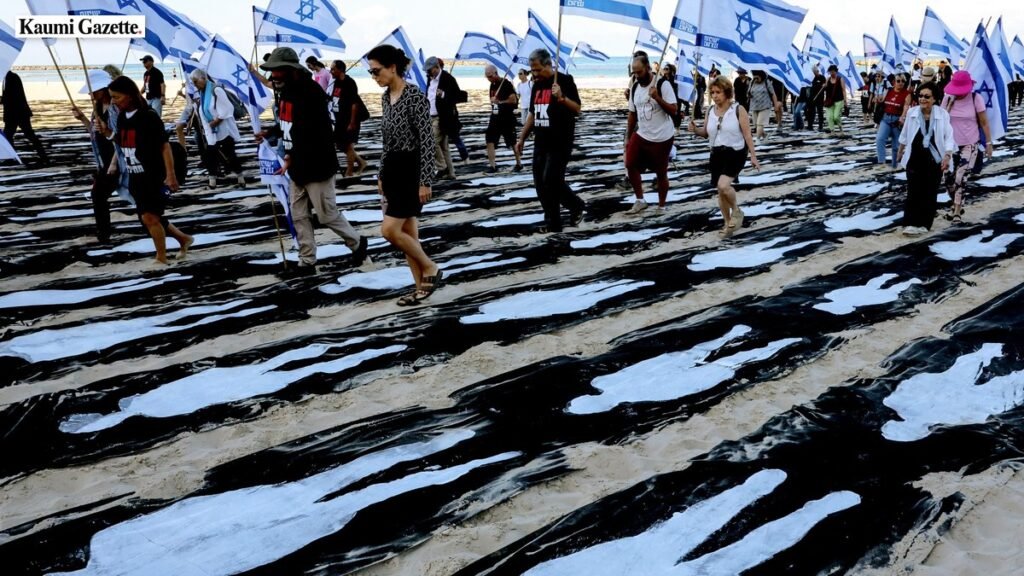
Three years after the October 7, 2023, Hamas-led attacks that resulted in about 1,200 deaths in southern Israel, new research shows a sharp rise in mental health struggles, post-traumatic stress, and emergency psychiatric visits across Israeli society.
Data from the National Mental Health Barometer—conducted by Clalit Health Services’ Research Institute and the Myers-JDC-Brookdale Institute—reveals that one in five Israelis experiences severe difficulties with daily functioning due to mental health issues. Furthermore, one-third of the population feels a need for mental health treatment, half report disruptions to leisure activities, and 35 percent struggle to form and maintain close relationships.
Separate research from Clalit, drawing on records from about five million members, recorded a 121 percent increase in psychiatric emergency visits among children and adolescents compared to the pre-war period. During a webinar organized by Clalit, Irit Ben Arye described the psychological toll on her family after her 52-year-old husband, Haim Ben Arye, returned home crying from evacuating survivors at Kibbutz Be’eri and died by suicide about two weeks later. She recalled telling her eight children to seek help and express their pain openly.
Experts attribute these widespread issues to the constant state of alertness brought on by missile strikes, airstrikes, and military campaigns involving Israel, Iran, and regional groups. Eric Vermetten, a professor of psychiatry at Leiden University Medical Center in the Netherlands, stated that repeated attacks, warning sirens, and displacement turn ordinary decisions into calculations of safety. He noted that maintaining such vigilance leads to fragmented sleep, faltering concentration, and strained relationships.
Edgar Jones, a professor at King’s College London’s Institute of Psychiatry, Psychology and Neuroscience, explained that while some individuals develop coping mechanisms, those who face home destruction or the loss of relatives risk post-traumatic illness and depression. “Everyone has a breaking point,” Jones said.
The psychological burden extends heavily to active-duty military personnel and reservists deployed to Gaza, where Israel’s assault has killed more than 74,000 Palestinians and prompted a UN commission of inquiry to conclude that the actions amount to genocide. Vermetten noted that reservists moving repeatedly between combat and civilian life have little time to process loss, guilt, or anger before redeployment. Jones added that soldiers often experience moral injury and self-directed anger when reflecting on their actions or orders. Israeli parliamentary data documented 279 suicide attempts among serving soldiers between January 2024 and July 2025, with combat soldiers accounting for 78 percent of military suicide deaths in 2024, excluding veterans.
The regional fallout of the prolonged conflicts has similarly affected children in neighboring territories. UNICEF estimated that 770,000 children in Lebanon have experienced psychological distress, with nearly two-thirds of households reporting anxious or nervous children. In Gaza, where a UN commission of inquiry concluded genocide occurred and much of the enclave remains devastated alongside ongoing bombardment, UNICEF estimates that more than one million children require mental health and psychosocial support.
Related stories


More from World
 WorldUnited Kingdom reportedly threatens to expel Israeli diplomats over consulate closure threat
 WorldKarl Deisseroth, Peter Hegemann, and Georg Nagel win 2026 Nobel Prize in Physiology or Medicine for optogeneticsWorldMost expensive ticket ever? World Cup final seat listed for $11.5 million despite being one of the worst in stadium | International Sports News
 ExplainerWhy the ‘Trump rally’ is hitting a wall of profit-taking
 WorldChina becomes AI’s biggest testing groundWorldUS petrol prices rise 50% since Iran war began, Strait of Hormuz disruption drives pump costs higher