
Supreme Court Directs Centre To Prevent Complete Prohibition On Metro And Railway Services To Delhi
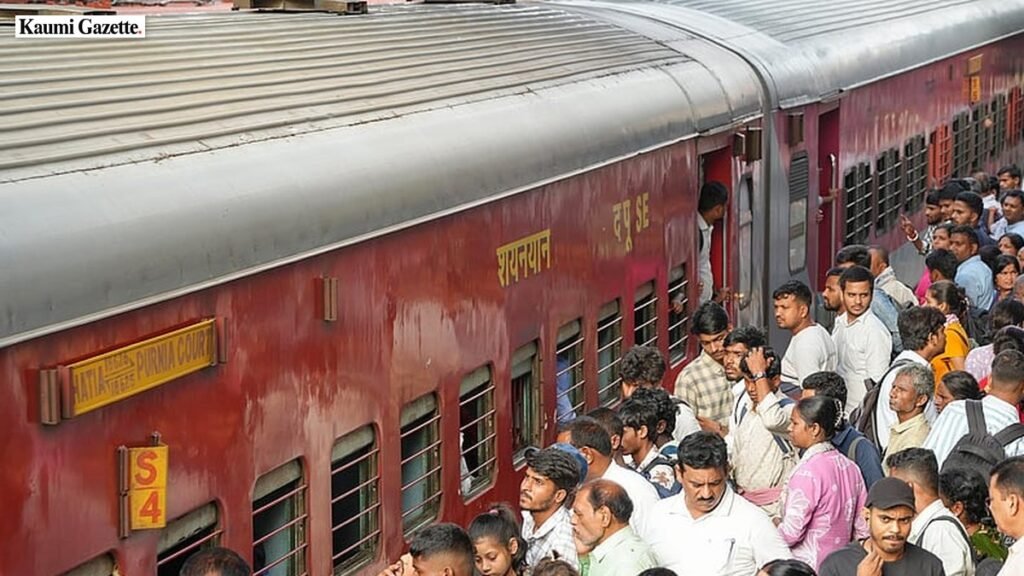
The Supreme Court on Friday directed the Centre to ensure there is no complete prohibition on metro and railway services to Delhi, cautioning that security measures must remain proportionate and avoid undue hardship to ordinary commuters.
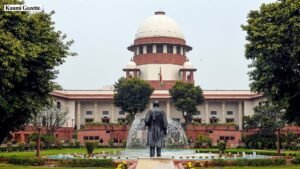
A bench comprising Chief Justice of India Surya Kant and Justices Joymalya Bagchi and V Mohana heard a petition challenging the closure of entry and exit gates at 57 Delhi Metro stations and the cancellation of trains ahead of a planned Saturday protest by the Cockroach Janta Party and student organisations against Chief Election Commissioner Gyanesh Kumar.
Observing that regulation and complete prohibition are distinct measures, the bench remarked that authorities should not use a hammer to kill a fly. The judges noted that total closures could severely impact thousands of daily commuters traveling from Gurugram, Greater Noida and other parts of the National Capital Region for work and education.
“Everybody does not have a car. Everybody does not have access to private transport. People depend on public transport. This cannot be done,” the Chief Justice said, stressing that law enforcement must account for the needs of citizens, including patients, senior citizens, women and children.
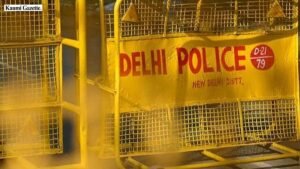
Solicitor General Tushar Mehta, appearing for the Centre, assured the court that authorities would reconsider the restrictions and allow the movement of metro and railway services in a regulated manner. He defended the security measures by citing an earlier protest in June where demonstrators allegedly violated time conditions, continued a sit-in for 17 days, and attempted to march toward restricted areas near Parliament, resulting in injuries to over 200 police personnel and private individuals.
Mehta also submitted that internet curbs were restricted to an approximate four-kilometre radius around Rashtrapati Bhavan and Raisina Road, and offered to place video recordings of the earlier confrontations on record.
Appearing for CPI(M) general secretary M A Baby, Senior Advocate Kapil Sibal raised concerns regarding long-distance train cancellations from states such as Kerala, arguing that services originating far outside Delhi were being halted.
During the proceedings, a senior advocate alleged on oath that Delhi Police personnel visited mosques to discourage participation in the upcoming demonstration, citing submitted photographs and videos. Mehta strongly objected to the manner of the allegation, calling it an attempt at instigation. The Chief Justice declined to comment on the mosque visit allegations without hearing the concerned authorities.
The apex court directed the Centre to widely publicise decisions regarding transport services to minimise public inconvenience and asked authorities to review road closures and barricading to allow free traffic movement where severe restrictions are unnecessary.
Related stories
 NationalDelhi Police detain over 5,000 protesters during demonstrations demanding resignation of Chief Election Commissioner
 NationalIndian authorities enforce security lockdown and detain protesters in New Delhi to block anti-government demonstration
 NationalSecurity Forces Detain Over One Thousand Individuals in New Delhi to Block Demonstration Against Election Chief
More from India
 NationalDelhi Police detain over 3,000 protesters marching toward Jantar Mantar
 NationalDelhi Police detains students travelling from Punjab for protest
 NationalPolice detain leaders and activists ahead of planned demonstration at Jantar Mantar
 NationalOmar Abdullah criticizes Delhi security restrictions and internet suspension
 NationalDelhi Police increases security and surveillance ahead of planned protest at Jantar Mantar
 NationalSupreme Court Directs Authorities to Maintain Regulated Transport During Demonstrations in Delhi