
Sonia Gandhi describes upcoming memoir as personal narrative rather than political book
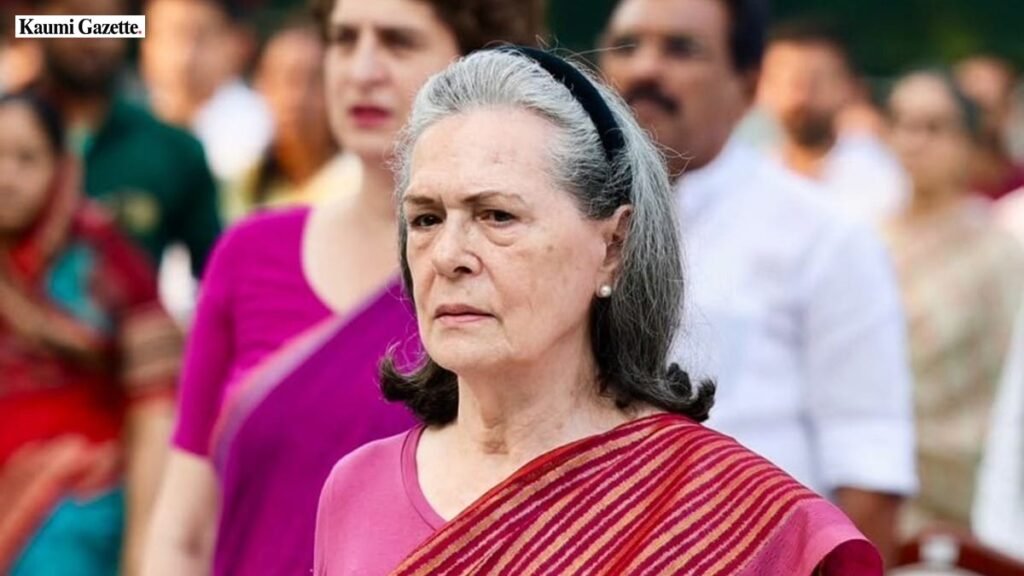
NEW DELHI — Congress Parliamentary Party Chairperson Sonia Gandhi has stated that her upcoming memoir, Belonging: A Journey of Love, is a personal account of her life rather than a political book.
Writing in the English daily The Hindu on Sunday, Gandhi explained that she intentionally kept her private world restricted for a long time. She noted that it was only after stepping back from the daily commotion of public life that she was able to view her life’s journey with clarity.
The publication of the memoir offers a rare personal reflection from a central figure in Indian politics who has spent over five decades in the country. The book traces her transition from the periphery to the center of India’s political life, capturing the broader transformation of the nation during that period.
According to Gandhi, the central thread of her life’s story is love and the loyalty born from it. That journey began in England, where as a 19-year-old woman from a small Italian town, she met a young Indian student, Rajiv Gandhi. That relationship eventually connected her to a new country and family.
Gandhi detailed how, after arriving in India, she developed a deep relationship with her mother-in-law, Indira Gandhi. She wrote that raising her children and focusing on family remained at the center of her life for years. However, that domestic life was also marked by profound tragedy. She lost both her mother-in-law and her husband to acts of violence.
Despite those immense hardships, Gandhi stated that her love for her husband and for India provided her with the strength to endure. Having adopted India as her true home, a sense of duty eventually compelled her to enter public life, even though it ran contrary to her natural inclinations.
Addressing public perceptions, Gandhi observed that much has been written about her family over the years, yet frequent accounts have often failed to genuinely capture her personality, motivations, struggles, and human vulnerabilities. Through the memoir, she sought to portray her family members precisely as she knew and loved them.
Reflecting on her five decades in the country, Gandhi described witnessing India’s evolution—initially from the margins and later from the epicenter of its political and public activities. She characterized her book as a personal narrative of that national transformation alongside her own deep connection to the country she came to call home.
Related stories
 HeadlinesCongress launches nationwide campaign demanding removal of Chief Election Commissioner and electoral reforms
 HeadlinesKarnataka voter list shrinks by nearly eighteen percent following revision exercise by Election Commission
 HeadlinesSaudi coalition intercepts missiles over Riyadh, damaging Aramco building
More from India
 NationalMadhya Pradesh High Court Quashes FIR Against Journalist Uvesh Khan Over Violence Reporting
 HeadlinesNew Zealand Election Ends in Tight Contest Pointing Toward Coalition Negotiations
 HeadlinesIsraeli President Tasks Opposition Leader Gadi Eisenkot With Forming New Government
 HeadlinesDiscrepancy emerges between electoral rolls in Rajasthan as millions of voters missing from national lists
 HeadlinesCockroach Janta Party Founder Calls for Democratic Removal of Government at Kochi Protest
 HeadlinesCongress vows indefinite nationwide agitation for removal of Chief Election Commissioner