
Youth-led political movements reshape global landscape amid systemic grievances and state crackdowns
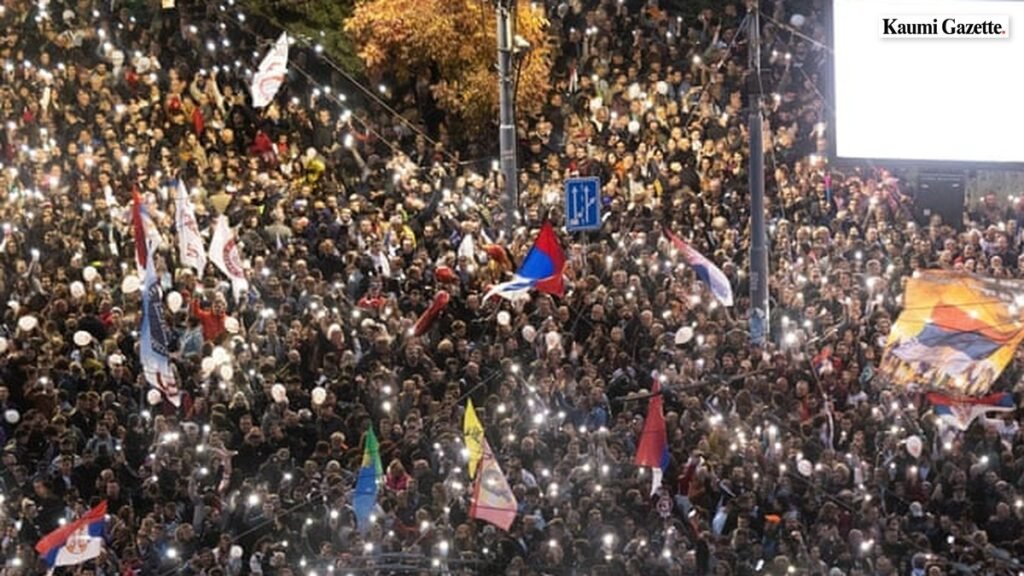
NEW DELHI — A sweeping wave of youth-led political movements is reshaping the global political landscape, with researchers documenting at least 25 distinct protests worldwide where individuals aged roughly 14 to 29 have played a central role.
Accounting for approximately one-third of the global population, Generation Z has increasingly moved away from the political sidelines. Erica Chenoweth, a political scientist at the Harvard Kennedy School, described the trend as a “global political awakening,” noting that a significant proportion of young people are tired of watching their political systems fail them.
The institutional, legal and political significance of these movements lies in their direct challenge to established authorities and democratic backsliding. While students and young people have historically driven historic shifts—such as the US civil rights movement and the 2011 Arab Spring, as noted by analysts Cait Dallaire and Sebastian Dittgen—contemporary youth-led action operates through a vastly expanded digital infrastructure. TikTok and X amplify grievances, Discord servers and group chats facilitate decentralised planning, and virtual private networks allow organisers to bypass internet shutdowns.
These movements have targeted a wide array of systemic grievances, ranging from corruption, unequal economic playing fields and democratic erosion to demands for greater investment in education, affordable housing and climate action. Arancha González, dean of the Paris School of International Affairs, observed in the Italian newspaper Corriere della Sera that while the specific issues vary, the underlying spark is the same: the breakdown of the social contract and the shattering of the belief that economies reliably generate wellbeing and social equality.
Asia and Africa witnessed some of the earliest high-profile movements. In 2024, student demonstrations in Dhaka, Bangladesh, began over a quota law before escalating into widespread opposition against the autocratic rule of Prime Minister Sheikh Hasina. Two months later, Hasina resigned and fled by helicopter after being chased out by young protesters, in what was described as the world’s first successful Gen Z-led revolution. United Nations human rights experts subsequently reported that as many as 1,400 people were killed, primarily by security forces, with thousands more sustaining severe injuries.
Similar anti-establishment momentum has surfaced across other continents. In Serbia, student-led movements pushed back against a government that tightened control over media and institutions. Late last month, the movement transitioned from the streets to the halls of power, unseating Aleksandar Vučić in elections and ending his party’s 14-year tenure.
In India, the online satire-turned-protest movement known as the “Cockroach movement” emerged as a prominent show of force against the government of Prime Minister Narendra Modi. Driven by democratic ideals and social media, the movement’s influence became evident this summer when protests forced the resignation of the country’s education minister. Security forces have responded with heavy pushback, detaining thousands, deploying tear gas, and using lathis. Authorities implemented severe restrictions in October to prevent gatherings in central Delhi, including road barricades, public transport suspensions, and internet shutdowns.
State repression has frequently accompanied youth-led demonstrations globally. Civicus, a non-profit monitoring global civic freedoms, noted that because these movements question the distribution of economic and political power, they invariably meet with state violence. In France, rights groups and lawyers reported that several teenagers sustained war-like injuries from police weapons during school protests for better working conditions. In Morocco, more than 2,000 people faced criminal charges and harsh prison sentences following the 2025 “Gen Z 212” movement targeting corruption and neglected public services, while youth-led protests over crime and corruption in Mexico resulted in dozens of arrests after clashes with police.
Despite such crackdowns, youth mobilization has successfully intersected with mainstream electoral politics. In Brazil, millions of young people rallied online through videos and memes. Following a first-round loss by the political left, students from Fluminense Federal University initiated pro-Lula marches that sparked nationwide action. Concurrently, congressman André Janones established a “Lula’s Army” WhatsApp channel that attracted millions of participants to amplify pro-Lula content. President Luiz Inácio Lula da Silva acknowledged their impact on election night, thanking young people for taking to the streets to defend democracy.
In the United States, youth organizing has been shaped significantly by the pro-Palestine student movement, which saw thousands of arrests, suspensions, and the implementation of restrictive anti-protest policies on campuses. Nonetheless, student activism has persisted, ranging from voting rights marches in North Carolina to class boycotts and campus occupations responding to the Cornell 7 case. Political campaigns have also adapted; Zohran Mamdani’s campaign for New York mayor integrated social media strategies with a core base of roughly 50,000 volunteers, providing young New Yorkers an outlet for socialisation and political mobilisation.
European countries have experienced similar activism. In Spain, students pitched tents to demand affordable housing, while in Germany, thousands joined the “Gen Z regelt!” movement to protest the cost of living and demand increased investment in education, health, and climate initiatives.
Chenoweth suggested that the ongoing wave of youth-led activism could signify the beginning of a profound generational transformation in world affairs, potentially capable of countering global democratic backsliding. For many young participants, however, the protests reflect a more fundamental grievance. Bilal Narjissi, a 17-year-old high school student in a northern suburb of Paris, told the Associated Press that the explosion of youth movements underscores a long-overlooked reality: young people are treated like children far too frequently and are not listened to enough.
Related stories
 HeadlinesOusted Prime Minister Sheikh Hasina requests passport to return and surrender before Bangladesh court
 HeadlinesElection Commission simplifies voter reinstatement procedure for specific jurisdictions following judicial scrutiny
 ExplainerPolitical Speculation Intensifies Over Potential Reunion Between Shiromani Akali Dal and Bharatiya Janata Party in Punjab
More from Analysis
 HeadlinesCongress launches nationwide campaign demanding removal of Chief Election Commissioner and electoral reforms
 HeadlinesKarnataka voter list shrinks by nearly eighteen percent following revision exercise by Election Commission
 HeadlinesSaudi coalition intercepts missiles over Riyadh, damaging Aramco building
 HeadlinesSonia Gandhi describes upcoming memoir as personal narrative rather than political book
 HeadlinesNew Zealand Election Ends in Tight Contest Pointing Toward Coalition Negotiations
 HeadlinesIsraeli President Tasks Opposition Leader Gadi Eisenkot With Forming New Government