
International Court of Justice finds Myanmar responsible for Rohingya genocide
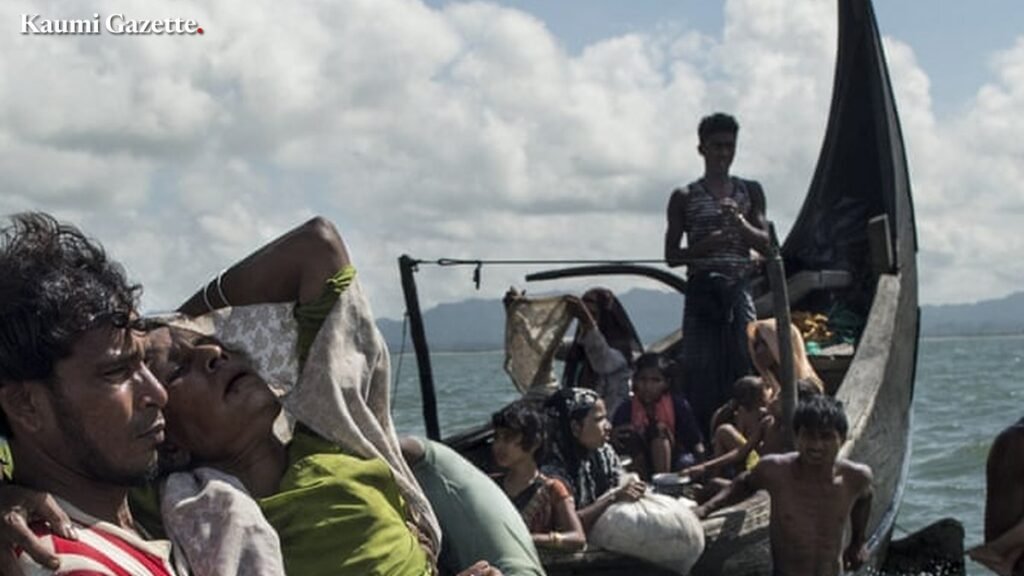
THE HAGUE: The International Court of Justice has delivered a historic judgment finding that Myanmar committed genocide against its Rohingya minority, marking the first time the United Nations tribunal has held a sovereign state directly responsible for the crime.
Delivered at The Hague in the Netherlands, the ruling concludes a seven-year legal battle initiated by the Gambia on behalf of survivors. ICJ President Yuji Iwasawa stated during the reading that the court is fully convinced Myanmar carried out acts under the 1948 genocide convention with the specific intent to destroy a substantial portion of the Rohingya population.
The legal challenge centered on military clearance operations conducted in Rakhine state throughout 2016 and 2017. The assaults compelled more than 700,000 predominantly Muslim Rohingya to cross the border into Bangladesh. Refugees reported mass killings of adults and children, gang-rapes, and widespread village arson.
In January, the ICJ held closed-door hearings for survivors from Bangladesh camps, where more than 1 million Rohingya now live in the world’s largest refugee settlement. Fewer than 600,000 Rohingya are estimated to remain in Buddhist-majority Myanmar. Investigators built parts of their case on atrocities such as the 2017 massacre in Tula Toli village, where accounts detailed systematic civilian shootings, mass graves, children drowned in a river, and subsequent satellite evidence of the village being burned.
Gambian Justice Minister Dawda Jallow told the court during proceedings that the case concerned real people and human beings targeted for destruction rather than esoteric points of international law.
Legal experts observed that the judgment serves as a vital test for addressing sexual violence within genocide evaluations, specifically regarding convention provisions concerning acts intended to prevent births. Investigators presented evidence that gang-rapes and genital mutilation of women were deployed systematically to halt reproduction.
Myanmar denied the genocide allegations, maintaining that its forces targeted a Rohingya militant group engaging in guerrilla attacks through clearance operations. Min Aung Hlaing, who led the military during the 2016-2017 violence, faces a pending arrest warrant from the International Criminal Court for crimes against humanity. He led the 2021 coup against Aung San Suu Kyi’s elected government, which sparked a civil war, and was installed as civilian president in April following discredited elections.
Genocide, established by a 1948 UN convention following the Nazi Holocaust, requires proof of specific intent to destroy a protected group, making it harder to prove than war crimes. Prior to this ruling, UN tribunals had established genocide in only a handful of cases, including 1970s Cambodia under the Khmer Rouge and the 1994 mass killings in Rwanda. Two previous ICJ cases regarding 1990s Balkans conflicts did not find states directly responsible, though Serbia was found legally responsible for failing to prevent or punish the Srebrenica massacre.
Although the ICJ lacks enforcement powers, its decisions are binding, carry diplomatic weight, and can influence international actions and sanctions. Governments worldwide monitored the verdict closely because it provides an indicator of how judges may approach other proceedings, notably South Africa’s genocide case against Israel, which UN investigators and scholars assert has committed acts of genocide in Gaza.
The ruling is predicted by observers to potentially trigger US sanctions against ICJ judges, including Nobel Peace Prize winner Navi Pillay. While the Biden administration had classified the Rohingya crisis as a genocide, the Trump administration has maintained an aggressive posture toward international rights bodies, previously imposing sanctions on the ICC.
Related stories
More from World
 WorldUkraine, Russia, and the United States hold direct negotiations in Abu Dhabi
 WorldANTALYA: World leaders and delegates are gathering in Antalya, Turkiye, for the United Nations COP31 climate summit,
 HeadlinesOusted Prime Minister Sheikh Hasina requests passport to return and surrender before Bangladesh court
 WorldPolish Prosecutors Open Terrorism Investigation After Mass Shooting in Kraków
 HeadlinesSaudi coalition intercepts missiles over Riyadh, damaging Aramco building
 WorldWorld leaders convene in Turkey for Cop31 climate summit amid record temperatures