
UN Climate Summit in Antalya Concludes Without Consensus Due to Divisions Over Fossil Fuels and Finance
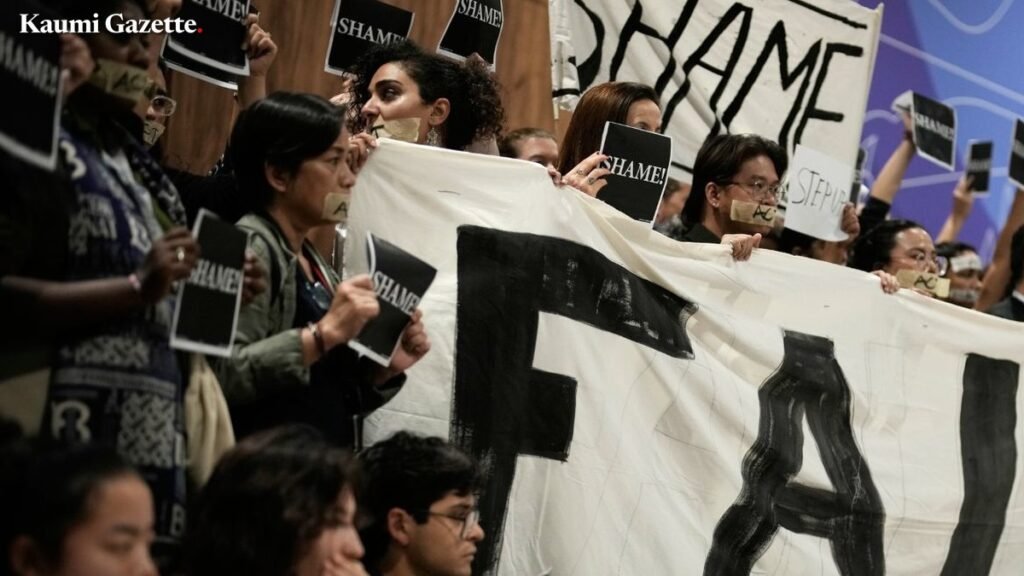
ANTALYA: The 31st United Nations Climate Change Conference (COP31) concluded in Antalya on November 22 without adopting an overarching cover decision, marking the first time a UN climate summit has failed to reach a unified political outcome since the Copenhagen conference in 2009.
The summit closed without endorsing the proposed Antalya Pact, which was intended to establish a common political direction for global emissions reduction, the energy transition, and climate finance. While cover decisions are not legally binding, they serve as crucial political signals that indicate collective agreement and guide regulators, investors, and finance ministries. Past summits have consistently delivered such texts, ranging from Glasgow’s call to phase down coal in 2021 to Dubai’s transition away from fossil fuels in 2023 and Belém’s adaptation finance targets in 2025.
The absence of a consensus text follows a year marked by severe climate impacts globally, including Europe’s summer heatwaves, flash floods in Nepal, and extreme weather in India, set against a backdrop of rising oil, gas, and fertiliser prices driven by the closure of the Strait of Hormuz following the war in Iran. The World Meteorological Organization (WMO) expects 2026 to rank among the four warmest years on record, accompanied by a very strong El Niño developing into 2027.
The negotiations broke down over foundational disagreements regarding fossil fuels and financial commitments. More than 130 countries backed a push to move away from fossil fuels, but the final draft omitted explicit references to coal, oil, or gas, instead citing the previous Dubai outcome. The text proposed scaling carbon capture, utilisation, and storage (CCUS) to gigatonne levels by 2035 and raising electricity’s share in final energy use to 35% by the same year.
Negotiators representing the European Union, Panama, and the Marshall Islands viewed the omission of fossil fuel phase-out language paired with an emphasis on carbon capture as a retreat from prior commitments. Conversely, Saudi Arabia, speaking on behalf of Arab states, supported carbon capture as a mechanism for producers to reduce emissions without curtailing output. Russia also raised objections, leaving the summit without a formal mitigation process.
Disagreements over climate finance further stalled progress. Developing nations insisted that wealthy countries must provide adequate public financial assistance, arguing that ambitious commitments require commensurate support. Developed nations, however, made no new collective financial commitments, offering selective announcements reliant on loans and private capital rather than public funds. While the finance work programme survived as an ongoing process, it did so without new financial allocations.
United Nations Secretary-General António Guterres expressed deep disappointment over the lack of consensus, stating that while negotiating rooms failed to reach agreement, the underlying scientific imperatives remain unchanged.
India participated in the Antalya talks with its established positions, having submitted its third Nationally Determined Contribution (NDC) in April 2026, which commits to a 47% reduction in emissions intensity from 2005 levels and aims for non-fossil sources to comprise about 60% of installed power capacity by 2035. India had already surpassed the 50% threshold for non-fossil capacity five years ahead of its 2030 target.
Collaborating with the BASIC bloc (Brazil, South Africa, India, China) and the Like-Minded Developing Countries (LMDCs), India pressed for public finance under Article 9.1 of the Paris Agreement. It advocated for mitigation talks to remain bottom-up, country-driven, facilitative, and non-punitive, while opposing unilateral trade measures such as the EU’s Carbon Border Adjustment Mechanism (CBAM).
Although dissatisfied with the dilution of text concerning historical responsibilities of developed nations, India secured key objectives in the draft: the reaffirmation of developed countries’ Article 9.1 obligations, and the placement of equity and common but differentiated responsibilities (CBDR) at the core of implementation. Additionally, India acknowledged the near-term climate benefits of reducing anthropogenic methane emissions and short-lived climate pollutants (SLCPs), marking a shift in its stance while maintaining its positions on domestic food security.
Analysts note that the summit’s failure highlights a deeper structural friction within the UN framework, where climate regimes operate on competing currencies of ambition and finance, and the consensus rule grants every nation a veto. Experts warn that a weak multilateral process risks fragmenting climate action into voluntary coalitions and trade policies where traditional equity principles carry less weight.
For India, the breakdown underscores the importance of maintaining pressure for public finance at COP32 in Addis Ababa and through the second global stocktake concluding in 2028. Simultaneously, policymakers face an imperative to accelerate domestic and unaligned mitigation measures, including curbing methane emissions from waste and fossil fuels, phasing down hydrofluorocarbons (HFCs) under the Kigali Amendment, and reducing black carbon to address near-term warming.
Related stories
 HeadlinesGrameen Bank branches face coordinated attacks amid political tensions in Bangladesh
 HeadlinesSupreme Court directs priority hearings for millions of appeals regarding deleted voter names in West Bengal
 HeadlinesNepali Prime Minister Balen Shah Prioritizes India for First Foreign Visit Amid Economic and Diplomatic Realities
More from World
 HeadlinesLUCKNOW: Uttar Pradesh is set for a major political show of strength on November 26, 2026, coinciding with
 WorldNvidia reinstates Jensen Huang as chief executive following presidential intervention and board review
 HeadlinesSupreme Court directs Election Commission to prioritize voter list deletion appeals in West Bengal
 OpinionAzam Khan: Political Persecution to Revolution Chants
 Fact CheckInvestigation reveals age anomalies in Uttar Pradesh draft electoral roll
 WorldUnited Nations climate talks conclude without final agreement amid divisions over fossil fuels