
Grameen Bank branches face coordinated attacks amid political tensions in Bangladesh
DHAKA:
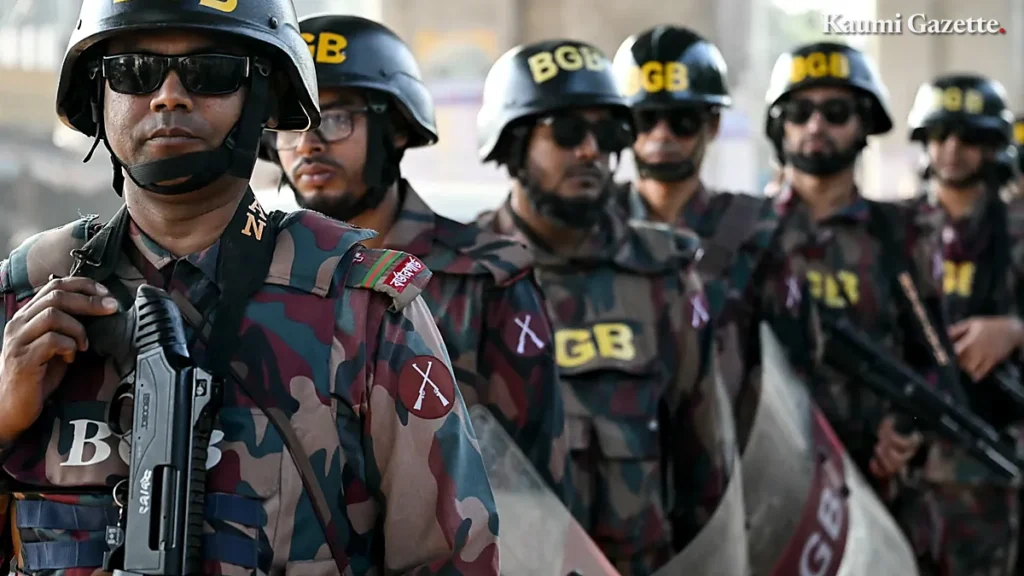
One of Bangladesh’s most prominent financial institutions, the Nobel Prize-winning Grameen Bank, has found itself targeted in a wave of coordinated violence amid escalating political tensions. The attacks, which have seen nearly 100 branches and offices struck across the country, highlight deep-seated friction following the removal of former Prime Minister Sheikh Hasina in August 2024 and the subsequent rise of an interim and later political administration under Prime Minister Tarique Rahman.
The violence has heavily impacted the microcredit pioneer founded by Muhammad Yunus, whose tenure as leader of the interim administration preceded the current political landscape. According to an internal memorandum dated November 23, Grameen Bank recorded 97 attacks on its branches and offices between November 10 and 23.
The scale of the destruction was starkly illustrated at a branch in Kashiani, located in Bangladesh’s Gopalganj district. On the afternoon of November 18, about a dozen men carrying machetes, petrol, and lock-breaking tools stormed the facility while staff members were away on field visits. According to branch manager Solaiman Morol, the attackers looted the office, attempted to cut open the vault with a grinder, and dragged out approximately 40 sacks of vouchers and loan documents to set them on fire. Steel cupboards, filing cabinets, tables, chairs, and even a staff member’s rice cooker were stolen.
“They said that after burning the records, nobody would have to repay their loans,” Morol said. During the incident, witnesses reported hearing slogans such as “Joy Bangla” and “Joy Bangabandhu” (phrases associated with Sheikh Hasina’s Awami League) alongside demands to destroy what the attackers termed “Yunus’s den.”
The targeted branch has been unable to resume normal operations, leaving customers anxious about the security of their deposits and loan records. Morol noted that the psychological toll on customer confidence is severe, as the institution relies fundamentally on trust.
Grameen Bank holds a unique position in Bangladesh’s financial ecosystem. It pioneered the microcredit model, extending small loans to rural populations, particularly women, who lack access to conventional banking services. Approximately 90 percent of the bank is owned by its borrower-members, while the government holds the remaining 10 percent.
Managing Director Sarder Akhter Hamed stated that the institution serves around 10.6 million members. Among them, roughly 5.5 million borrowers carry outstanding loans exceeding Tk19,000 crore ($1.53bn), while members hold deposits of approximately Tk25,000 crore ($2bn). The bank employs around 21,000 staff members, many of whom are grappling with a sense of insecurity following the attacks. In response to the crisis, the bank has suspended the accrual of interest on outstanding loans at branches forced to halt operations, increased security measures, and relocated personnel from high-risk areas.
Government officials and political analysts attribute the violence to supporters of the Awami League, pointing to renewed political activity and unrest in areas like Gopalganj, Hasina’s ancestral district. During recent unrest, supporters have allegedly set fire to police stations and local MPs’ homes, and reportedly killed three Bangladesh Nationalist Party (BNP) members in Faridpur and Narail.
Mubashar Hasan, a researcher at Western Sydney University, noted that the timing aligns with efforts by Hasina’s party to push for her return from exile in India, where she has resided since her ouster. A tribunal previously convicted Hasina in absentia for massacres carried out against protesters during the 2024 uprising, carrying a death sentence.
“Her party has spent the week pushing for her return. Grameen Bank is the easiest symbol of Dr Yunus they can reach,” Hasan said. “For the Awami League’s hardliners, Yunus is the face of their fall, so burning his bank is a way of hitting back at him.” He added that the attacks serve as a performance of strength to signal the party’s continued presence on the streets despite being banned from electoral politics under Yunus’s administration.
Asif Mohammad Shahan, a professor of development studies at the University of Dhaka, described the violence as part of a deliberate political strategy. He argued that the Awami League opted against seeking political rehabilitation through self-reflection, choosing instead to pursue a “politics of revenge” intended to provoke a heavy-handed government response and delegitimise the administration.
The government maintains it is actively managing the security situation. Ziauddin Ahmed, additional secretary in charge of the political wing at the Ministry of Home Affairs, rejected assertions that the administration was struggling to contain the unrest, citing police deployment constraints. “The problem is that our police force is somewhat short of manpower,” Ahmed told Al Jazeera.
Police headquarters reported that eight cases have been filed and eight individuals arrested in connection with the violence. Hamed acknowledged that police had responded when called and occasionally provided advance warnings, though he noted that staff have largely had to rely on self-protection.
“If the law-and-order situation in the country improves, confidence and trust in the bank, too, will automatically return,” Hamed said.
Related stories
 HeadlinesSupreme Court directs priority hearings for millions of appeals regarding deleted voter names in West Bengal
 HeadlinesNepali Prime Minister Balen Shah Prioritizes India for First Foreign Visit Amid Economic and Diplomatic Realities
 HeadlinesLUCKNOW: Uttar Pradesh is set for a major political show of strength on November 26, 2026, coinciding with
More from World
 WorldNvidia reinstates Jensen Huang as chief executive following presidential intervention and board review
 HeadlinesUN Climate Summit in Antalya Concludes Without Consensus Due to Divisions Over Fossil Fuels and Finance
 HeadlinesSupreme Court directs Election Commission to prioritize voter list deletion appeals in West Bengal
 OpinionAzam Khan: Political Persecution to Revolution Chants
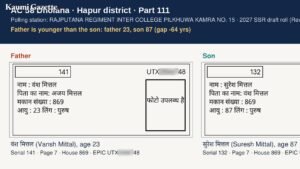 Fact CheckInvestigation reveals age anomalies in Uttar Pradesh draft electoral roll
 WorldUnited Nations climate talks conclude without final agreement amid divisions over fossil fuels