
Arab Political Factions Emerge as Potential Kingmakers After Inconclusive Israeli Elections
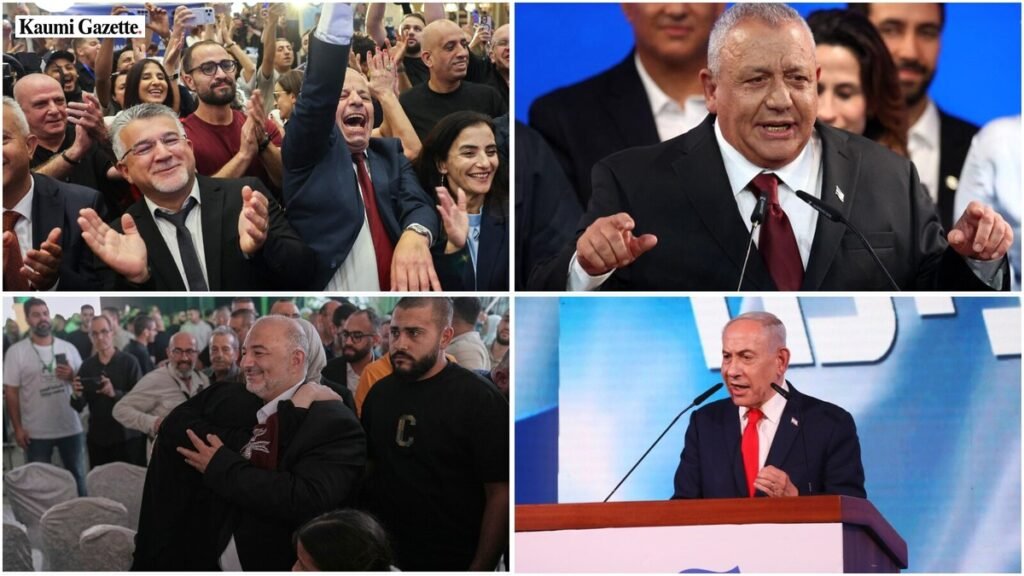
JERUSALEM — Israel’s Arab political factions have emerged as potential kingmakers following inconclusive general elections that left both major political blocs short of a parliamentary majority.
With approximately 90 percent of votes counted by Wednesday evening, interim results from the Israeli Central Elections Committee showed Prime Minister Benjamin Netanyahu’s ruling Likud coalition poised to win 53 seats in the 120-seat Knesset. The opposition bloc, led by Gadi Eisenkot, secured 48 seats.
Neither side reached the 61-seat threshold required to form a government. According to the election committee, the Joint List and Ra’am—Israel’s Arab-majority parties—are projected to secure up to 19 combined seats, positioning them to determine the composition of the next administration.
The potential inclusion of Arab factions in a governing coalition faces significant political barriers, notably an informal anti-Arab veto among Jewish-led parties that reflects deep-seated reluctance to partner with Arab-led factions. Ahead of the vote, the Netanyahu-led bloc attempted to bar both the Joint List and Ra’am from contesting the election, though the Supreme Court ultimately struck down the move.
The deadlock highlights the growing political leverage of Arab voters amid a fractured legislature, compounded by national tensions following the October 7, 2023, attacks by Hamas and ongoing military campaigns in Gaza and Lebanon. If major Jewish-led blocs refuse to ally with Arab parties, Israel could face another election, with Netanyahu remaining in office as a caretaker leader.
The Joint List, an alliance of Arab-majority parties including Hadash, Ta’al, and Balad, re-emerged for the 2026 elections against the backdrop of regional conflicts. Led by Yousef Jabareen, the alliance campaigned on prioritizing domestic economic investment, better housing, free education, workers’ rights, and a plan to eradicate organized crime in Israeli-Arab society.
Jabareen stated that the alliance’s primary objective is to unseat Netanyahu and alter Israel’s political landscape, though he acknowledged that cooperating with Eisenkot’s bloc would also present difficulties due to its support for military actions in Gaza and southern Lebanon.
Ra’am, a conservative party with Islamist roots led by Mansour Abbas, contested the election independently. Abbas signaled openness to joining a new governing coalition to address community issues from within the system, telling Ynet news after the release of initial exit polls that participation could yield substantial changes rather than empty talk. Ra’am previously made history in 2021 by becoming the first independent Arab party to join an Israeli governing coalition under Naftali Bennett and Yair Lapid.
Netanyahu, who faces a ongoing corruption trial alongside managing wartime governance, has previously described a potential coalition with Arab parties as a “shame and disgrace.” Conversely, Eisenkot’s opposition bloc faces a narrow path to unseating the incumbent administration, with alliances involving Arab factions representing a principal avenue to achieve a majority.
Related stories



More from World
 WorldEgyptian President Abdel Fattah el-Sisi Announces Departure at Conclusion of Term in 2030
 WorldChancellor John Healey plans to abolish gas standing charges to reduce household energy costs
 WorldBritish Employers Question Proposed Cost Increases for Older Apprenticeship Training
 WorldLula wins Brazil presidential runoff as opponent contests result
 WorldDisplacement follows military sweep in Hebron after checkpoint attack
 WorldMecca Defence Alliance delegations hold high-level security talks in Tehran amid regional tensions