
Supreme Court grants Himachal Pradesh two weeks to respond to ecological panel report

NEW DELHI — The Supreme Court has granted the Himachal Pradesh government two weeks to respond to the Central Empowered Committee’s (CEC) first interim report, which recommends strict curbs on tourism, stricter regulatory frameworks for road construction, and enhanced oversight of hydroelectric projects in the fragile Himalayan state.
The apex court bench comprising Justices Vikram Nath, Sandeep Mehta and Aparesh Kumar Singh accepted the report on Tuesday. The submission follows suo motu proceedings initiated by the Supreme Court on July 28, 2025, to address recurring ecological degradation in Himachal Pradesh, after concluding that environmental threats in the region transcend isolated incidents.
In July 2026, the court directed the statutory CEC—originally formed in 2002 and operating as a statutory body since 2023—to examine nine thematic areas. These include zoning, forest cover, compensatory afforestation, climate change, disaster management, road infrastructure, hydroelectric projects, mining and tourism. The newly accepted interim report covers four of these areas: tourism, compensatory afforestation, roads, and hydroelectric developments.
The CEC’s findings highlight rapid and unregulated infrastructure growth across the state. Data compiled by the panel shows that registered hotels grew by 90.8% between 2016 and 2026, rising from 2,784 to 5,311. Over the same period, registered homestays surged by 669.7% from 876 to 6,743, surpassing hotels. Combined, tourist accommodations grew by roughly 229% to reach 12,054.
The Tourism Department informed the CEC that no carrying-capacity studies have been conducted for major destinations including Shimla, Manali, Dharamshala, Dalhousie, Solang, Kasol, Chandratal, Spiti, or the Great Himalayan National Park. Consequently, the panel has recommended immediate carrying-capacity assessments, temporary restrictions where necessary, and the establishment of binding, periodically updated district- and destination-wise limits on visitors, vehicles, and accommodation beds.
On infrastructure and industrial pressures, the report notes that hydroelectric projects account for the largest share of diverted forest land at 31.9% (5,598 hectares), while roads constitute the second-largest share at 25.3% (4,443 hectares). A basin-wide inventory identified 1,007 hydel projects totaling 22,957 MW across the Sutlej, Beas, Chenab, Ravi, and Yamuna rivers. Of these, 189 projects are commissioned, 53 are under construction, 526 are under clearance or investigation, and 239 remain unallotted. The CEC flagged severe cumulative pressures, environmental flow concerns, and muck disposal issues, proposing basin-wide disaster preparedness plans to counter glacial lake outburst floods and multi-hazard risks.
Regarding road infrastructure, the panel attributed frequent slope failures and landslides to systemic engineering and regulatory failures rather than natural inevitabilities. It noted that the state recorded 113 landslides over 55 days during the early monsoon of 2023, resulting in 111 deaths, and cited near-vertical hill cuts and muck dumping towards the Beas river along national highway projects. The CEC recommended that the Environment Ministry review a 2013 exemption that dispensed with environmental clearances for new hill roads and two-lane expansions, alongside appointing a state-level ombudsman for National Highways Authority of India grievance redressal.
The panel also reported significant gaps in compensatory afforestation. While roughly 30,462 hectares have been covered against a targeted 34,169 hectares since 1981-82—reflecting a 3,707-hectare shortfall—recent plantation survival assessments remain incomplete. Funds remained underutilised between 2020-21 and 2025-26, with ₹592.69 crore spent against an approved outlay of ₹1,110.81 crore, and 2020-21 plantations recording a survival rate of only 51%. The panel urged expediting pending afforestation and commissioning third-party survival audits.
Related stories



More from Explainers
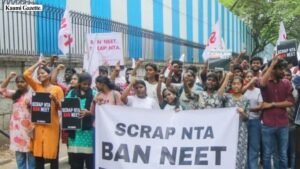 ExplainerSupreme Court to urgently hear NEET candidate plea on NTA record retention rule
 ExplainerElection Commission Faces Credibility Crisis Amid Internal Friction and Controversies Over Electoral Roll Revisions
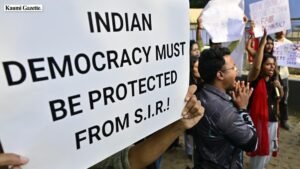 ExplainerSpecial Intensive Revision of Electoral Rolls Deletes Millions of Voters Across States and Union Territories
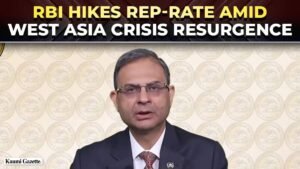 ExplainerReserve Bank of India raises repo rate by 25 basis points
 ExplainerGST Council Approves Eight Reforms and Raises Prosecution Threshold
 ExplainerIndian Stock Market Tumbles Amid Capital Outflows and Economic Pressures Despite Robust GDP Growth