
Supreme Court to urgently hear NEET candidate plea on NTA record retention rule
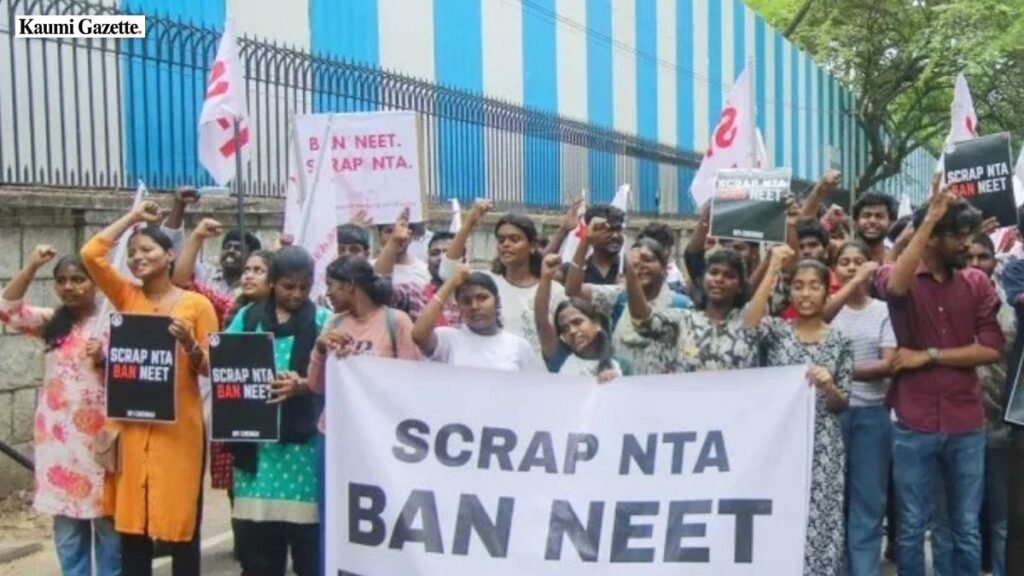
NEW DELHI — The Supreme Court is set to urgently hear a plea concerning the National Testing Agency’s (NTA) 90-day record retention rule, as a Gujarat candidate fights a looming deadline that threatens crucial evidence in her NEET-UG score dispute.
The case highlights a significant legal and administrative question regarding how rules on disposing of examination records operate when the authenticity of a key document, such as an Optical Mark Recognition (OMR) answer sheet, is challenged in court while a retention window draws to a close.
The petitioner, Shreya Chaudhari, claims she should have received 415 marks more than the score declared by the NTA on July 16. The NEET-UG 2026 re-examination was held on June 21 after the original May 3 test was scrapped due to a question paper leak. More than 22.79 lakh candidates registered for the re-test, with nearly 20 lakh appearing.
After the Gujarat High Court rejected her petition earlier this month, a Division Bench dismissed her appeal on October 12. With the NTA’s 90-day retention period for exam documents expiring soon after the July result declaration, the petitioner moved the Supreme Court, prompting an urgent listing.
Under the NTA’s information bulletin, all documents relating to examinations are preserved for 90 days from the declaration of results before being weeded out, after which the agency ceases to entertain correspondence regarding them. Officials explained that retention schedules allow examining authorities to manage the vast volume of physical and digital records generated by competitive exams, such as OMR sheets and attendance logs.
Legal and coaching experts noted that while the bulletin sets a 90-day window, the policy must be read alongside provisions on accessing recorded responses. Furthermore, filing a grievance, an RTI application, or a court petition does not automatically halt the disposal process. Officials emphasized that candidates must secure an explicit interim direction from a court requiring the NTA to preserve original records until a dispute is resolved.
During the proceedings in the Gujarat High Court, the NTA produced the original OMR sheet in a sealed cover, which was opened and shown to the petitioner and her counsel. The High Court ultimately found no material discrepancy to displace the NTA’s record. Legal experts cautioned that the Supreme Court’s decision to list the matter urgently does not constitute an automatic stay on the destruction of records, underscoring the need for an express preservation order.
Other testing bodies follow varied timelines for record disposal. Under the UPSC Record Retention Schedule, answer sheets are typically kept for six months from the written exam’s conclusion or 45 days from marksheet display, with separate provisions for ongoing litigation. The CBSE generally retains answer books for three years when no litigation is pending, and keeps records involved in court cases for one year after a final judgment. Meanwhile, the CISCE regulations state that ICSE answer scripts are not retained beyond 60 days following the declaration of results.
Related stories
 ExplainerElection Commission Faces Credibility Crisis Amid Internal Friction and Controversies Over Electoral Roll Revisions
 ExplainerSpecial Intensive Revision of Electoral Rolls Deletes Millions of Voters Across States and Union Territories
 ExplainerReserve Bank of India raises repo rate by 25 basis points
More from Explainers
 ExplainerGST Council Approves Eight Reforms and Raises Prosecution Threshold
 ExplainerIndian Stock Market Tumbles Amid Capital Outflows and Economic Pressures Despite Robust GDP Growth
 ExplainerGST Council deliberates on tax offence decriminalisation and compliance reforms
 ExplainerHow black holes become cosmic monsters: Scientists uncover the violent merger chain behind giant space objects |
 ExplainerWhy the ‘Trump rally’ is hitting a wall of profit-takingExplainerWhy India’s defence sector boost drone output for next-gen combat