
G20 finance ministers gather in Bangkok to address economic fallout from Middle East conflict and rising global debt
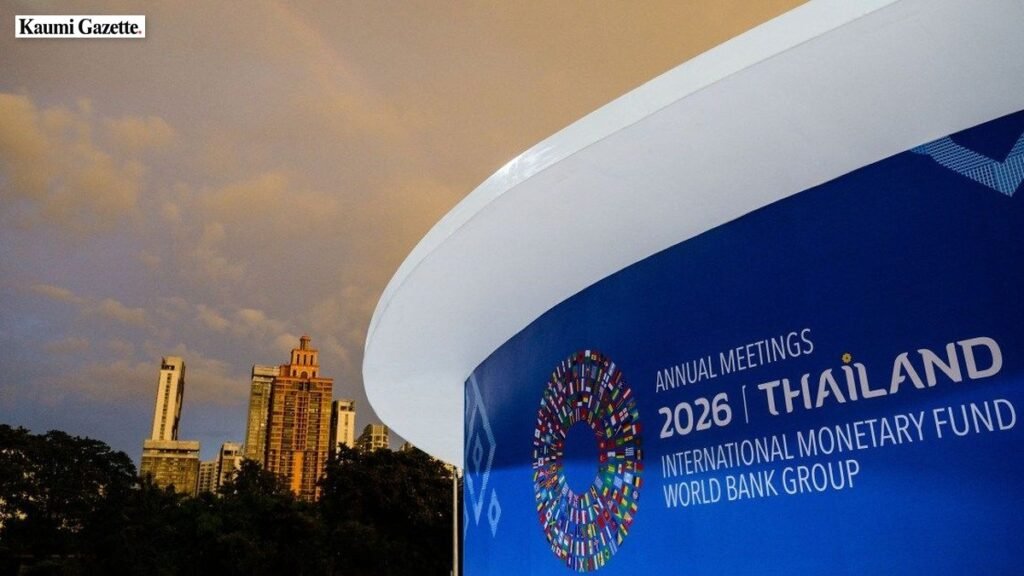
BANGKOK — G20 finance ministers and central bank governors are gathering in Bangkok on Thursday for high-level talks dominated by the economic fallout from the US-Israel war on Iran.
The ministerial meetings coincide with the annual gatherings of the International Monetary Fund (IMF) and the World Bank, running in the Thai capital from October 12 to October 18.
The meetings bring together economic policymakers from the G20, an economic forum comprising 19 large economies alongside the European Union and the African Union. Established in 1999 following the Asian Financial Crisis, G20 nations account for roughly 85 percent of global gross domestic product and three-quarters of global trade. The current rotating presidency is held by the United States.
Discussions in Bangkok are expected to centre heavily on the consequences of the ongoing conflict in the Middle East, which has disrupted regional economic activity and choked shipping through the Strait of Hormuz. The resulting supply constraints have driven crude oil prices above $100 a barrel for much of the past eight months, placing severe strains on household budgets and government finances across Asia and the Gulf.
Ahead of the talks, Australian Treasurer Jim Chalmers called for an immediate halt to Middle Eastern conflicts and the restoration of normal shipping lanes. In a statement, Chalmers said the war is pushing up fuel prices, inflation and interest rates globally, concluding that reopening the Strait of Hormuz is vital for the world economy.
Aside from geopolitical fallout, the agenda features mounting sovereign debt levels that exceed 100 percent of GDP in nations such as the US, Canada, Japan, Italy and France. Addressing the meetings on Wednesday, IMF Managing Director Kristalina Georgieva warned that escalating debt threatens global stability and asserted that governments face inevitable choices regarding tax hikes and spending cuts.
Trade imbalances and non-market economic policies are also expected to draw sharp debate. The US administration has raised concerns over China’s state-driven industrial model and its large trade surplus, which reached a cumulative $938bn in September. In a written statement addressed to the IMF on Wednesday, US Treasury Secretary Scott Bessent urged stronger multilateral engagement on how exchange rates and non-market policies drive external imbalances and distort competition.
While top G20 finance officials and central bankers are attending alongside IMF chief Georgieva and World Bank Group President Ajay Banga, US Treasury Secretary Bessent is a notable absence. US officials cited domestic engagements for Bessent’s decision to skip the gathering. Washington is instead represented by Deputy Secretary Francis Brooke and Undersecretary for International Affairs Erin Browne.
Prospects for a unified multilateral agreement remain uncertain. At the previous gathering of G20 finance ministers in Asheville, North Carolina, member states failed to issue a joint communique after China raised objections to proposed language concerning international trade.
The current meetings in Bangkok will help shape the policy agenda for the upcoming G20 leaders’ summit scheduled for December 14–15 in Miami, Florida.
Related stories



More from World
 WorldNew Delhi Police Detain Opposition Legislators During Protest Demanding Election Commissioner’s Resignation
 WorldGrain ship sinks in Black Sea following fire after Ukrainian president blames Russian drone attack
 WorldUnited Kingdom reportedly threatens to expel Israeli diplomats over consulate closure threat
 WorldKarl Deisseroth, Peter Hegemann, and Georg Nagel win 2026 Nobel Prize in Physiology or Medicine for optogeneticsWorldMost expensive ticket ever? World Cup final seat listed for $11.5 million despite being one of the worst in stadium | International Sports News
 ExplainerWhy the ‘Trump rally’ is hitting a wall of profit-taking