
Supreme Court directs Central Empowered Committee to submit report on nationwide illegal river sand mining
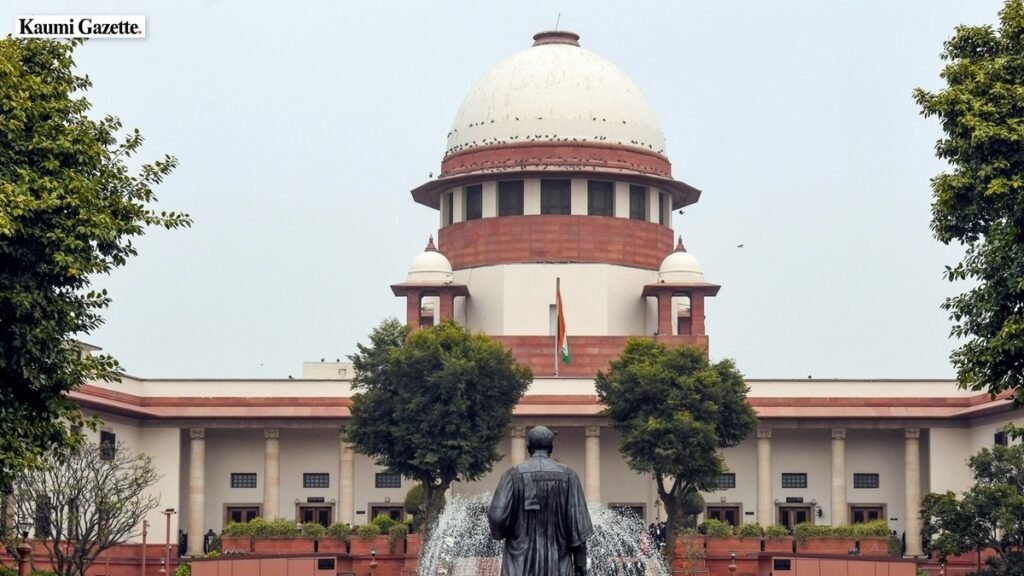
The Supreme Court has directed the Central Empowered Committee (CEC) to submit a comprehensive report on illegal river sand mining across the country, expanding its ongoing judicial probe into ecological degradation.
“Rivers once destroyed cannot be compensated,” a bench of Justices Vikram Nath and Sandeep Mehta observed, emphasizing that a pan-India approach is required to tackle the issue.
The apex court expanded the scope of the proceedings during a suo motu hearing initiated earlier this year following media reports of rampant illegal sand extraction inside the National Gharial Sanctuary along the Chambal River. The court pulled up the governments of Rajasthan and Madhya Pradesh for failing to dismantle organized sand-mining syndicates or identify the key operators behind the illegal trade.
Addressing Rajasthan’s counsel, the bench warned that a blanket ban on sand mining would be imposed across all state rivers if authorities failed to take proactive enforcement action within two weeks. The court noted that seized vehicles involved in illegal transport were frequently released upon payment of fines and that past judicial orders regarding the Chambal sanctuary had been poorly respected.
During the proceedings, amicus curiae senior advocate Nikhil Goel—assisted by advocate Rupali Fransesca Samuel—informed the bench that a forest ranger, Pratap Singh Chundawat, was crushed to death last month by a dumper truck carrying illegally mined sand while on duty.
The court also considered a separate petition alleging rampant illegal sand mining in the Ken River, demanding a response from Madhya Pradesh regarding the deployment of heavy excavators and sand-pulling pumps in the absence of valid government mining contracts.
The CEC, which assists the court on environmental matters, previously highlighted critical enforcement gaps, including a lack of legal protection for frontline forest personnel confronting armed syndicates. The committee recommended granting legal safeguards similar to those implemented for public servants, alongside filling forest guard vacancies, upgrading surveillance infrastructure, and ensuring strict district-level accountability and inter-state coordination.
The Chambal sanctuary, designated in 1978 and spanning Rajasthan, Madhya Pradesh and Uttar Pradesh, hosts the largest global population of critically endangered gharials. Previous court directives ordered increased surveillance, monitoring of illegal routes, and consideration of preventive detention against syndicate kingpins.
The Supreme Court has posted the matter for further hearing on November 4.
Related stories
 NationalPolice detain Rahul Gandhi and Priyanka Gandhi during opposition protest in New Delhi
 NationalOpposition launches nationwide campaign against Chief Election Commissioner over voter list allegations
 NationalDelhi Police register FIR against opposition leaders following protest at Akashvani Bhavan
More from India
 NationalOpposition parties continue protests demanding Chief Election Commissioner’s resignation over voter list revisions
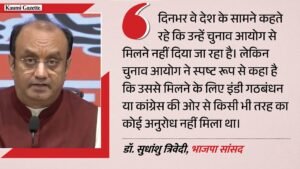 NationalBJP accuses Rahul Gandhi of political drama over Election Commission protest
 NationalCongress President Mallikarjun Kharge Supports Protests Against Chief Election Commissioner
 NationalCockroach Janta Party founder calls elections pointless while Chief Election Commissioner remains in office
 HeadlinesDelhi Police detains 160 protesters during demonstration demanding Chief Election Commissioner’s resignationExplainerWhy India’s defence sector boost drone output for next-gen combat