
Special Intensive Revision of Electoral Rolls Deletes Millions of Voters Across States and Union Territories
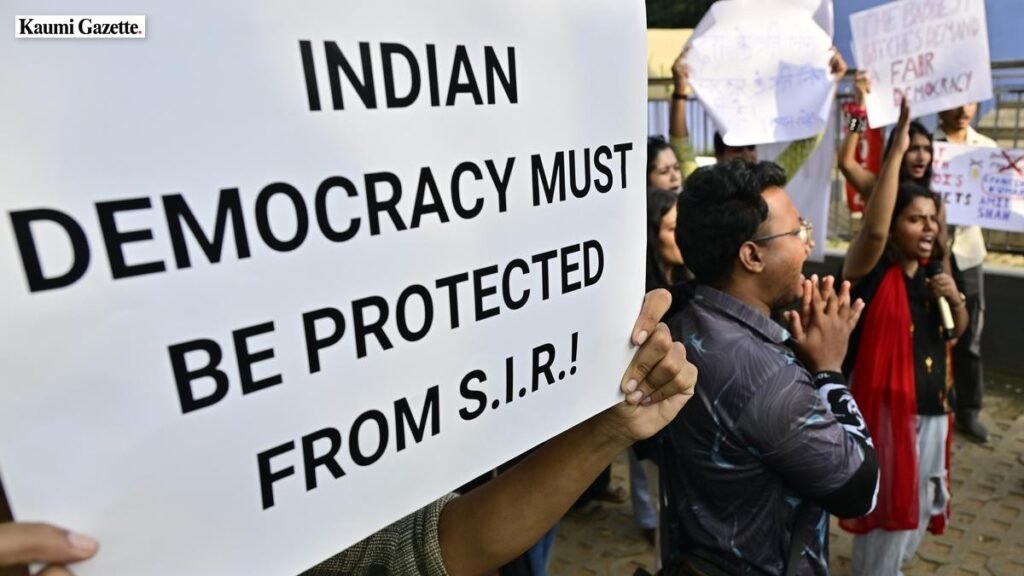
The Special Intensive Revision (SIR) of electoral rolls, launched by Chief Election Commission of India Gyanesh Kumar, has resulted in the deletion of a large number of genuine voters across 30 States and Union Territories, according to data from three phases of the exercise.
The names of 13.37 crore people were struck off during the draft stage across three phases, including 65 lakh in Bihar, 6.57 crore across 12 States and Union Territories in Phase 2, and 6.15 crore in Phase 3. The deletion rate increased as the exercise progressed, rising from 8.3 per cent in Bihar to 12.9 per cent in Phase 2 and 17 per cent in Phase 3, reaching 32.8 per cent in Delhi and 21.7 per cent in Telangana. Net deletions in Phases 1 and 2 stood at about 6.2 crore after additions.
In Delhi, the draft roll contains 97.54 lakh electors, marginally above the 94.95 lakh who voted in the February 2025 Assembly election. In 24 of Delhi’s 70 constituencies, the draft roll features fewer electors than actual voters in that election. The Election Commission of India (ECI) subsequently directed officials to conduct a special drive to enrol left-out voters.
The SIR process departed from traditional intensive revisions. While the ECI’s Manual on Electoral Rolls (2023) mandates that enumerators visit every house for de-novo revisions and give probative value to preceding rolls, the SIR shifted the enumeration onus onto electors. Citizens had to trace themselves or a parent to an intensive revision conducted over two decades ago or provide eligibility documents. Electors who were unreachable, illiterate, or failed to return forms were dropped.
Restoring deleted voters required filing Form 6, normally used for new voters, preventing audits due to indistinguishable figures. Additionally, software flagged “logical discrepancies” such as spelling variations, more than six voters linked to a single ancestor, and parent-child age gaps outside a 15-to-45-year range.
In West Bengal, judicial officers deployed by the Supreme Court struck off 27 lakh of 60 lakh flagged names. Appellate tribunals subsequently restored electors in 93 per cent of adjudicated cases, adding about one lakh names, but had disposed of only 1.22 lakh of more than 38 lakh appeals by early September. Statistical analysis by the Kolkata-based SABAR Institute estimated that 65 per cent of those deleted after adjudication for logical discrepancies in West Bengal were Muslims. In Bihar, the gender ratio in final SIR rolls dropped to 892 from 907 in the 2024 Lok Sabha rolls, with more women than men struck off, particularly those aged 18–29 recorded as permanently shifted.
Centralised database changes through the ERONet system bypassed local Electoral Registration Officers, while the lack of a current Census hindered population baselines. Election Commissioners Sukhbir Singh Sandhu and Vivek Joshi recorded at least 14 objections between October 2025 and August 2026 regarding procedural alterations.
The Supreme Court upheld the SIR on May 27. Legal scholars have raised objections regarding the use of Section 21(3) for state-wide revisions, the standard of review applied, and the departure from the 1995 Lal Babu Hussein ruling which held that roll names carry presumptive validity. Petitions regarding West Bengal, Delhi, and the conduct of the Chief Election Commissioner are currently before the Court.
Related stories


More from Explainers
 ExplainerGST Council deliberates on tax offence decriminalisation and compliance reforms
 ExplainerHow black holes become cosmic monsters: Scientists uncover the violent merger chain behind giant space objects |
 ExplainerWhy the ‘Trump rally’ is hitting a wall of profit-takingExplainerWhy India’s defence sector boost drone output for next-gen combat
 ExplainerHow David Attenborough’s lush imagery hid a history of colonial harm
 ExplainerWest Bengal (WBBSE) Madhyamik Result 2026 LIVE: Class 10 scorecard today at wbbsedata.com — How to check at 10:15 am