
Faculty Shortages and Equipment Gaps Strain Uttar Pradesh Medical Colleges
LUCKNOW —
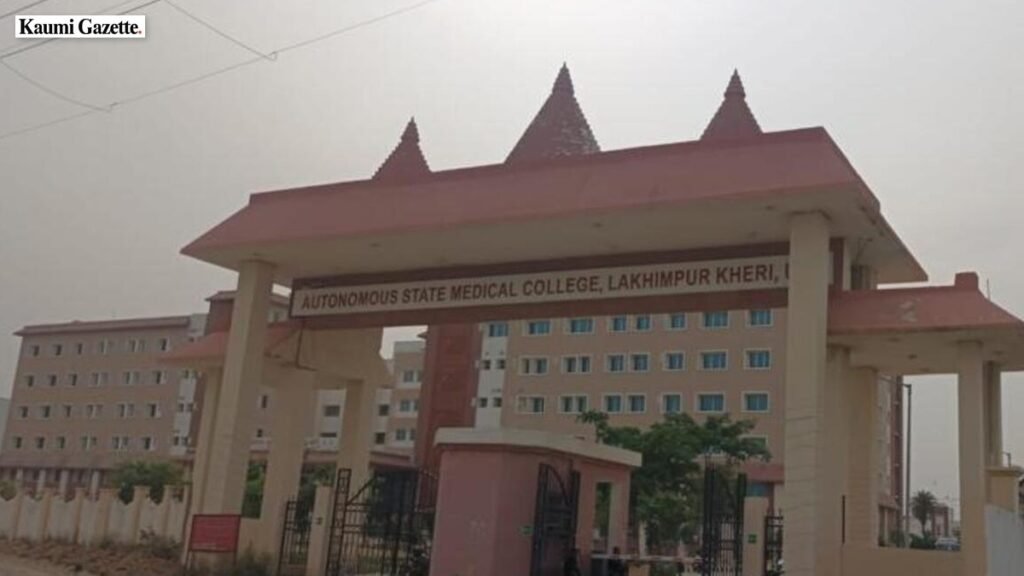
Uttar Pradesh’s rapidly expanding network of autonomous state medical colleges features impressive modern buildings and expansive campuses, but a severe shortage of teaching faculty and specialised diagnostic equipment is undermining their primary objective of local healthcare delivery, a ground report reveals.
The state government’s “one district one medical college” initiative, rolled out since 2019-20 to serve a population exceeding 25 crore, has successfully established physical infrastructure across various districts. However, institutions face acute faculty shortfalls and infrastructural limitations that frequently force avoidable patient referrals to tertiary centres, creating bottlenecks at higher facilities.
At the Autonomous State Medical College in Basti, established in 2019, only 65 faculty members are operational against 110 sanctioned posts, a figure that includes contractual appointments. Despite handling an average daily outpatient department footfall of 1,200 patients and conducting over 20 daily surgeries, the institution lacks advanced facilities such as a catheterization laboratory and a functional 50-bed critical care unit, resulting in critical cardiac and specialized cases being referred elsewhere.
Similar shortages affect institutions across the state. The Madhav Prasad Tripathi Medical College and Hospital in Siddharthnagar operates with 59 faculty members against a requirement of 93, fielding just three professors against 23 sanctioned posts. When the college recently advertised over 40 faculty positions, it received only eight applications, with just two candidates ultimately joining. Siddharthnagar also functions without a regular anaesthetist, relying on a single deployment from the chief health department to manage critical care.
In Bahraich, the Maharaja Suheldev autonomous medical college runs with 60 faculty members against a required 110, while Lakhimpur Kheri operates with over 50 faculty against 86 needed. Distance between academic blocks and clinical wings further complicates operations. At Lakhimpur Kheri, the hospital wing is situated roughly 12 km from the campus, while other districts maintain gaps ranging from two to five kilometres, occasionally testing National Medical Commission guidelines requiring campuses to maintain manageable transit times.
Medical administrators point to systemic reluctance among experienced medical professionals to relocate to Tier-II and Tier-III peripheral districts away from urban centers like Lucknow as the primary driver of the vacancies. Consequently, several institutions depend heavily on junior and senior resident doctors serving mandatory bond periods, with some departments staffed entirely by doctors on such bonds.
To mitigate recruitment hurdles, principals have been delegated powers to make contractual appointments within a week of interviews, provided candidates apply. Administrators are also advocating for the reintroduction of a rural service allowance—previously offered in the state and still active in states like Rajasthan—to incentivize faculty retention in peripheral districts. Proposals regarding institutional bye-law amendments were sought by the Directorate of Medical Education to address recurring operational bottlenecks, though formal impacts are yet to materialize.
Related stories


More from Explainers
 ExplainerSpecial Intensive Revision of Electoral Rolls Deletes Millions of Voters Across States and Union Territories
 ExplainerReserve Bank of India raises repo rate by 25 basis points
 ExplainerGST Council Approves Eight Reforms and Raises Prosecution Threshold
 ExplainerIndian Stock Market Tumbles Amid Capital Outflows and Economic Pressures Despite Robust GDP Growth
 ExplainerGST Council deliberates on tax offence decriminalisation and compliance reforms
 ExplainerHow black holes become cosmic monsters: Scientists uncover the violent merger chain behind giant space objects |