
BHOPAL: Researchers at the ICAR-National Institute of High Security Animal Diseases (NIHSAD) have formulated India’s inaugural domestic vaccine
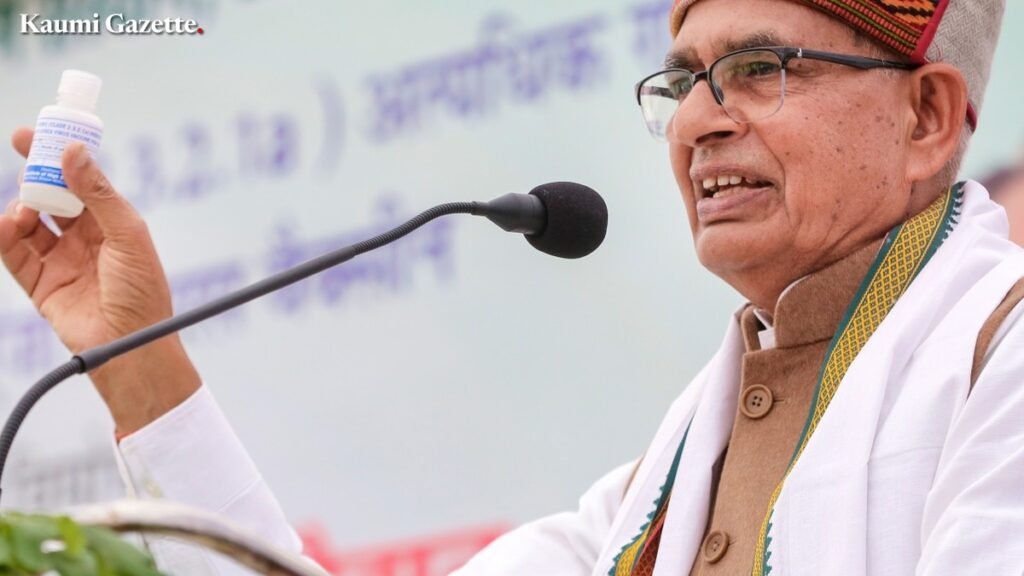
BHOPAL: Researchers at the ICAR-National Institute of High Security Animal Diseases (NIHSAD) have formulated India’s inaugural domestic vaccine targeting the highly pathogenic H5N1 avian influenza strain in poultry. Union Agriculture Minister Shivraj Singh Chouhan revealed the development in Bhopal on Friday, stating the immunization carries an estimated cost of Rs 1-2 per dose. The biological product specifically neutralises the H5N1 Clade 2.3.2.1a genetic lineage, which has accounted for the vast majority of avian influenza episodes across domestic flocks since 2011.
Avian influenza first surfaced in India in 2006 within Navapur, Maharashtra, subsequently triggering upwards of 500 outbreaks characterized by mass mortality and extensive culling of livestock. The implications of Clade 2.3.2.1a stretch beyond the agricultural economy. During 2025, matching viral groups infected various mammalian populations, including tigers, lions, domestic cats, leopards, and jungle cats. Furthermore, health authorities recorded three human fatalities linked to the identical viral clade across Haryana, Andhra Pradesh, and Karnataka.
Dr S Nagarajan, the principal scientist who spearheaded the project at the Bhopal laboratory, emphasized the dual economic and public health imperatives behind the research. “These outbreaks have caused huge economic loss to the poultry industry,” Nagarajan told The Indian Express, explaining that the injection aims to curb the circulating strain to protect farmers while averting the genesis of a human pandemic pathogen. While the vaccine is engineered exclusively to shield chickens, its broader epidemiological utility lies in stifling viral replication among birds, thereby cutting off potential transmission vectors to handlers.
Formulating the injection demanded stringent laboratory containment and relentless schedules. According to project leaders, researchers labored through weekends and holidays under strict biosafety parameters. These measures required thorough pre- and post-lab sanitation, rigorous personal bathing regimens, and domestic restrictions against keeping pets to eliminate any possibility of pathogen leakage.
Pre-clinical evaluations verified that the candidate met the safety, efficacy, and potency benchmarks established by the World Organisation for Animal Health (WOAH). Nagarajan reported that controlled trials yielded total protection against the designated H5N1 clade throughout a 24-week monitoring window administered after a booster shot. Additionally, transmission assays demonstrated that immunized chickens co-housed with unimmunized birds successfully blocked inter-animal viral spread.
Despite these findings, analysts note that the 24-week efficacy data reflects strictly controlled experimental parameters following a booster dose, leaving commercial-scale performance metrics and broader trial demographics yet to be detailed. The formulation remains commercially unavailable to agricultural producers pending technology transfer agreements. Nagarajan stated that technology licensing to industrial manufacturers will commence rapidly, though actual market availability rests upon regulatory procedures established by the Centre’s Department of Animal Husbandry and Dairying.
Once commercial production begins, the vaccine is intended to protect layers kept for egg production and growing birds heading toward maturity, shielding operations from severe mortality events and economic disruption. NIHSAD has previously engineered domestic inoculants for Gumboro disease, Brucella abortus, Classical Swine Fever, and African Swine Fever. The new H5N1 rollout expands this institutional portfolio, delivering a customized defensive tool tailored to viral lineages actively circulating domestically.
Related stories



More from Explainers
 ExplainerEl Niño dryness drives India food inflation to twenty-three-month high
 ExplainerDelhi Government Considers Cloud Seeding Trials to Combat Post-Diwali Air Pollution
 ExplainerData Analysis Shows Firecrackers Drove Majority of Delhi Pollution Following Diwali
 ExplainerPolitical Speculation Intensifies Over Potential Reunion Between Shiromani Akali Dal and Bharatiya Janata Party in Punjab
 ExplainerUttar Pradesh government increases Dearness Allowance by five percent for state employees
 ExplainerCentre explores legal safe harbour review for social media platforms amid accountability push