
US Trade Representative proposes tariff of up to 25 per cent on Indian goods
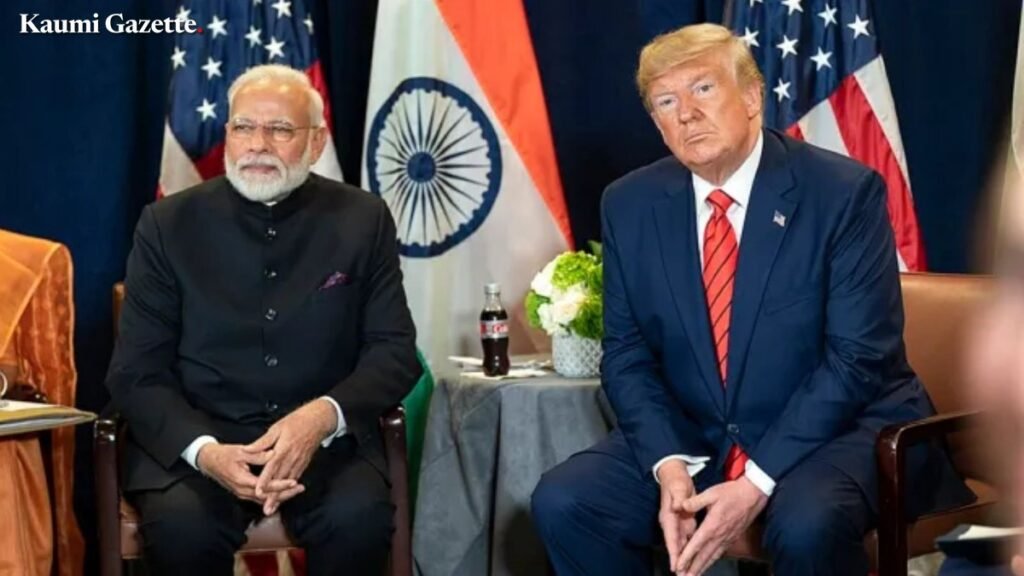
NEW DELHI: The United States Trade Representative (USTR) has proposed a tariff of up to 25 per cent on Indian goods, citing allegations of excess manufacturing capacity in India.
The proposed levy, announced on November 25, 2026, is expected to incorporate the existing 10 per cent forced-labour duty currently paid by Indian exporters. However, the proposed rate is structured to drop to 17 per cent if India and the US successfully sign their long-pending bilateral trade deal before the conclusion of scheduled public hearings, which open on January 25, 2027.
The latest trade friction forms part of a nearly two-year cycle of shifting US duties, which have undergone continuous revisions through alternating legal frameworks since April 2025.
### Evolution of Tariffs and Legal Frameworks
The initial US measures began in April 2025 with a 26 per cent reciprocal tariff and a separate 50 per cent penalty targeting Indian purchases of discounted Russian crude oil. These initial duties were implemented under the International Emergency Economic Powers Act (IEEPA) of 1977.
However, the legal foundation for those emergency tariffs collapsed on February 20, 2026, when the US Supreme Court ruled in Learning Resources v. Trump that the emergency legislation did not permit such duties. Consequently, the initial emergency tariffs were struck down, initiating refund procedures for US importers.
Following the court ruling, Washington shifted its approach. A temporary 10 per cent global surcharge under Section 122 of the Trade Act of 1974 took effect for a limited 150-day window before expiring on July 24, 2026. This was immediately replaced by a 10 per cent forced-labour duty under Section 301 of the Trade Act of 1974, which carries no expiration date.
Alongside these measures, product-specific duties imposed under Section 232 of the Trade Expansion Act of 1962 (covering steel, aluminium, and copper at 50 per cent, as well as cars and parts at 25 per cent) remained untouched by the Supreme Court ruling and continue in force.
### The Excess-Capacity Inquiry and Trade Negotiations
Under the newly proposed Section 301 inquiry, the USTR has argued that Indian industrial policies, including Make India initiatives and production-linked incentives, foster artificial manufacturing competitiveness. Washington has also pointed to India’s rising reliance on intermediate goods imported from China, citing figures indicating that such imports nearly doubled between 2017 and 2025.
India’s commerce ministry has rejected the finding, maintaining that the country holds no structural excess capacity in any sector and that trade concerns should be resolved through bilateral negotiations.
Bilateral talks have progressed intermittently since they were launched following a joint leaders’ statement in February 2025 and an interim framework announced in February 2026. Under the framework proposed in early 2026, India would eliminate or reduce tariffs on all US industrial goods and a wide range of agricultural products (including animal feed ingredients, tree nuts, fruit, soybean oil, wine, and spirits) while easing regulatory barriers for US medical devices and IT import licensing. Furthermore, India expressed an intention to purchase $500 billion worth of US energy, aircraft, precious metals, technology products, and coking coal over five years.
Political reactions within India have varied. The opposition Congress party has contended that the framework terms were conceded entirely to Washington. Conversely, Commerce Minister Piyush Goyal stated on November 3 that India has preserved its core red lines, protecting sensitive domestic sectors such as dairy, poultry, meat, and genetically modified products from foreign access, while noting that the US may have softened its demands in those areas.
### Sectoral Exemptions and Exposures
The proposed Section 301 duties carry specific exemptions for key export segments. Generic pharmaceuticals and smartphones (which constitute India’s two largest export categories to the United States) remain exempt from the proposed excess-capacity levies, though patented medicines face separate national-security tariffs under Section 232.
At the same time, labour-intensive sectors remain exposed to the broader tariff pressures. Categories such as textiles and apparel, gems and jewellery (with the US purchasing nearly 30 per cent of total Indian exports in the sector), shrimp and seafood, carpets, and solar goods face direct exposure depending on the final outcome of the trade negotiations and the January hearings.
Whether Indian shipments ultimately face the 25 per cent ceiling rate or the reduced 17 per cent trade deal rate depends entirely on whether a formal bilateral agreement is finalized before January 25, 2027.
Related stories
 ExplainerIndia and Bangladesh Meet in Dhaka as Ganga Water Sharing Treaty Nears Expiry
 ExplainerSEBI proposes scrapping additional disclosure requirements for foreign portfolio investors
 ExplainerBHOPAL: Researchers at the ICAR-National Institute of High Security Animal Diseases (NIHSAD) have formulated India’s inaugural domestic vaccine
More from Explainers
 ExplainerTelangana decides to phase out standalone junior colleges to integrate senior secondary classes
 ExplainerEl Niño dryness drives India food inflation to twenty-three-month high
 ExplainerDelhi Government Considers Cloud Seeding Trials to Combat Post-Diwali Air Pollution
 ExplainerData Analysis Shows Firecrackers Drove Majority of Delhi Pollution Following Diwali
 ExplainerPolitical Speculation Intensifies Over Potential Reunion Between Shiromani Akali Dal and Bharatiya Janata Party in Punjab
 ExplainerUttar Pradesh government increases Dearness Allowance by five percent for state employees