
Syria confirms military adviser deployment to Saudi Arabia following high-level diplomatic talks
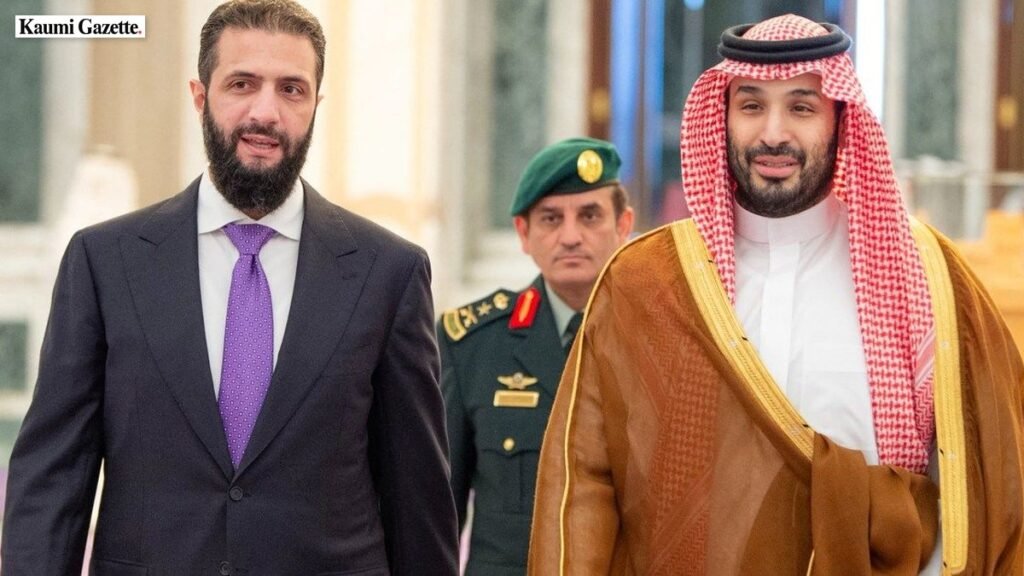
NEW DELHI — Syria has confirmed that it has deployed military advisers to Saudi Arabia, with 600 special forces scheduled to arrive in the kingdom next week, following high-level diplomatic talks in Riyadh.
The troop deployment comes in the wake of Syrian President Ahmed al-Sharaa’s visit to Saudi Arabia last week, where he met with Saudi Crown Prince Mohammed bin Salman. The discussions centred on security and financial cooperation, concluding with Riyadh pledging $403 million in loans to assist Syria in rebuilding infrastructure damaged by 13 years of civil war. Syria’s Ministry of Foreign Affairs and Expatriates stated that defence ministry cooperation between the two nations was the most notable outcome of the meetings, though initial reports of Damascus sending troops to Yemen were denied.
While Syrian officials initially disputed reports of direct intervention in Yemen, a government official later confirmed to the state news agency SANA that soldiers were dispatched in a capacity focused on training, expertise exchange and military consultations. Media reports, including accounts from Reuters and The Associated Press, indicated that Syrian personnel are providing military advice and training inside the kingdom to counter ongoing Houthi missile and drone attacks on Saudi cities. Separate reports cited by AFP claimed Syrians were leading drone operations against the Houthis in Yemen, though Damascus has denied those specific claims.
The developing military arrangement could eventually pave the way for Syria to join the Mecca Joint Defence Agreement, a collective defence pact formed in August by Saudi Arabia, Turkey and Pakistan.
Yemen has remained a security concern for Riyadh since Houthi fighters captured the capital, Sanaa, in September 2014, prompting a Saudi-led Arab military coalition to support Yemen’s internationally recognised government starting in March 2015. Saudi Arabia has sought regional alliances to counter threats from the Houthis and Iran, whose attacks on Gulf neighbours escalated after the US-Israel war on Iran began on February 28.
Analysts note that Syria’s thousands of battle-hardened soldiers, who possess expertise in drone warfare, offer a tactical advantage to Riyadh. Rob Geist Pinfold, a lecturer on security studies at King’s College London, observed that the deployment reflects a standard Saudi strategic approach of leaning on diplomatically cultivated partners.
Nanar Hawach, a Syrian analyst, explained that distinguishing between training Yemeni forces inside the kingdom and fighting directly on the front lines allows Damascus to balance its regional commitments. Participating in a regional security framework helps anchor Syria’s domestic recovery, while avoiding direct intervention in nearby Lebanon to sidestep historical instability. However, Hawach cautioned that confronting Iranian allies carries risks of retaliation and potential casualties that could prove difficult to justify to a domestic public focused on peace and reconstruction.
The post-war Syrian government, established after the fall of Bashar al-Assad’s regime in December 2024, has faced external pressure to deploy forces abroad, including US requests for intervention in Lebanon to help disarm Hezbollah. At the same time, Saudi Arabia has reportedly aided the US in removing Assad-era sanctions on Syria, bolstering the legitimacy of the Damascus government.
Samy Akil, senior programme adviser with The Syria Report, noted that the cooperation signals Syria’s willingness to support regional partners despite its limited resources, while positioning Saudi Arabia as a primary regional ally. Furthermore, aligning with a regional power like Saudi Arabia provides Damascus with diplomatic backing amid ongoing Israeli raids and military encroachment in southwestern Syria, offering potential deterrence for areas in Quneitra and Daraa.
Related stories

More from World
 HeadlinesOusted Prime Minister Sheikh Hasina requests passport to return and surrender before Bangladesh court
 WorldPolish Prosecutors Open Terrorism Investigation After Mass Shooting in Kraków
 WorldWorld leaders convene in Turkey for Cop31 climate summit amid record temperatures
 HeadlinesSaudi coalition intercepts missiles over Riyadh, damaging Aramco building
 HeadlinesIsraeli President Tasks Opposition Leader Gadi Eisenkot With Forming New Government
 WorldUnited States Offers Twenty Million Dollar Reward For Information On Iran Nuclear Programme