
Election Commission sets January 2027 qualifying date for Karnataka electoral roll revision
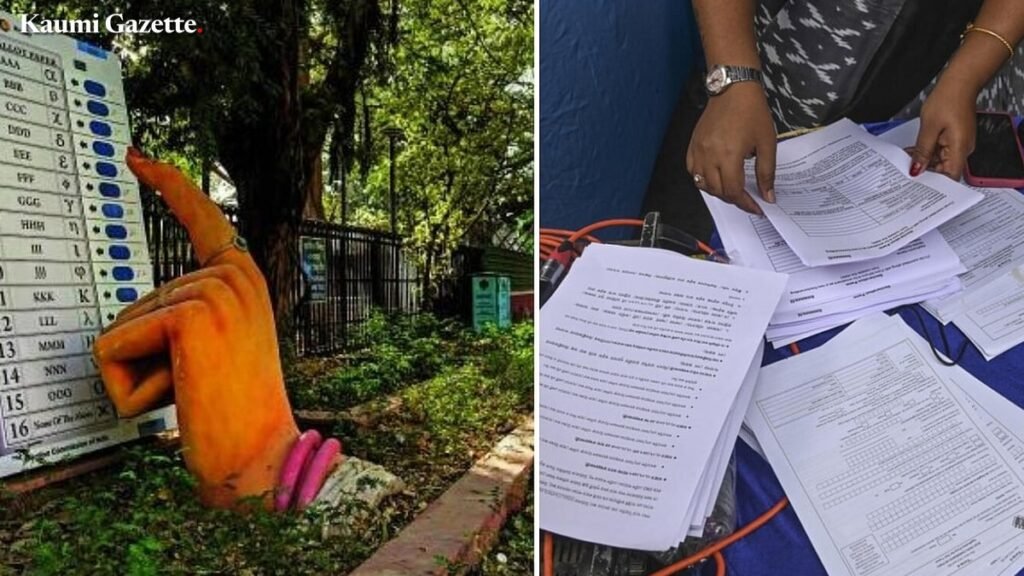
BENGALURU: The Election Commission of India has set January 1, 2027, as the qualifying date for a Special Summary Revision of electoral rolls in Karnataka, scheduling the final voter list publication for January 20.
Issued to the state’s Chief Electoral Officer under Section 21 of the Representation of the People Act, 1950, the directive arrives amid heavy scrutiny from political parties and citizen rights groups over the removal of 1.08 crore voters during the preceding Special Intensive Revision.
The upcoming drive targets young, first-time and left-out voters. Beyond citizens turning 18 by January 1, 2027, individuals who become eligible on three subsequent milestone dates (April 1, July 1 and October 1, 2027) can file advance applications. Electoral Registration Officers have been explicitly instructed to prevent both the omission of eligible citizens and the inclusion of ineligible names.
To maintain list integrity, the commission has introduced strict verification safeguards. Individual citizens face tight restrictions on submitting bulk Form 7 applications for name removals. EROs must personally cross-verify any proposed deletion exceeding two percent of a polling station’s electorate, or when a single objector flags more than five names.
Booth Level Agents representing recognised parties may submit up to 10 forms daily to Booth Level Officers. Any BLA filing more than 30 forms across the entire revision window will trigger mandatory personal cross-verification by an ERO or Assistant ERO. Weekly summaries of claims and objections will be published online and provided to recognised political parties.
Field officers will gather new standard photographs from electors, while EROs handle the removal of deceased, duplicate or permanently relocated individuals through Form 7 procedures. All pending claims from continuous updation must be cleared before the draft roll emerges.
Polling station rationalisation requires 100 percent physical verification beforehand. EROs must keep individual booths under a ceiling of 1,200 electors unless granted explicit ECI clearance, while ensuring voters are not forced to cross natural barriers or travel past a two-kilometre radius.
To boost urban participation, authorities must survey sites for new polling booths on the ground floors of high-rise complexes, housing societies, residential association colonies and urban slums. Geographic coordinates for every station will be mapped onto the ECINET platform, and families living at identical addresses must remain assigned to the same booth.
State administration must establish dedicated help desks and special camps to target vulnerable and hard-to-reach demographics, encompassing migrant labourers, shelter-dwelling homeless populations, women, senior citizens, transgender persons and individuals with disabilities.
Exercising powers under Article 324 of the Constitution, the ECI ordered Karnataka’s Chief Secretary to prevent any vacancies among District Election Officers, EROs and Assistant EROs during the administrative push. Additionally, officials linked to the revision process face a total transfer embargo from the December 1 draft publication until the January 20 final release, unless granted prior exemption by the commission.
Related stories

More from India
 HeadlinesElection Commission assures Supreme Court that voters restoring names using Form 6 face no prosecution
 NationalEconomists project Reserve Bank of India rate hikes amid mounting inflation pressures
 ExplainerEl Niño dryness drives India food inflation to twenty-three-month high
 HeadlinesElection Commission releases draft electoral rolls showing voter additions across jurisdictions
 HeadlinesActivists Urge Election Commission to Expand Voter Relief Measures Nationwide
 HeadlinesIndonesian Vice President Gibran Resigns Following Court Rulings and Parliament Pressure