
Election Commission releases draft electoral rolls showing voter additions across jurisdictions
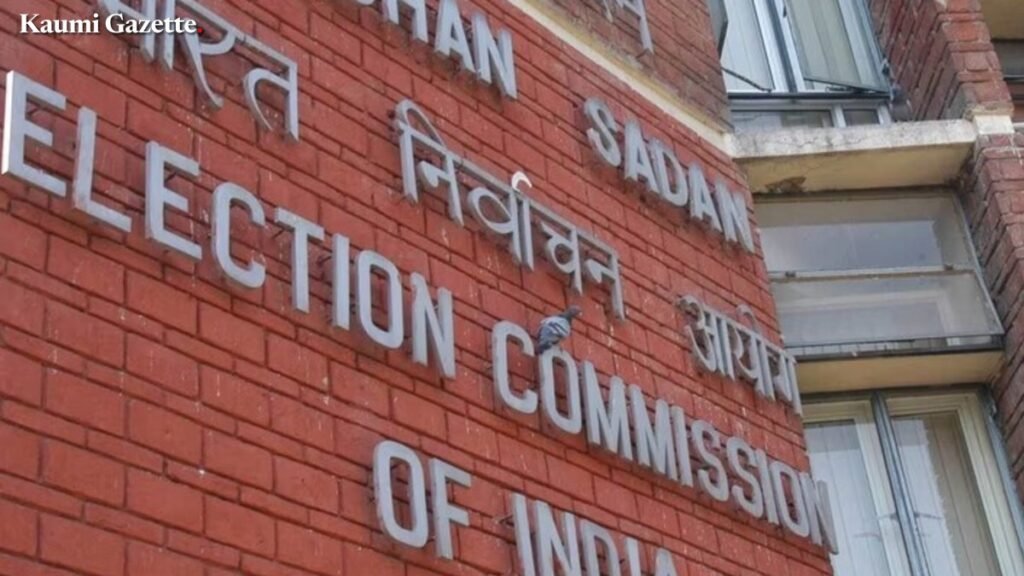
NEW DELHI — Electorate sizes have increased by up to 3% across several jurisdictions in draft electoral rolls published under the Election Commission of India’s Special Summary Revision, providing the first update since tens of thousands of names were removed during the Special Intensive Revision.
The inclusion of approximately five million new voters across nine states and Union Territories represents a small proportion of the electorates previously removed under the SIR. According to data released by the ECI, increases in the draft rolls ranged between 0.1% and 3% across the reporting regions.
The draft SSR lists were issued on November 12 across 13 states and three Union Territories, though Uttar Pradesh deferred its publication to November 17. The ECI established December 11 as the final date for submitting claims and objections, with final electoral rolls scheduled for publication on January 4.
Bihar and Tamil Nadu recorded the highest absolute additions. Bihar’s draft SSR list reached roughly 75.5 million electors, an increase of about 1.3 million over its post-SIR figure of 74.2 million. Tamil Nadu added approximately one million voters to reach a draft total of about 57.7 million, remaining below its pre-exercise total of roughly 64.1 million.
Other regions also registered substantial voter additions. Rajasthan reported an increase of about 1.1 million voters, translating to a 2.22% rise and a draft total near 52 million. Madhya Pradesh added 819,000 voters to reach nearly 54.8 million electors, while Kerala gained about 406,000 voters to record 27.36 million electors compared to its post-SIR count of 26.95 million.
Goa registered the highest percentage increase at 3%, adding roughly 43,000 voters while processing at least 11,000 deletions. Uttarakhand added 1,25,216 names alongside 6,130 processed deletions, bringing its draft total to 7.27 million compared with 7.15 million in the final SIR roll. Manipur recorded an increase of approximately 33,700 voters. Comprehensive data was unavailable for Assam, Chhattisgarh, Gujarat, Punjab, Uttarakhand, West Bengal, and the Andaman and Nicobar Islands in the initial release.
These additions remain limited compared to the scale of deletions executed during the SIR. Across 12 states and UTs, electorates dropped from 509 million to 444 million in draft rolls after SIR phase 2, with final SIR rolls reflecting the deletion of about 20.5 million voters, or 13.27%.
The SSR is a statutory annual revision that uses the existing roll as its baseline and remains critical for first-time voter enrolment. Unlike the SIR, which requires electors to prove eligibility to remain on rolls, SSR applicants are not required to submit citizenship documents or undergo house-to-house mapping.
The ECI announced the SSR in an October 15 notification for 17 states and UTs where the SIR had concluded its first two phases. The decision followed an Economic Times report indicating that routine SSR cycles had been suspended since 2024 following the launch of the SIR in June 2025, delaying the enrolment of newly eligible Gen Z voters.
Internal discussions preceded the rollout. Election Commissioners Sukhbir Singh Sandhu and Vivek Joshi maintained that individuals turning 18 must be registered annually and that the SIR should not replace the annual SSR. Chief Election Commissioner Gyanesh Kumar sought legal guidance regarding the necessity of holding the SSR concurrently with the SIR.
The revision process took place amid protests directed at Chief Election Commissioner Gyanesh Kumar and public scrutiny of SIR irregularities. The SIR was launched in Bihar in June of the previous year as a cleansing drive to eliminate duplicate, deceased, bogus, and ineligible voters. Opposition parties criticised the exercise, alleging it was structured to benefit the Bharatiya Janata Party. The exercise in West Bengal proved particularly contentious, with nearly nine million deletions recorded—a figure comparable to the vote margin between the BJP, which won power in the state for the first time, and the Trinamool Congress.
Related stories
More from India
 HeadlinesElection Commission assures Supreme Court that voters restoring names using Form 6 face no prosecution
 HeadlinesElection Commission sets January 2027 qualifying date for Karnataka electoral roll revision
 NationalEconomists project Reserve Bank of India rate hikes amid mounting inflation pressures
 ExplainerEl Niño dryness drives India food inflation to twenty-three-month high
 HeadlinesActivists Urge Election Commission to Expand Voter Relief Measures Nationwide
 HeadlinesIndonesian Vice President Gibran Resigns Following Court Rulings and Parliament Pressure