
Chief Minister Yogi Adityanath alleges mass exclusion of Hindu voters in Uttar Pradesh electoral rolls
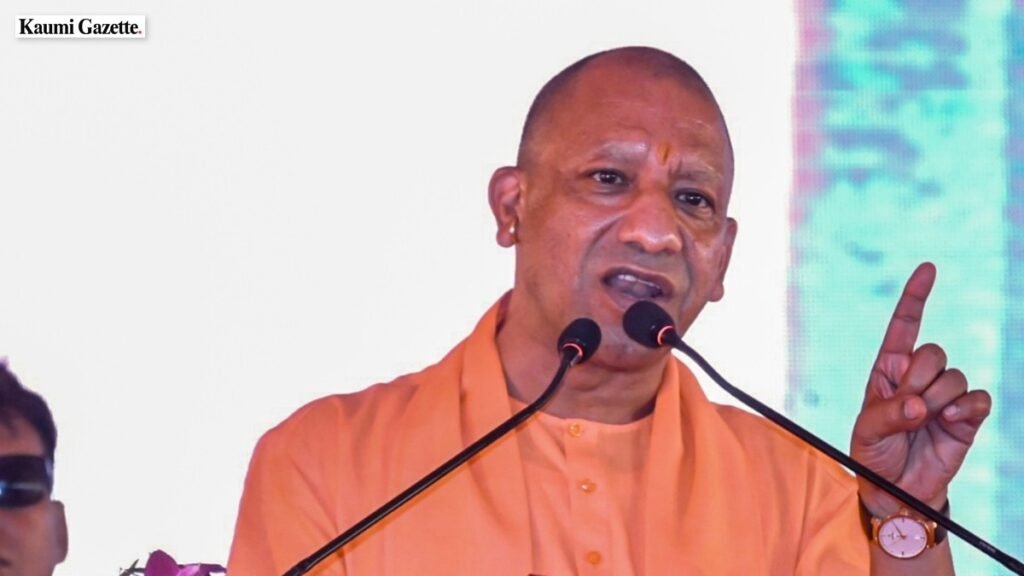
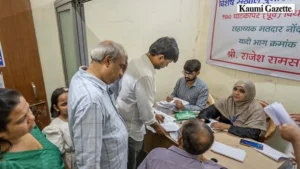
LUCKNOW — A fresh political controversy has erupted in poll-bound Uttar Pradesh over the Special Intensive Revision (SIR) of electoral rolls, with Chief Minister Yogi Adityanath alleging that nearly 1.27 crore Hindu voters have been omitted from the voter lists while more Muslim voters have been enrolled.
The developments surrounding the revision exercise have intensified political friction between the ruling Bharatiya Janata Party (BJP) and opposition parties in the state. While the opposition has accused the Election Commission of India (ECI) of facilitating vote manipulation and demanded the resignation of Chief Election Commissioner Gyanesh Kumar, the debate in Uttar Pradesh has shifted toward claims of selective voter deletions affecting specific communities and government welfare beneficiaries.
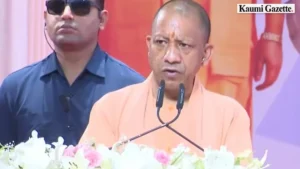
Addressing a media event in Ayodhya, Chief Minister Yogi challenged Samajwadi Party president Akhilesh Yadav to demand the withdrawal of the SIR exercise. Yogi stated that the number of Muslim voters in Uttar Pradesh had increased by 1.63 per cent, whereas the number of Hindu voters had dropped by 1.27 crore. He added that a formal memorandum had been submitted to the Election Commission seeking an explanation for these demographic shifts in the voter rolls.
Detailing the figures during his address, Yogi claimed that approximately 1.27 crore Hindu voters were missing from the Assembly electoral rolls. Out of this total, 66 lakh voters were reportedly listed in the state’s panchayat electoral rolls but were absent from the Assembly voter list. Furthermore, he asserted that 55 lakh Hindu voters who are beneficiaries of government welfare schemes had also been left out.
The chief minister also highlighted that about 4.5 lakh voters belonging to the 18-19 age group were missing from the electoral rolls. At the same time, Yogi defended the necessity of the SIR exercise itself, maintaining that the revision was essential to purge deceased individuals from the voter lists. He claimed that roughly 46 lakh deceased voters remained registered in the rolls prior to the undertaking.
“After removing the names of deceased voters, the names of other eligible voters should have been included. But that has not happened. We are demanding the removal of Bangladeshi infiltrators and the inclusion of Hindu voters who have been left out. We have submitted a memorandum to the Election Commission and hope that all eligible names will be included soon,” Yogi said.
In response, Samajwadi Party president Akhilesh Yadav questioned the provenance of the chief minister’s statistics, specifically challenging how religion-specific data regarding voter additions and deletions was obtained when the Election Commission had not published any such figures.
Taking to social media platform X, Akhilesh subsequently proposed systemic electoral reforms, suggesting the integration of Aadhaar with voting procedures and the replacement of paper or plastic voter ID cards with tamper-proof metal alternatives. He also recommended implementing biometric verification using fingerprints or iris scans to prevent duplicate identification. “The demand is simple. Aadhaar should be linked to voting. Instead of paper or plastic cards, metal cards should be issued so that they cannot be duplicated. Biometric identification through fingerprints or iris scans should also be adopted, as these are unique to every individual. This would prevent the BJP from facilitating bogus voting,” he wrote.
Chief Minister Yogi had previously raised concerns regarding potential voter exclusions during the initial stages of the SIR exercise in December of the previous year, while addressing BJP workers in Lucknow. Pointing to Uttar Pradesh’s total population of approximately 25 crore, Yogi had estimated that roughly 65 per cent of residents, amounting to about 16 crore individuals, should qualify as eligible voters.
At that time, Yogi assessed that the SIR process had encompassed only around 12 crore voters, leaving an estimated four crore eligible individuals unaccounted for. He had asserted then that a vast majority of those uncounted voters belonged to the ruling party’s support base, urging local party cadres to verify that all eligible citizens were added to the electoral registers.
Official data released by the Uttar Pradesh Chief Electoral Officer shows that the state’s electoral rolls stood at 15.44 crore voters when frozen on 27 October 2025. Following the conclusion of the SIR exercise in March, that figure dropped to 13.39 crore, marking a net reduction of approximately 2.05 crore voters across the state.
An analysis of district-level statistics reveals marked discrepancies in the distribution of voter deletions. BJP strongholds, including Lucknow, Ghaziabad, Kanpur, and Agra, have experienced noticeably higher rates of voter removals. Conversely, minority-dominated districts with a stronger opposition presence—such as Rampur, Moradabad, Sambhal, and Saharanpur—have recorded comparatively lower volumes of deletions.
Related stories
More from UP Politics
 Fact CheckFact Check: Viral Video Showing Donald Trump Vandalizing Office Is Artificially Generated
 HeadlinesAnand Teltumbde warns state weaponises legal frameworks against opposition to Chief Election Commissioner
 Uttar PradeshThirteen killed in three separate road accidents across Uttar Pradesh during Diwali festivities
 Uttar PradeshUttar Pradesh Government Announces Three Percent Hike in Dearness Allowance for State Employees
 HeadlinesOusted Prime Minister Sheikh Hasina requests passport to return and surrender before Bangladesh court
 HeadlinesElection Commission simplifies voter reinstatement procedure for specific jurisdictions following judicial scrutiny