
Union government plans special parliamentary session to advance women reservation and Lok Sabha expansion bill
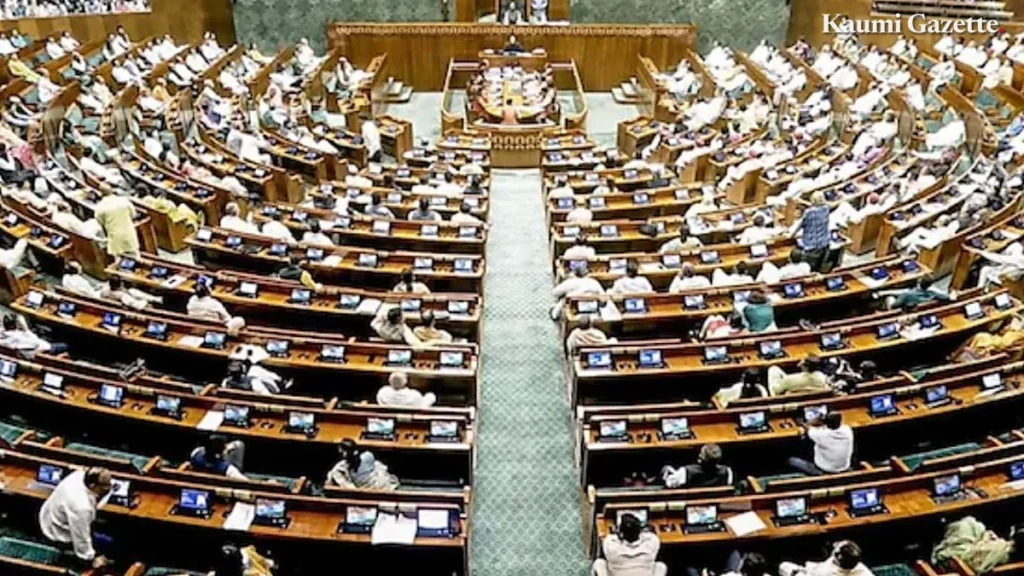
NEW DELHI — The Union government is planning to convene a special session of Parliament to advance a fresh constitutional amendment bill that links the expansion of the Lok Sabha with the implementation of the women’s reservation law.
The proposed legislation aims to increase the maximum strength of the Lok Sabha from 543 to 850 seats through a delimitation exercise, paving the way for a 33 per cent reservation for women in Parliament and state legislative assemblies. The government seeks to implement the women’s reservation law before the 2029 parliamentary elections, proposing to increase Lok Sabha seats for all states by 50 per cent to address the concerns of southern states.
According to government sources speaking to the Press Trust of India, officials are confident the bill will secure the necessary two-thirds majority by a margin of 15 to 18 votes. Passing a constitutional amendment in the Lok Sabha requires 361 votes. The current House has 543 members with three vacancies.
A similar constitutional amendment bill previously failed to secure the required votes in the Lok Sabha during a special sitting of the Budget Session on April 17.
Procedurally, an extended sitting within an existing session requires at least two days’ notice, while convening a fresh session requires a minimum notice of 14 days. Specific dates and the duration of the proposed session have not yet been finalised, and government sources noted that no final decision has been taken on whether the fresh draft will retain the existing ratio of seats among states based on the 1971 Census.
Meanwhile, the Monsoon Session, during which both Houses were adjourned sine die on August 13, has remained unprorogued for 91 days. This surpasses the previous record of 87 days set in 2008. The Constitution does not specify a timeframe for proroguing a House after it has been adjourned sine die, and keeping a session open without formal prorogation for an extended period does not constitute a constitutional or procedural violation.
Related stories



More from India
 NationalRising Ammonia Levels in Yamuna Disrupt Delhi Water Treatment Operations
 HeadlinesIndonesian Vice President Gibran Resigns Following Court Rulings and Parliament Pressure
 HeadlinesBJP Focuses on Grassroots Network and Governance in Uttar Pradesh Preparations
 NationalSecurity threats forced abrupt withdrawal of Rahul and Priyanka Gandhi from boarding schools in 1984, Sonia Gandhi reveals
 HeadlinesYogi Adityanath alleges large-scale omission of Hindu voters from rolls in Uttar Pradesh
 HeadlinesUnion Cabinet approves Noida metro extension and Yuge Yugeen Bharat Museum funding