
Supreme Court States Protest Sites Cannot Be Occupied Indefinitely
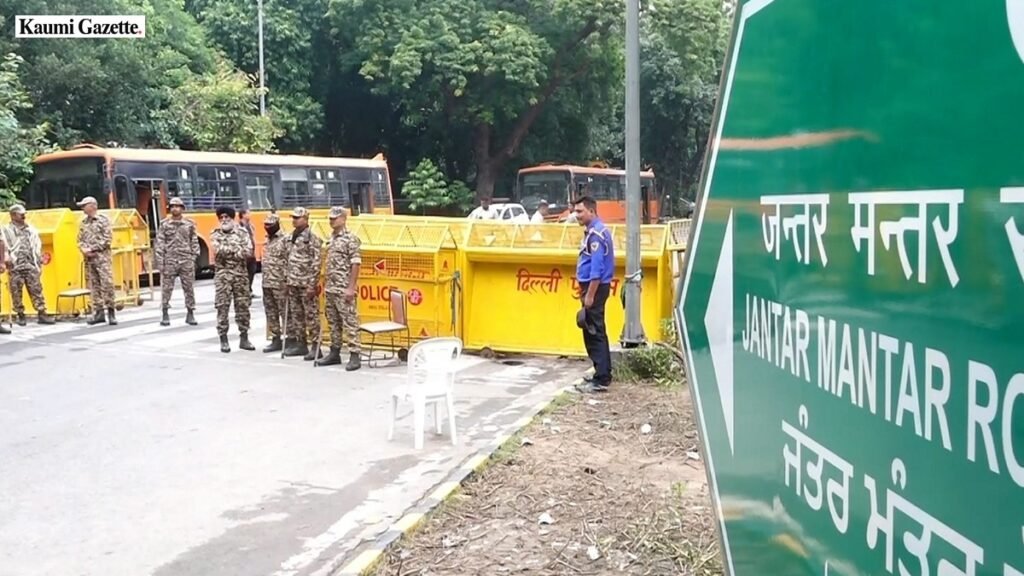
NEW DELHI — The Supreme Court of India stated on Tuesday that no individual, group or organisation can claim an indefinite right to occupy a designated protest site, emphasizing that public spaces must remain accessible to all citizens under constitutional principles.
The observation was made by a bench comprising Chief Justice of India Surya Kant and Justices Joymalya Bagchi and V Mohana during the hearing of a clutch of petitions. The legal proceedings arise from police actions during demonstrations held in July by the Cockroach Janata Party (CJP), alongside separate challenges filed by trade bodies concerning business disruptions, mass detentions, surveillance technologies, and public infrastructure restrictions in the national capital.
The court’s stance highlights the complex judicial balancing act required between freedom of speech and expression and the economic rights of local traders and commuters. “Even the right to protest at a designated site has to be for a certain period. You cannot occupy a protest site for all time to come…where will farmers, traders, journalists go?” the bench observed during the hearing. The court further noted, “You cannot occupy a protest site indefinitely. You cannot prevent other people from protesting, saying ‘I can protest and you cannot’.”
The hearings encompass multiple legal challenges stemming from the July protests led by the CJP, which involved a proposed march toward Parliament and subsequent incidents of violence. Solicitor General Tushar Mehta told the court that while permission for the demonstration on July 20 had been granted for a single day, the protesters occupied the site for 17 days.
In response to the prolonged demonstrations, Delhi’s traders filed petitions through senior advocate Mukul Rohatgi, representing the Kirana Committee Delhi and other commercial bodies, stating that extended disruptions severely affected business operations and livelihoods. Mr Rohatgi sought a prohibition on protests and dharnas across Delhi for the next two months.
Addressing the competing interests at stake, the bench observed, “It is a competing right — your right to trade, business and earn livelihood and someone’s right to protest peacefully.”
Alongside commercial concerns, the petitions brought forward substantial civil liberties issues regarding police actions during the July unrest. The court examined contentions involving mass detentions, police excesses, internet restrictions, the closure of metro stations, and the deployment of facial recognition technology for surveillance. Advocate Prashant Bhushan questioned the legal framework authorizing the use of facial recognition technology by law enforcement authorities.
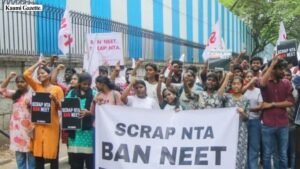
In a specific interim relief measure, the Supreme Court invoked Article 142 of the Constitution to quash First Information Reports (FIRs) registered against students who participated in protests between July 20 and 25 over the NEET-UG examination. However, the court permitted legal action to proceed against 2,873 individuals identified separately by the Delhi Police.
The judiciary is also reviewing the broader regulatory framework governing demonstrations in Delhi. This includes examining the controversy surrounding the Delhi Police’s decision to denotify Jantar Mantar as a designated protest venue and redirect demonstrations to alternative locations such as Ramlila Ground, Burari Ground, and CBD Ground. The court will specifically examine whether authorities independently applied their minds to the suitability and efficacy of Jantar Mantar as a protest site, while also evaluating the privacy implications of surveillance technologies.
The bench directed Mukul Rohatgi to implead the organizations that organized the demonstrations and submit a formal assessment of the financial losses suffered by traders. Meanwhile, the Centre and the Delhi Police were granted time to file their formal responses to the array of issues raised in the petitions.
Related stories

More from Explainers
 ExplainerJio Platforms prepares for record public offering amid shifting telecom landscape
 ExplainerFaculty Shortages and Equipment Gaps Strain Uttar Pradesh Medical Colleges
 ExplainerDeadly crowd surge at Kolkata Durga Puja pandal leaves nineteen dead
 ExplainerSupreme Court to urgently hear NEET candidate plea on NTA record retention rule
 ExplainerElection Commission Faces Credibility Crisis Amid Internal Friction and Controversies Over Electoral Roll Revisions
 ExplainerSpecial Intensive Revision of Electoral Rolls Deletes Millions of Voters Across States and Union Territories